Parliament Demands Government Vehicles Insurance in 2027 Budget
Majority and Minority Chief Whips demand government vehicles insurance be included in the 2027 Budget, ending a 1958 exemption to protect Ghanaian citizens.



The Joint Parliamentary Demand for Vehicle Insurance

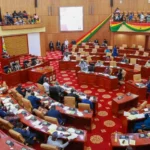
In a significant display of bipartisan cooperation, the leadership of both sides of the House has called for a fundamental shift in how the state manages its automotive assets. Majority Chief Whip Rockson-Nelson Dafeamekpor and Minority Chief Whip Frank Annoh-Dompreh issued a joint statement on the floor of Parliament, demanding that the government provide government vehicles insurance for the entire state fleet. This rare consensus underscores a growing concern regarding the legal and ethical discrepancies between the requirements placed on private citizens and those currently governing state operations.
The joint statement emphasizes that the state must lead by example. By requiring mandatory insurance for all state-owned vehicles, the Whips argue that the government will better protect road users and ensure that the state is held to the same standards as the Ghanaian public. This initiative is specifically aimed at the Ghana 2027 Budget, with the leadership insisting that the necessary funds for these premiums be explicitly allocated in the upcoming financial statement.
Key Demands for Government Vehicles Insurance Reform
The Chief Whips have outlined a comprehensive roadmap to ensure that the transition from self-insurance to commercial third-party insurance is transparent and effective. Their demands include:
- The publication of a comprehensive state vehicle fleet audit to determine the exact number of vehicles and their current insurance status.
- Dedicated budgetary allocations for insurance premiums within the Ghana 2027 Budget.
- Immediate compliance by all Ministries, Departments, and Agencies (MDAs) to insure their vehicles, rather than waiting for legislative amendments to conclude.
- The formal registration of every government vehicle on the Motor Insurance Database Ghana to allow for digital tracking and verification by law enforcement.
- Legal amendments to the Motor Vehicles (Third Party Insurance) Act, 1958 (Act 42) to permanently remove current exemptions.
Ending the 1958 Exemption: Why it Matters
For decades, the state has operated under a legal framework established by the Motor Vehicles (Third Party Insurance) Act of 1958. This colonial-era legislation provides an exemption that allows government-owned vehicles to operate without the compulsory third-party insurance required for private vehicles. Under this “self-insurance” model, the state is theoretically responsible for compensating victims of accidents involving its vehicles directly from the Consolidated Fund.
However, the Whips argue that this system is no longer fit for purpose. Relying on an exemption from 1958 creates bureaucratic hurdles for accident victims and often leads to significant delays in compensation. By removing this exemption, the 9th Parliament aims to modernize Ghanaian road safety 2026 standards, ensuring that the National Insurance Commission and private insurers manage claims rather than strained government accounts. The shift represents a move toward a more equitable legal environment where the “sovereign immunity” of the state does not come at the expense of citizen safety.
Why the 1958 Exemption Matters for Ghanaians
The 1958 exemption essentially means that if a government vehicle hits a private citizen, the victim cannot claim compensation from an insurance company. Instead, they must sue the state—a process that is notoriously slow, expensive, and often results in no payment at all. Requiring insurance would mean immediate financial protection for ordinary road users.
The practical implications of the 1958 exemption are felt most acutely by ordinary Ghanaians involved in road traffic accidents. When a private vehicle causes an accident, the victim can claim directly from an insurance company. When a state vehicle is involved, the process often involves a lengthy legal pursuit against the Attorney-General’s office. This disparity has led to many victims being left without the financial support needed for medical bills or property repairs.
By mandating government vehicles insurance, Parliament is effectively streamlining the justice process. If a state vehicle is registered on the Motor Insurance Database Ghana, a victim can verify the insurance policy instantly via mobile shortcodes, just as they would with a private car. This transparency is expected to significantly improve the welfare of road users and reduce the burden on the court system.
A Push for Accountability in the 2027 Budget
Following the joint statement, the Speaker of Parliament directed the Attorney-General and the Minister for Finance to take immediate steps to integrate these changes into the state’s financial planning. This directive is seen as part of a broader move toward the scrutiny of public institutions, ensuring that every agency is accountable for the risks it poses on the road. The inclusion of insurance premiums in the budget will prevent MDAs from claiming a lack of funds as an excuse for non-compliance.
The National Insurance Commission is expected to work closely with the Attorney-General to draft the necessary amendments to Act 42. This collaboration ensures that the transition is technically sound and that the insurance industry has the capacity to absorb the influx of thousands of state vehicles into the commercial insurance pool.
The Road to the 2027 Budget Presentation
The timing of this demand is strategic. Finance Minister Dr. Cassiel Ato Forson is scheduled to present the Ghana 2027 Budget to Parliament on Thursday, November 12. The inclusion of a national insurance plan for state vehicles is being framed as a test of the government’s commitment to administrative reform and fiscal discipline.
As the country prepares for the budget presentation, the focus remains on how the government will balance the costs of premiums against the long-term savings of reduced litigation and improved public trust. Lawmakers have made it clear that they will be looking for specific line items addressing these premiums during the budget debate sessions following the November 12 presentation.
Frequently Asked Questions about Government Vehicle Insurance
The proposed changes have sparked public discussion regarding how the state manages its fleet. Many citizens are concerned about the cost to the taxpayer, while others are eager to see an end to the “untouchable” status of state drivers on the road. Parliament has indicated that the transparency provided by the Motor Insurance Database Ghana will be the primary tool for monitoring the success of this reform.
Frequently asked questions
Why are government vehicles currently not insured?
Currently, a 1958 legal exemption allows state-owned vehicles to operate without the compulsory third-party insurance required for private citizens.
What specific actions are Parliament demanding?
The Chief Whips have called for a comprehensive audit of the state’s vehicle fleet, the inclusion of insurance premiums in the 2027 Budget, and the registration of all state vehicles on the Motor Insurance Database.
Related posts:
 DVLA Expands from 33 to 63 Offices Across Ghana
 Mahama Directs GH¢300m for 250 Police Apartments in 2027 Budget
 John Darko SIC Investigation: Suame MP Denies Role in GH¢27m Loss
 PAC Chair Demands Openness in Tax Collection for State Agencies
 Ghana Parliament Passes Human Sexual Rights and Family Values Bill