
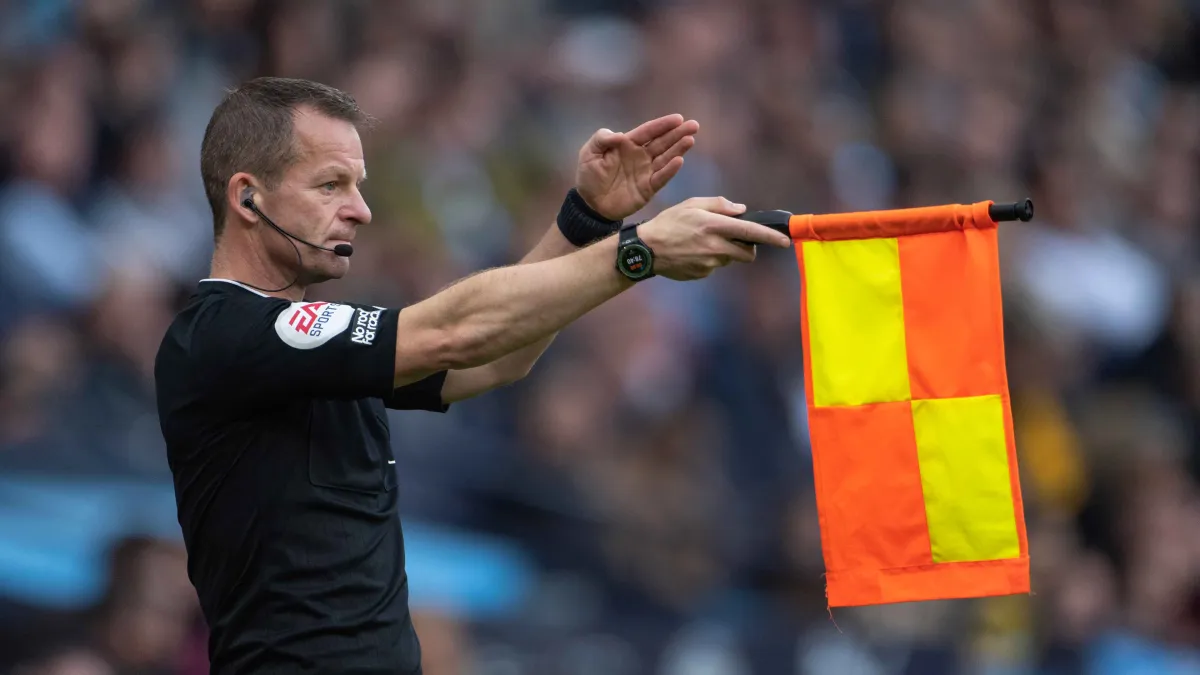
FIFA Targets End of Delayed Offside Flags at 2026 World Cup


Follow Nukunya
Get the latest breaking news and updates from Nukunya.
FIFA will introduce enhanced semi-automated offside technology at the 2026 World Cup, allowing assistant referees to receive near real-time alerts when players are clearly offside. The governing body says the changes should speed up decisions, improve player safety and reduce one of the most criticised features of the VAR era.
ZURICH, Switzerland — FIFA has unveiled new offside technology for the 2026 World Cup that could dramatically reduce delayed flags, one of the most criticised features of the VAR era.
The governing body says the enhanced system will help assistant referees identify clear offside situations more quickly, reducing unnecessary passages of play and potentially lowering the risk of injuries that can occur when attacks continue despite an obvious infringement. FIFA referees chief Pierluigi Collina has described the reforms as part of a wider effort to improve the speed, accuracy and credibility of officiating at football’s biggest tournament.
The technology will be used at the expanded 2026 World Cup, which will feature 48 teams and 104 matches across the United States, Canada and Mexico, making it the largest tournament in FIFA’s history. For supporters, players and coaches, the changes could mean fewer frustrating delays and fewer situations where attacks continue only to be ruled offside moments later.
Why FIFA is changing the system
Since the introduction of VAR, assistant referees have often been instructed to delay raising their flags during close attacking moves. The approach was designed to prevent legitimate goalscoring opportunities from being incorrectly stopped before a video review could take place.
While the policy reduced the risk of incorrect decisions, it also created a new source of frustration. Players frequently continued attacking, defending and sprinting through phases of play that were ultimately rendered meaningless by an offside decision. FIFA believes the new technology can preserve the benefits of VAR while reducing those drawbacks.
The issue attracted renewed attention in 2025 when Nottingham Forest striker Taiwo Awoniyi suffered a serious injury after colliding with a goalpost during a phase of play in which an offside flag was delayed. FIFA officials have pointed to player welfare as one factor behind efforts to speed up clear-cut decisions.
How the new offside system works
The upgraded semi-automated offside technology combines advanced tracking cameras, artificial intelligence and sensor data from the ball to monitor player positions in real time.
Under the new system, assistant referees will receive an audio alert when a player is more than 10 centimetres offside. Previous versions of the technology only alerted officials when players were significantly further beyond the defensive line.
The alert is intended to help officials identify obvious infringements more quickly and stop play earlier where appropriate. However, FIFA has stressed that referees will retain final authority. Match officials can choose not to stop play if they suspect a technical malfunction or believe further assessment is required.
The technology will also remain limited to positional offside decisions. Subjective elements of the law, such as whether a player interfered with an opponent or gained an advantage without touching the ball, will continue to require human judgement.
Part of a broader World Cup officiating overhaul
The offside technology forms part of the most significant package of officiating reforms introduced ahead of a World Cup in recent years.
FIFA has confirmed that players will undergo digital scanning to create life-like AI-enabled 3D avatars, improving the accuracy of offside visualisations shown to match officials, broadcasters and supporters. The process will create digital profiles for all 1,248 players expected to take part in the tournament.
The governing body has also approved new technology capable of determining whether the ball left the field of play before a goal was scored.
Additional “line-of-sight” tools will help VAR officials assess whether goalkeepers were obstructed by players standing in offside positions. FIFA says the new system should make those decisions quicker, clearer and more consistent.
New rules aimed at reducing time-wasting
Technology will not be the only change at the tournament. Collina has confirmed that goalkeeper tactical timeouts will be banned after concerns that teams were increasingly using injury stoppages to receive coaching instructions or disrupt opponents’ momentum.
Several additional rule changes will also be implemented, including countdown procedures for throw-ins and goal kicks, stricter enforcement measures and expanded support tools for VAR officials.
Together, the reforms reflect FIFA’s broader effort to improve match flow and reduce avoidable interruptions.

What it means for football
For FIFA, the challenge is balancing technological innovation with the human element that remains central to football. Supporters are likely to welcome efforts to reduce lengthy delays and eliminate situations where attacks continue despite an obvious offside position.
Critics, however, may question whether increased reliance on automated systems risks creating fresh controversy around marginal decisions, even if overall consistency improves. FIFA insists referees will remain at the heart of decision-making, with technology acting as a support tool rather than a replacement.
The 2026 World Cup will provide the first major test of whether football can become faster, safer and more accurate without losing the judgement and authority that remain essential to the game.
Reporting by Edem Hodasi, with additional verification and editorial analysis by Nukunya News Desk. Reporting based on FIFA announcements and verified coverage reviewed from BBC Sport alongside official comments from FIFA refereeing officials.
Related posts:
 World Cup 2026: Players Who Cover Mouths in Confrontations Face Red Cards Under New FIFA Rule
  Harry Maguire omitted from England World Cup squad as Ivan Toney recalled
  Harry Kane backs PSG as slight favourites in Arsenal Champions League final
  Tottenham’s Mohammed Kudus ruled out of 2026 World Cup with injury
  Real Madrid Turn to Jose Mourinho in Bid to End Trophy Drought