GFAF, Ghana Embassy Seek Diaspora Support for Black Stars

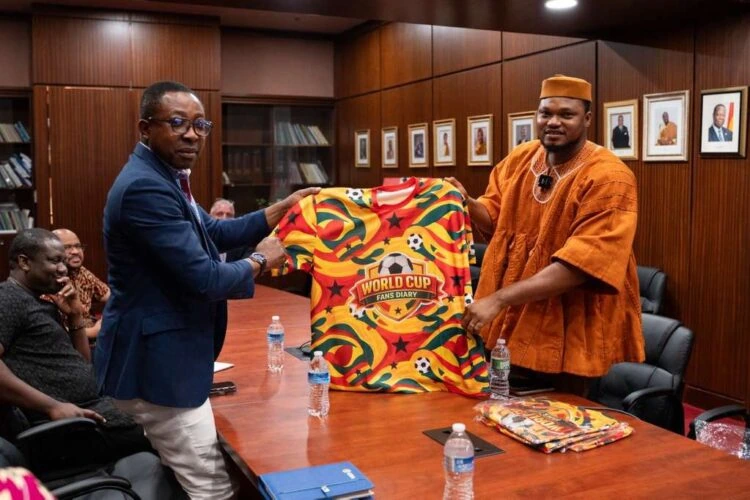

The Ghana Federation of American Football and Ghana’s embassy in Washington, D.C., have launched a partnership aimed at strengthening diaspora engagement ahead of the Black Stars’ 2026 FIFA World Cup campaign while exploring youth development and sporting exchange opportunities. No specific programmes or funding commitments have yet been announced.
WASHINGTON, D.C. — The Ghana Federation of American Football (GFAF) and Ghana’s embassy in Washington have launched a partnership aimed at strengthening diaspora engagement ahead of the Black Stars‘ 2026 FIFA World Cup campaign while exploring broader opportunities in sports development, cultural exchange and youth empowerment.
The initiative reflects growing efforts to involve Ghanaian communities abroad as Ghana prepares for a World Cup that will be hosted across the United States, Canada and Mexico. However, officials have not yet announced specific programmes, budgets, implementation plans or timelines arising from the discussions.
Why Is an American Football Federation Involved?
One of the immediate questions raised by the announcement is why an American football federation is participating in an initiative linked to the Black Stars. GFAF governs American football rather than association football. However, officials say the organisation intends to use its networks within Ghanaian communities across the United States to support wider sporting, cultural and diaspora initiatives connected to Ghana’s international sporting ambitions.
The partnership therefore focuses less on football operations and more on community engagement, athlete development and strengthening ties between Ghanaian institutions and diaspora communities.
Meeting in Washington
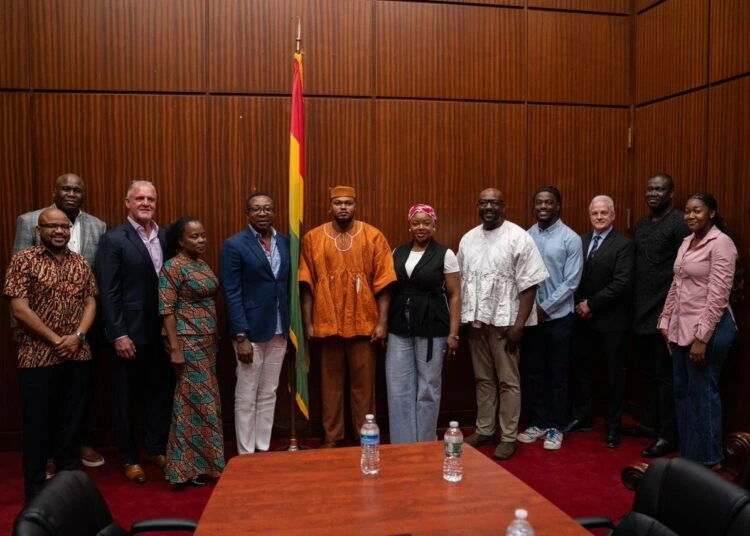
The GFAF delegation was led by Secretary-General Mohammed Osman Nkosi and Senior Coaching Advisor Chadwick Louisville, who also serves as head coach at West Potomac High School in Alexandria, Virginia. The delegation met Bernard Quantson, Head of the Consular Section at Ghana’s embassy, alongside members of the diplomatic mission.
According to officials, discussions centred on ways sport could be used as a platform for youth development, cultural exchange and international cooperation. Both sides also explored how diaspora communities could contribute to broader national development objectives through sport.
Looking Beyond the World Cup
Speaking during the engagement, Mr Nkosi highlighted the growing international profile of American football and pointed to the sport’s inclusion in the Los Angeles 2028 Olympic Games as an opportunity for athlete development and international collaboration.
Discussions also covered coaching clinics, talent development pathways, educational exchange programmes and initiatives aimed at expanding opportunities for young athletes in both Ghana and the United States. Officials said the partnership seeks to use sport as a tool for youth empowerment, sustainable development and stronger people-to-people connections between Ghana and the United States.
Why the Diaspora Matters
The significance of the initiative lies largely in the location of the next World Cup. The 2026 tournament will be staged primarily in North America, home to one of the largest Ghanaian diaspora populations outside Africa.
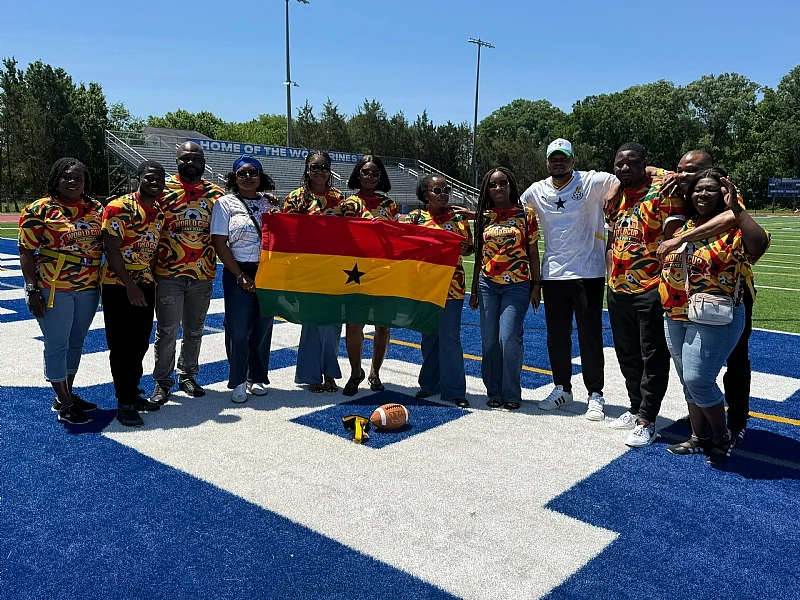
Ghanaian communities in cities including Washington, New York, New Jersey, Maryland, Virginia, Toronto and other North American centres have historically provided strong support for the Black Stars during international tournaments.
That support often extends beyond stadium attendance to community events, fundraising efforts, cultural activities and the promotion of Ghana’s image abroad. As a result, diaspora engagement is increasingly viewed as an important component of Ghana’s wider World Cup environment.
Sports Diplomacy and National Development
The discussions also highlight a growing trend in which sporting organisations and diplomatic institutions work together to advance broader national objectives. In recent years, countries have increasingly used sport as a vehicle for cultural diplomacy, international engagement and youth development.
The Washington meeting reflects that approach, with officials seeking opportunities that extend beyond competition itself. The partnership is also part of a broader effort to strengthen Ghana-US relations through educational, cultural and sporting collaboration.
What It Means for Ghana
The meeting in Washington does not automatically translate into stronger support for the Black Stars. Nor does it guarantee new opportunities for young athletes. Those outcomes will depend on whether the discussions lead to practical programmes, sustained collaboration and measurable results.
At this stage, the announcement is best understood as the beginning of a conversation rather than the completion of a project. Nevertheless, it reflects growing recognition that Ghana’s sporting ambitions increasingly depend on partnerships that extend beyond national borders.
With the 2026 FIFA World Cup set to take place across North America, the ability to engage Ghanaian communities abroad could become an important part of the Black Stars’ wider tournament environment. That is the opportunity now facing both GFAF and Ghana’s diplomatic mission in Washington.
Related posts:
 Ghana Challenges Canada’s Thomas Partey Visa Decision as World Cup Row Deepens
  Ghana Embassy in US Yet to Receive World Cup Tickets for Diaspora Distribution
  Ghana Edge Closer to World Cup Knockouts After Holding England to Draw
  Carlos Queiroz’s Farewell Exposes the Challenge Facing Ghana Football
  Ipswich Town Sign Ghana Star Abdul Fatawu in £20m Permanent Deal Ahead of Premier League Return