IMANI Africa Suggests Ways to Address Cocaine Issues


IMANI Africa Suggests Ways to Address Cocaine Issues, Says Ghana Is “Undoubtedly” a Transit Point
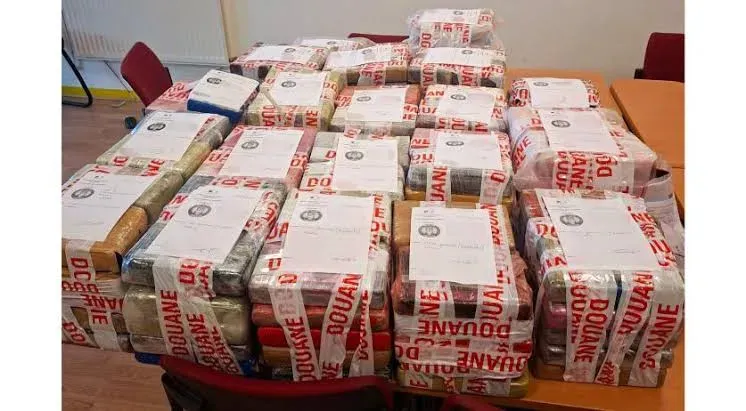
Policy think tank IMANI Africa has weighed in on Ghana’s recent cocaine scandal, offering a set of practical suggestions on how the country can tighten its response. The commentary comes on the back of a high-profile seizure of cocaine shipped from Ghana’s shores.
In a statement titled “The Last Word on Cocaine Politics Wise Words from an IMANI Sage,” the think tank pushed back against what it sees as a narrow, overly political framing of the issue. According to IMANI, the real culprits behind narcotics busts are international organised criminals operating in a way comparable to terrorism networks and the conversation too often skips over a crucial question: how the drugs get into the country in the first place, before they ever leave.
IMANI was blunt about Ghana’s role in the broader picture. “Undoubtedly, Ghana is a transit point. And transit means a corridor; in and out. The ‘in’ is equally as important as the ‘out’,” the statement said.
The think tank argued these are systemic failures, not political ones, with international organised crime as the true beneficiary. We need to look at the systems more than the politics, it said, adding that political administrations come and go, but the underlying criminal network persists regardless describing it as a system stretching from the seabed to space.
Interestingly, IMANI pushed back on the idea that a large seizure signals Ghana becoming a cocaine coast, pointing out that the United States remains the world’s largest cocaine consumer. In their view, aggressive seizures are actually part of the fight that keeps Ghana’s coast clear, not evidence of a growing problem.
IMANI also proposed rethinking how seizures are valued. Rather than focusing on market price which they called something of an illusion the think tank suggested measuring impact by weight and quantity instead, since cocaine effectively carries zero value once it’s intercepted and never reaches a buyer.
On the question of how to actually keep cocaine out, IMANI’s core message was to make life harder for the criminal networks operating the supply chain. They argued that every cocaine seizure anywhere in the world, not just in Ghana, carries lessons worth applying locally, since these networks tend to be interconnected globally.
Using an analogy, IMANI compared the effort to sealing holes in Swiss cheese gradually plugging the gaps a network exploits until fewer and fewer remain open. Their suggestion was to focus attention inward, examining exactly how the network manages to keep functioning despite enforcement efforts.
The statement also pointed to a pattern worth investigating cocaine reportedly being stored within high-walled properties in affluent communities. IMANI recommended that intelligence agencies start profiling these properties more closely, suggesting that something as simple as Ghana Card registration data could offer an early signal worth following up on.
IMANI took particular aim at how security personnel operate at Ghana’s ports and airports. They argued that NACOC officers shouldn’t be visibly patrolling in uniform, since the organisation’s core function is intelligence work, not visible foot patrol. NACOC is intelligence, not foot soldiers, the statement said, calling for a shift from uniformed presence toward undercover operations.
They also flagged a concerning imbalance at these facilities more non-flying individuals present than actual travellers, many there to “facilitate” logistics and traffic. IMANI noted there appear to be more off-duty security personnel milling around ports than those actually on active duty.
To address this, the think tank recommended a clock-in system for all service personnel, whether on or off duty, with that system tied directly back to their respective headquarters. Their reasoning: off-duty personnel scattered around warehouses represent a real vulnerability, given how organised these criminal networks tend to be.
IMANI was direct in warning against treating this as primarily a political party issue. They argued that fixating on partisan blame ultimately benefits organised criminals, comparing the dynamic to wearing a glove that matches the colour of the hand.
Looking ahead, the think tank cautioned that similar issues are likely to resurface as Ghana approaches the 2028 elections, pointing to the November-December period as particularly vulnerable a stretch marked by holidays, distractions, and typically lower security posture, especially during transitions between outgoing and incoming governments.
IMANI closed its statement with a clear disclaimer: this isn’t about any particular political party. It has nothing to do with NPP, NDC, UP, IMANI, etc. It is organised crime, the statement read.