Sarkodie’s Rapperholic 2026 draws thousands to Kumasi as attendance claims raise questions.
Sarkodie returned to Kumasi for Rapperholic 2026, featuring major Ghanaian performers and a Daddy Lumba tribute. Nukunya examines disputed crowd estimates and the event's wider significance.



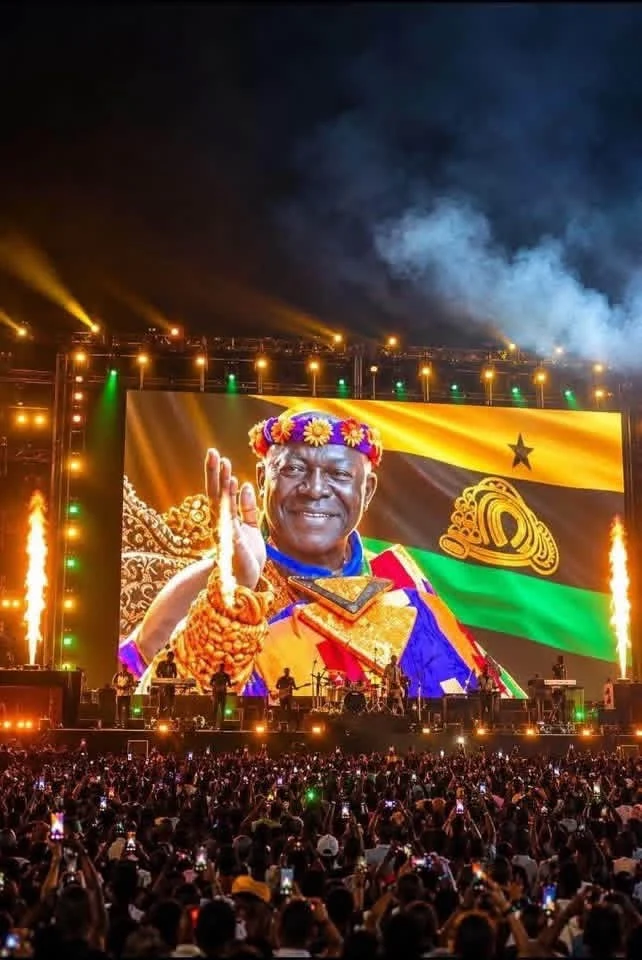
Sarkodie’s Rapperholic concert brought thousands of music fans to Kumasi’s Baba Yara Sports Stadium on 24 October, featuring performances by leading Ghanaian musicians and a tribute to Daddy Lumba. Some media outlets have reported attendance exceeding 80,000, but independently verified crowd figures and ticket sales have not been made available.
KUMASI — Ghanaian rapper Sarkodie has staged his second consecutive Rapperholic concert in Kumasi, attracting thousands of fans to the Baba Yara Sports Stadium for an overnight celebration of Ghanaian music.
The event took place on Saturday, 24 October 2026, continuing into the early hours of Sunday. The concert featured performances by Sarkodie and a range of Ghanaian artistes, with music, cultural presentations and a tribute to the late highlife musician Daddy Lumba and there was a large audience at the stadium.
However, the reported crowd size has also raised questions about how attendance at major entertainment events is measured and verified.
What happened at Rapperholic 2026?
The concert marked the second consecutive year Sarkodie had taken Rapperholic to the Ashanti Regional capital. The 2025 event, known as Rapperholic: The Homecoming, established a Kumasi edition of a concert brand previously associated primarily with Accra.
This year’s event again used Baba Yara Sports Stadium as its venue; supporting performers included Lasmid, Mr Drew, Sista Afia and other Ghanaian musicians.
Additional reports named DopeNation, Oseikrom Sikani, King Promise and other performers.
The line-ups published by different outlets are not identical, so Nukunya has not treated any single list as a complete, independently verified record of everyone who appeared on stage.
Reports also described Sarkodie’s entrance as incorporating traditional music and imagery associated with the Asantehene, Otumfuo Osei Tutu II. The cultural presentation was among the features distinguishing the Kumasi concert from a conventional music performance.
Sarkodie pays tribute to Daddy Lumba
One of the reported highlights was a musical tribute to the late Ghanaian highlife performer Daddy Lumba. Sarkodie dedicated part of his performance to the musician and incorporated his songs into the programme.
The tribute connected contemporary Ghanaian rap with an earlier generation of popular music.
It also provided an opportunity for audiences to celebrate an artist whose recordings remain influential in Ghana's music culture.
The reports describe a concert combining hip-hop, highlife and other contemporary Ghanaian music styles.
Did more than 80,000 people attend?
The number of people at the concert is one of the most significant claims to emerge from the event. There were reports that more than 80,000 fans attended, while others also referred to reports of attendance exceeding that figure. The stadium was filled to capacity but did not provide an independently audited attendance count.
Nukunya has not obtained an official event attendance report, ticket-scanning records or a verified count from the venue operator.
The figure of more than 80,000 should therefore be treated as a reported estimate, not an established attendance total.
Rapperholic 2026: What is known?
| Indicator | Information available |
|---|---|
| Event | Rapperholic 2026, Kumasi edition |
| Date | Saturday, 24 October 2026 |
| Venue | Baba Yara Sports Stadium, Kumasi |
| Headline performer | Sarkodie |
| Kumasi editions | Second consecutive year |
| Reported attendance | More than 80,000 in some media reports |
| Independently audited attendance | Not established |
| Tickets sold | Not independently verified |
| Gross ticket revenue | Not established |
| Event operating costs | Not established |
Sources: 3News, AdomOnline, AtinkaOnline and Daily Graphic. The attendance estimate has not been independently verified by Nukunya.
Why the attendance figure needs verification
Stadium concerts can use different configurations from football matches.
Organisers may place a stage on part of the playing surface, restrict access to certain stands or allow spectators into approved field areas.
These arrangements affect the number of people who can be admitted safely.
A football stadium's published seating capacity is therefore not automatically the same as its approved concert capacity.
An accurate attendance assessment would need to establish the event-specific permitted capacity, number of valid admissions and method used to count attendees.
Photographs and videos can demonstrate that a venue attracted a substantial crowd, but they cannot reliably establish the total number of people admitted.
Similarly, reports that a concert was sold out require clarification about which ticket categories or sections were available for sale.
Without those records, it is not possible to verify whether attendance exceeded 80,000.
Interactive: what would verify attendance?
Select an evidence source to understand its value and limitations. This explorer does not verify the reported crowd figure.
Approved concert capacity
The event-specific capacity approved for the concert configuration, including restricted areas, stage placement and authorised field access.
Why did some early images show empty sections?
The concert also attracted discussion about images circulated on social media showing apparently empty sections of the stadium.
In a commentary published by Citi Newsroom on 25 October, writer J. B. Allotey described how early photographs and videos led some observers to question the event's turnout.
He subsequently observed later footage showing substantially fuller sections of the stadium.
The commentary made clear that those observations were not an official attendance audit.
This distinction matters because photographs taken at different times may produce very different impressions of an event.
Early images cannot establish the final crowd size, while later footage cannot establish the number of paid admissions.
Both should be interpreted in their proper context.
What does Rapperholic mean for Kumasi's entertainment industry?
The return of Rapperholic to Kumasi suggests that organisers see a market for major concerts outside Accra.
Hosting a large entertainment event can create commercial opportunities for performers, technical crews, event organisers, vendors, transport operators and hospitality businesses.
However, the scale of those benefits depends on measurable spending and the extent to which revenue remains within the local economy.
For example, visitors travelling from outside Kumasi may spend money on accommodation, meals and transport.
Local vendors may also benefit from increased demand around the event.
But these possibilities should not be confused with verified economic outcomes.
Nukunya has not obtained data showing how many attendees travelled from outside the city, how much they spent or how much additional revenue local businesses generated.
Consequently, no reliable figure can yet be assigned to the concert's contribution to Kumasi's economy.
Can Rapperholic become a sustainable regional event?
A successful concert brand requires more than a large audience on one night.
Organisers must balance ticket revenue, sponsorship, production costs, performer fees, venue arrangements, security and other expenditure.
The 2026 Kumasi edition reportedly received support from MTN Mobile Money under the MoMoFest x Rapperholic branding.
Sponsorship may provide an additional source of financing, although the value and commercial terms of that support have not been publicly established in the reporting reviewed.
Two consecutive Kumasi editions demonstrate continued interest in staging the event in the city.
They do not, by themselves, establish whether the concert is profitable.
That would require financial information that organisers have not made available to Nukunya.
Interactive: hypothetical ticket-revenue calculator
Explore how tickets sold and average ticket prices affect gross receipts. Default inputs are purely illustrative and are not Rapperholic sales figures.
10,000 tickets × GH¢100 = GH¢1,000,000
Gross ticket receipts exclude any separate sponsorship income and are not net profit. Venue costs, taxes, production expenses, fees and other deductions are not calculated.
What should organisers disclose?
For major events attracting significant public attention, a limited set of verified figures could improve transparency and industry understanding.
These include the approved concert capacity, tickets issued, admissions recorded, complimentary entries, gross ticket revenue and attendance-related safety information.
Such disclosures would allow journalists and industry observers to distinguish between promotional estimates and measured performance.
They would also provide a stronger evidence base for assessing whether regional concerts are becoming commercially sustainable.
Interactive: event-performance information explorer
Approved event capacity
The permitted maximum attendance for the specific concert layout, supported by relevant venue and safety documentation.
These are proposed disclosure measures, not verified performance results.
A major event, but the numbers matter
Rapperholic 2026 demonstrated that a major Ghanaian music event can attract substantial public attention in Kumasi for a second consecutive year.
The performances, cultural presentation and tribute to Daddy Lumba gave the concert significance beyond its headline act.
But the strongest evidence of the event's long-term commercial success would come from reliable attendance and financial records.
The reported figure of more than 80,000 people may attract attention, but it should not be treated as verified simply because several outlets repeat it.
Nor should a large crowd automatically be equated with profitability or a quantified economic benefit.
Rapperholic's return to Kumasi is an important development for Ghana's live-music industry. Its lasting significance will be clearer when audience demand, event safety, financial sustainability and local economic effects can be assessed using reliable data.
Related posts:
 Emotional Reasons Odo Broni’s Daddy Lumba Tattoo Has Touched Ghanaians
 Kwesi Arthur Postpones North American Tour: 7 Things to Know About His Health Update
 Lasmid Meets Okomfour Kwadee After Revealing ‘Biggest Nathaniel’ Was Inspired by Him
 MUSIGA warns musicians against glorifying online fraud after Shatta Wale’s ShattaFest remarks.
 Nana Ama McBrown Says Self-Worth Should Not Depend on Public Approval