Trump Indictment: Full Details of 34 Felony Counts
Former President Donald Trump faces 34 criminal counts following the unsealing of the Trump indictment and statement of facts related to hush money payments.


Inside the Trump Indictment: 34 Felony Counts
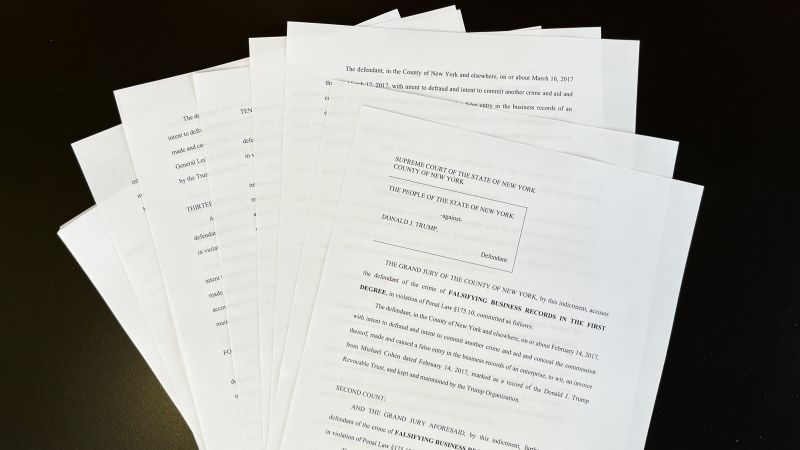
On April 4, 2023, the legal landscape of the United States shifted as former President Donald Trump was formally charged with 34 criminal counts of falsifying business records in the first degree. The Trump indictment, unsealed by the Manhattan District Attorney’s office, represents the first time a former U.S. president has faced criminal charges. The prosecution alleges that these records were manipulated to conceal information that could have been damaging to his 2016 presidential campaign, specifically focusing on a hush money payment scheme.
The charges center on a series of checks, invoices, and ledger entries recorded throughout 2017. Prosecutors contend that these documents were not merely administrative errors but were part of a coordinated effort to disguise payments made to suppress allegations of extramarital affairs. By categorizing these payments as “legal expenses” rather than campaign-related costs or reimbursements for a third party, the District Attorney argues that the defendant violated New York state law with the intent to commit or conceal another crime.
The 34-Count Indictment Explained
The indictment specifically focuses on the falsification of business records in the first degree, which is a Class E felony in New York. The prosecution alleges these acts were committed with the intent to conceal other crimes.
The indictment lists 34 separate instances of “Falsifying Business Records in the First Degree,” which is classified as a Class E felony in New York. While the act of falsifying records can sometimes be treated as a misdemeanor, the New York arraignment criminal charges elevated these to felonies because the prosecution alleges they were done with the “intent to defraud and intent to commit another crime and aid and conceal the commission thereof.” The counts are broken down as follows:
- Invoices: 11 counts related to false invoices submitted by Michael Cohen, Trump’s former personal attorney, to the Trump Organization.
- Ledger Entries: 12 counts involving false entries in the Detail General Ledger for the Donald J. Trump Revocable Trust or other related business entities.
- Checks and Vouchers: 11 counts pertaining to checks signed by Donald Trump or his associates, along with the accompanying stubs and vouchers, which were processed throughout 2017.
Analysis of the Statement of Facts
Accompanying the indictment, the prosecution released a detailed statement of facts that outlines the alleged “catch and kill” scheme. According to the document, the effort began in August 2015, when Trump met with his then-lawyer Michael Cohen and the CEO of American Media Inc. (AMI). The prosecution alleges that the parties agreed to identify and suppress negative stories that could jeopardize the 2016 election prospects. This included a $130,000 hush money payment made to an adult film actress to ensure her silence regarding an alleged encounter.
The statement of facts further details how the reimbursement for these payments was structured. Prosecutors argue that the Trump Organization reimbursed Michael Cohen for the $130,000, along with additional funds to cover tax liabilities and a bonus, totaling $420,000. These payments were then allegedly disguised in the company’s internal books as legal fees paid pursuant to a retainer agreement—an agreement that the prosecution asserts never actually existed. This mischaracterization is the core of the Donald Trump legal cases currently proceeding in Manhattan.
Trump Arraignment and Courtroom Atmosphere

The scene at the Manhattan Criminal Court was one of unprecedented security and media scrutiny. During the historic NYC arraignment details, observers noted the former president’s somber and defiant demeanor. Donald Trump surrendered to New York authorities in the early afternoon, undergoing the standard processing for a criminal defendant before entering the courtroom to face Judge Juan Merchan. He pleaded “not guilty” to all 34 counts, maintaining that the prosecution was politically motivated.
Inside the courtroom, the atmosphere was described as tense. The former president sat flanked by his legal team, speaking only briefly to enter his plea and acknowledge his rights. Outside the building, the streets were lined with both supporters and protesters, highlighting the deep political divisions surrounding the case. Despite the gravity of the falsifying business records charges, the proceedings were handled with the procedural rigor typical of a New York felony arraignment, though the global spotlight made it anything but typical.
Global Political Context
The Trump indictment did not occur in a vacuum; it unfolded amidst a period of significant international instability and shifting alliances. As the New York court proceedings dominated Western media, other critical stories continued to evolve. For instance, the Russia-Ukraine news update regarding a suspect detained in a high-profile bombing and the continued expansion of NATO remained at the forefront of the global security agenda. The intersection of a former U.S. president facing felony charges while the international community navigated a major European conflict created a complex backdrop for world leaders.
International observers have noted that the legal proceedings against a former head of state are being watched closely by both democratic and autocratic nations. For many, the case serves as a test of the American judicial system’s ability to hold high-ranking officials accountable, regardless of their political stature. Simultaneously, the distractions of domestic legal battles in the United States are often viewed by foreign policy experts as potential windows of opportunity for geopolitical adversaries.
Next Steps in the Legal Process
Following the arraignment, the case enters a lengthy period of discovery and motion practice. The defense team is expected to file numerous motions to dismiss the charges, challenging the legal theory that elevates the misdemeanors to felonies. There will also likely be disputes over the admissibility of evidence and the testimony of key witnesses, including Michael Cohen and former AMI executives. The prosecution, meanwhile, must provide the defense with all evidence gathered during the grand jury investigation.
The timeline for a trial remains uncertain, though legal experts suggest it could be many months, if not over a year, before the case reaches a jury. As these Donald Trump legal cases move forward, they will undoubtedly coincide with the 2024 election cycle, ensuring that the legal and political ramifications of the April 4 arraignment continue to be felt for the foreseeable future. The unsealed documents have provided a roadmap for the prosecution, but the burden remains on the District Attorney to prove “intent to defraud” beyond a reasonable doubt in a court of law.
Related posts:
 Trump Indictment News: Historic NYC Arraignment Details
 Iran and Israel Halt Attacks After Trump Intervention, but Ceasefire Remains Fragile
 Former Trump adviser John Bolton pleads guilty in classified documents case
 Anti-LGBTQ Bill to Reach Mahama This Month
 Ghanaian Healthcare Policy: Nursing Education Needs Labs