7 Dead, 100+ Injured in Major Egypt Train Collision
At least 7 dead and 100+ injured in a major Egypt train collision south of Cairo. Carriages derailed in Giza province as authorities launch a negligence probe.

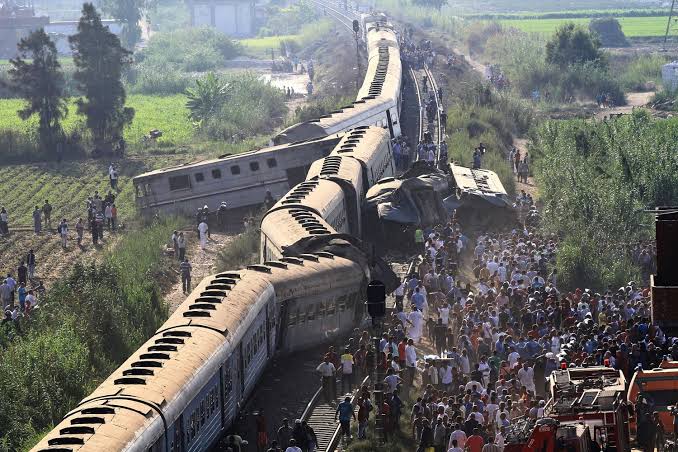

Major Egypt Train Collision South of Cairo
A devastating Egypt train collision has claimed the lives of at least seven people and left more than 100 others injured in Giza province. The disaster, which occurred on a Sunday, involved two passenger trains traveling south of the Egyptian capital. The force of the impact caused significant infrastructure damage and sent multiple carriages careening off the tracks, marking another somber chapter in the history of the region’s railway safety challenges.
The incident took place in the Al-Ayyat district, a region approximately 32 miles south of Cairo near the Nile River. Local authorities and the Egyptian railway authority derailment reports indicate that the collision resulted in several carriages sliding down an embankment, trapping passengers within the twisted metal of the wreckage. Images from the scene depicted a harrowing rescue effort as citizens and first responders scrambled over overturned cars, some of which had been split in two by the kinetic energy of the crash.
Sequence of the Al-Ayyat Train Collision
“I have ordered state authorities to investigate the circumstances of the accident and hold accountable anyone found to have been negligent.”
— President Abdul Fattah al-Sisi
The Al-Ayyat train accident unfolded when a passenger train traveling from Giza toward Fayoum struck the rear of a stationary service. The stationary train was reportedly heading south from Cairo toward Aswan when it was struck. The collision occurred specifically between the Kafr Ammar and Al-Raqqa stations, a stretch of track that has seen similar tragedies in previous decades.
According to the railway authority, the impact was severe enough to cause an immediate derailment. The rear-end collision forced the carriages of the moving train to leave the rails, with several tumbling down the adjacent embankment. Initial reports suggest that the driver of one of the trains was among those killed instantly, complicating the immediate technical assessment of why the two services were occupied on the same section of track simultaneously.
Casualties and Emergency Response

The confirmed death toll currently stands at seven, though the public prosecutor’s office has warned that this number could rise as more victims are extricated from the wreckage. Over 100 individuals sustained various injuries, ranging from fractures and concussions to critical trauma. The scale of the medical emergency mirrors the gravity seen in other tragic accidents, such as when a KNUST Student Dies under different but equally sudden circumstances, highlighting the fragility of life during transport and recreational incidents.
Emergency response teams were dispatched immediately from Giza and Cairo, supported by dozens of ambulances. Local hospitals in the Al-Ayyat district and surrounding Giza province were placed on high alert to receive the influx of wounded passengers. Bystanders and uninjured survivors played a crucial role in the initial minutes following the crash, using handheld tools and bare hands to search for those trapped inside the mangled passenger cars before heavy lifting equipment could reach the embankment.
Accountability and Government Response
The Egyptian public prosecutor’s office has warned that the death toll of seven may rise as emergency services continue their work and the condition of the 100+ injured is assessed.
In the wake of the tragedy, President al-Sisi investigation orders were issued to all relevant state authorities. The President emphasized that the government would hold accountable anyone found to have been negligent in their duties. This call for transparency and reform follows a pattern of high-level scrutiny regarding industrial and transport safety, reminiscent of the rigorous oversight seen during Safety Raids at TTU where institutional protocols were put under the microscope.
The public prosecutor has launched a full-scale inquiry into the technical failures that led to the moving train striking the stationary one. Investigators are focusing on signaling systems, the conduct of the railway staff, and the maintenance records of the rolling stock involved. The Egyptian railway authority derailment findings will be critical in determining whether the crash was the result of human error or a systemic failure of the aging infrastructure that services millions of commuters daily.
Comparison of Geographic Reporting
Reporting on the incident has varied slightly in terms of geographic specificity between local and international outlets. While all sources agree on the severity of the Egypt train collision, the precision of the location details differs as shown below:
| News Source | Location Specificity |
|---|---|
| GBC (Ghana Broadcasting Corporation) | Identifies the specific Al-Ayyat district and the stations of Kafr Ammar and Al-Raqqa. |
| BBC (British Broadcasting Corporation) | Provides a broader description, placing the accident generally near the city of Giza. |
Egypt Train Collision Context
The Al-Ayyat district has historically been the site of several major railway disasters in Egypt, leading to ongoing public concern regarding the safety of the network. This latest Giza province train crash serves as a stark reminder of the urgent need for modernization within the rail sector. As the investigation continues, the focus remains on supporting the families of the deceased and ensuring the 100+ injured receive necessary medical care while the nation awaits answers on the cause of this catastrophic failure.
Related posts:
 Tundu Lissu Found Guilty of Incitement in Tanzania
 Iran and Israel Halt Attacks After Trump Intervention, but Ceasefire Remains Fragile
 African Trade and Diaspora Economy: Trends and Challenges
 Paul Mackenzie Sentencing: Kenyan Cult Leader Faces Court
 Victor Smith Cautions Ghanaians on US Safety Risks