Ebola Death Toll in DR Congo Exceeds 5,000 as Cases Rise
The Ebola death toll in the DR Congo has passed 5,000 as total cases exceed 11,000. Learn about the deadliest epidemic on record and the ongoing containment.



Ebola Death Toll Passes 5,000 in DR Congo
“The current crisis marks a stark escalation in what is now the country’s deadliest epidemic on record.”
— Health Ministry of the Democratic Republic of the Congo
The Democratic Republic of the Congo (DR Congo) is facing a health emergency of unprecedented proportions as the Ebola death toll has officially surpassed the 5,000 mark. According to the latest Health Ministry figures released in November 2026, the country has recorded a total of 11,042 Ebola virus cases. This rapid surge in both infections and fatalities underscores the severity of the African health crisis 2026, which has left medical teams and international observers struggling to keep pace with the pathogen’s spread.
The DR Congo Ebola outbreak has reached a critical tipping point, with 5,387 reported fatalities. This data indicates that the virus is claiming the lives of nearly half of those it infects, maintaining a fatality rate of approximately 48.7%. Despite international aid and local intervention strategies, the daily reports from the Health Ministry suggest that the epidemic is not yet under control, as new cases continue to emerge in regions previously thought to be stabilized.
Deadliest Epidemic on Record in DR Congo
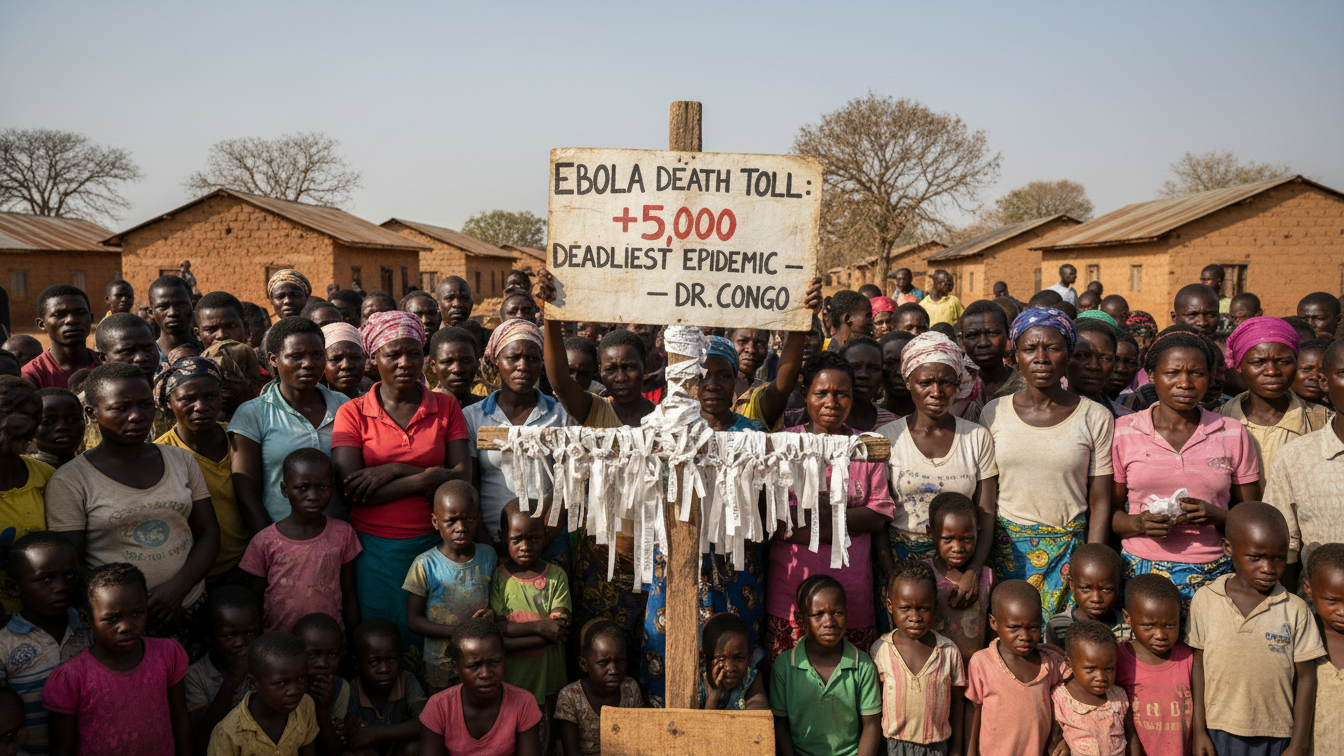
While the DR Congo has battled multiple Ebola outbreaks since the virus was first identified in 1976, the current situation has been identified as the deadliest epidemic record in the nation’s history. The scale of the current crisis is now only second to the historic 2014–2016 West African epidemic, which saw over 28,000 cases. The intensity of this 2026 surge has prompted a renewed health systems warning regarding the ability of fragile infrastructures to withstand high-consequence infectious diseases.
Comparatively, previous outbreaks in the region were often contained within smaller geographic clusters or fewer total infections. The current 11,000-case threshold represents a failure of early containment, allowing the virus to move through densely populated areas and remote communities alike. The sheer volume of Ebola virus cases has overwhelmed local clinics, making this outbreak a significant outlier in the history of viral hemorrhagic fevers in Central Africa.
Chronology of the Mid-May Outbreak
The escalation of the current crisis followed a specific timeline of detection and transmission. The following points outline the progression of the epidemic through late 2026:
- Mid-May 2026: The Congolese Health Ministry officially declares a new Ebola outbreak after a cluster of unexplained deaths and laboratory-confirmed cases in the eastern provinces.
- June – July 2026: Initial containment efforts are launched, but the virus begins to spread into neighboring districts, fueled by high mobility and community transmission.
- August 2026: Health authorities report a significant spike in undetected infections, suggesting the virus had been circulating longer than initially suspected.
- September – October 2026: The total number of cases doubles within two months, as medical facilities reach maximum capacity.
- November 2026: Official figures confirm the Ebola death toll has exceeded 5,000, with total infections surpassing 11,000.
Challenges in Controlling the Outbreak
Delayed detection and a high volume of undetected infections allowed the virus to gain a foothold before official containment measures were fully operational. Health authorities are now working to identify chains of transmission that remained hidden in the early stages of the crisis.
Several critical factors have hindered the ability of health workers to curb the DR Congo Ebola outbreak. Chief among these is the issue of delayed detection. Epidemiological investigations suggest that the virus gained a significant foothold in various communities prior to the official declaration in May. Because early symptoms of Ebola—such as fever and fatigue—mimic other common regional illnesses like malaria, many patients did not seek specialized care until the virus had already spread to their families and neighbors.
Furthermore, the presence of undetected infections has created “silent” transmission chains. In some instances, mobile populations moved across provincial borders before showing symptoms, making contact tracing an logistical nightmare for the Health Ministry. Security challenges in certain regions have also restricted the movement of vaccination teams and burial squads, both of which are essential for breaking the chain of infection. These compounded factors have transformed a manageable health event into a prolonged African health crisis 2026.
Health Infrastructure and Future Outlook
The strain on the Congolese health infrastructure has led to urgent calls for international support and systemic reform. Regional leaders have looked toward initiatives like the Ghana Medical Trust Fund (GMTF) as models for sustainable health financing that could potentially bolster response capabilities in neighboring nations. Currently, the DR Congo relies heavily on international NGOs and the World Health Organization to supply the necessary personal protective equipment (PPE) and experimental treatments required to manage Ebola virus cases.
Looking forward, the outlook remains cautious. While vaccination campaigns are active, the high Ebola death toll indicates that many patients are still arriving at treatment centers too late for medical intervention to be effective. Health authorities emphasize that until community trust is fully established and surveillance systems are strengthened to catch cases in real-time, the epidemic may continue to claim lives. The international community remains on high alert, as the potential for regional spillover remains a primary concern for global health security.
Frequently Asked Questions about the Ebola Crisis
The current situation in the DR Congo has raised many questions regarding the nature of the virus and the official response. Understanding the fatality rates and the methods of transmission is vital for both local residents and the international community. As the Health Ministry figures continue to be updated, the focus remains on public education to prevent further infections.
Related posts:
 DR Congo Health Workers Battle Ebola Outbreak Amid Equipment Shortages and Security Risks
 Ebola Outbreak Passes 530 Cases as Africa Races to Contain Rare Strain With No Approved Vaccine
 DR Congo Ebola deaths rise to 447 as WHO launches first treatment trial
 DR Congo Ebola outbreak becomes country’s deadliest with 2,325 deaths WHO Warns DR Congo Ebola Outbreak May Be Spreading Faster as Death Toll Hits 131