
DR Congo Ebola outbreak becomes country’s deadliest with 2,325 deaths
DR Congo's Ebola outbreak has become the country's deadliest on record, killing at least 2,325 people as health authorities confront rapid transmission and the absence of a licensed vaccine specifically for Bundibugyo virus.

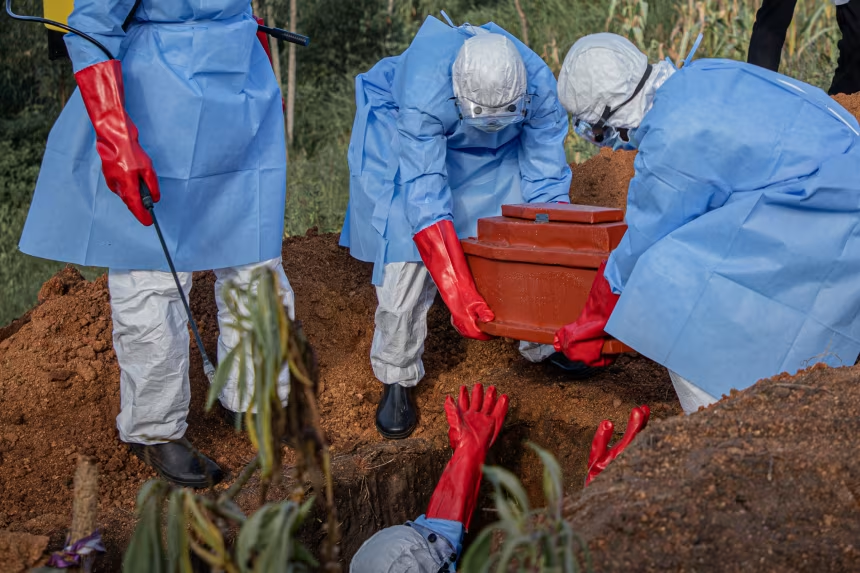

The Democratic Republic of Congo’s latest Ebola outbreak has killed at least 2,325 people and infected 4,945, overtaking the country’s 2018–2020 epidemic as its deadliest on record.
KINSHASA, Democratic Republic of Congo — The Democratic Republic of Congo’s latest Ebola outbreak has killed at least 2,325 people, becoming the deadliest recorded outbreak of the disease in the country’s history, according to government data. Confirmed infections have risen to 4,945, including 101 cases detected in the latest 24-hour reporting period, the country’s public health institute said.
The death toll has overtaken the 2,299 deaths recorded during DRC’s 2018–2020 outbreak, which had previously been the country’s deadliest. The current epidemic was formally declared on 15 May. The figures mark a significant deterioration in an outbreak that health authorities are trying to contain amid insecurity, population movement, pressure on health services and the absence of a licensed vaccine specifically targeting the Bundibugyo virus responsible for the epidemic. WHO says there is also no specific approved treatment for the disease, although experimental therapies are being evaluated.
Second only to West Africa’s Ebola epidemic
The outbreak is DRC’s 17th recorded Ebola outbreak since the disease was identified in the country, then known as Zaire, in 1976. It is now the second-deadliest Ebola outbreak recorded globally.
The 2014–2016 West African epidemic remains the world’s deadliest, with 28,616 cases and 11,310 deaths recorded across Guinea, Liberia and Sierra Leone, according to the World Health Organization.
But the speed of the current outbreak has alarmed health authorities. The West African epidemic took nearly five months after its declaration to reach 1,000 deaths. DRC’s current outbreak passed 2,000 deaths in less than three months, according to Reuters. The latest toll also represents a sharp increase from 11 August, when authorities reported 2,011 deaths and 4,381 confirmed cases.
Six provinces are now affected.
The geographical footprint has also expanded.
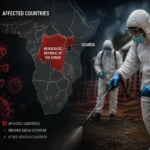
DRC authorities confirmed last week that Ebola had reached Bas-Uele, making it the sixth province affected by the outbreak.
A death was confirmed in Buta, the provincial capital, prompting efforts to identify people who may have had contact with the patient. Earlier WHO reporting showed sustained transmission across several health zones, with the outbreak initially concentrated heavily in Ituri province before expanding geographically.
The movement of people through affected areas presents an additional challenge for surveillance and contact tracing. WHO says the outbreak is unfolding amid a humanitarian crisis, insecurity and high levels of population and trade movement, conditions that complicate efforts to identify cases and interrupt transmission.
Why Bundibugyo makes this outbreak particularly difficult
The epidemic is caused by Bundibugyo virus, one of the orthoebolaviruses known to cause disease in humans. That distinction has important consequences for the response.
There is a licensed vaccine against disease caused by the more common Ebola virus, EBOV. But WHO says there is currently no licensed vaccine for Bundibugyo virus disease.
The existing Ervebo vaccine is licensed against Ebola virus disease caused by EBOV. WHO does not currently recommend its routine use against Bundibugyo because evidence that it provides sufficient protection against the virus remains inadequate.
Several experimental vaccines are under development.
WHO experts have identified a single-dose rVSV Bundibugyo vaccine being developed by IAVI and a ChAdOx1 Bundibugyo candidate involving Oxford University and the Serum Institute of India among candidates being considered for evaluation. That research is significant, but none should yet be described as an approved solution to the outbreak.
Experimental treatments under trial
Scientists are also testing possible treatments.
A WHO-sponsored clinical trial began enrolling patients in DRC in July to investigate whether two antiviral therapies, MBP134 and remdesivir, could improve survival among people diagnosed with Bundibugyo virus disease. Researchers are also studying whether using the treatments together could provide additional benefits.
The trial is being coordinated by DRC’s Institut National de Recherche Biomédicale, Belgium’s Institute of Tropical Medicine and the University of Oxford, with international partners and support from Africa CDC. Until effective therapies are established, rapid detection, isolation, contact tracing, supportive clinical care, safe burials and community cooperation remain central to containing transmission.
Fatality rate has risen sharply.
Government figures indicate that the proportion of confirmed patients dying from the disease has risen substantially during the outbreak. The case fatality ratio increased from around 20% in early June to about 46%, according to the latest data reported by Reuters.
Health specialists caution against interpreting that increase as evidence that the virus itself has become more lethal. Instead, delayed detection and difficulties getting patients into treatment early appear to be contributing to the high mortality.
Thomas Parisch, a public-health specialist deployed to DRC with Médecins Sans Frontières, said fatality rates would normally be expected to decline as contact tracing improves and patients are identified and treated earlier. Instead, health teams are continuing to encounter cases at advanced stages, including infections identified only after people have died in their communities.
That is particularly important in Ebola control because earlier identification does two things simultaneously: it gives infected patients a better opportunity to receive supportive care and enables health teams to trace contacts before further transmission occurs.
Uganda contained a linked outbreak.
The epidemic has also demonstrated its capacity to cross borders.
Cases linked to DRC were detected in neighbouring Uganda earlier in the outbreak. Uganda recorded 20 confirmed cases and two deaths before bringing transmission under control, according to the latest reporting cited by Reuters.
WHO said when it assessed the outbreak in May, DRC faced a “very high” national risk, while Uganda’s risk was assessed as “high”. The contrast between the two countries underlines the importance of rapid detection and containment.
How Ebola spreads
Ebola is transmitted through direct contact with the blood or other bodily fluids of an infected person, including someone who has died from the disease, or through contaminated materials.
It is not transmitted through routine airborne spread in the way infections such as measles are.
Early symptoms can include fever, fatigue, muscle pain, headache and sore throat. Vomiting, diarrhoea and impaired kidney and liver function can develop as the disease progresses.
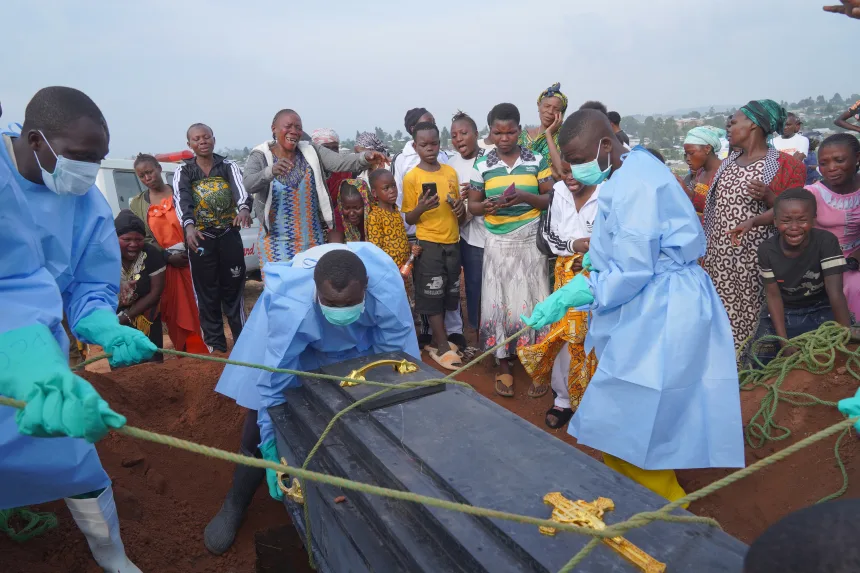
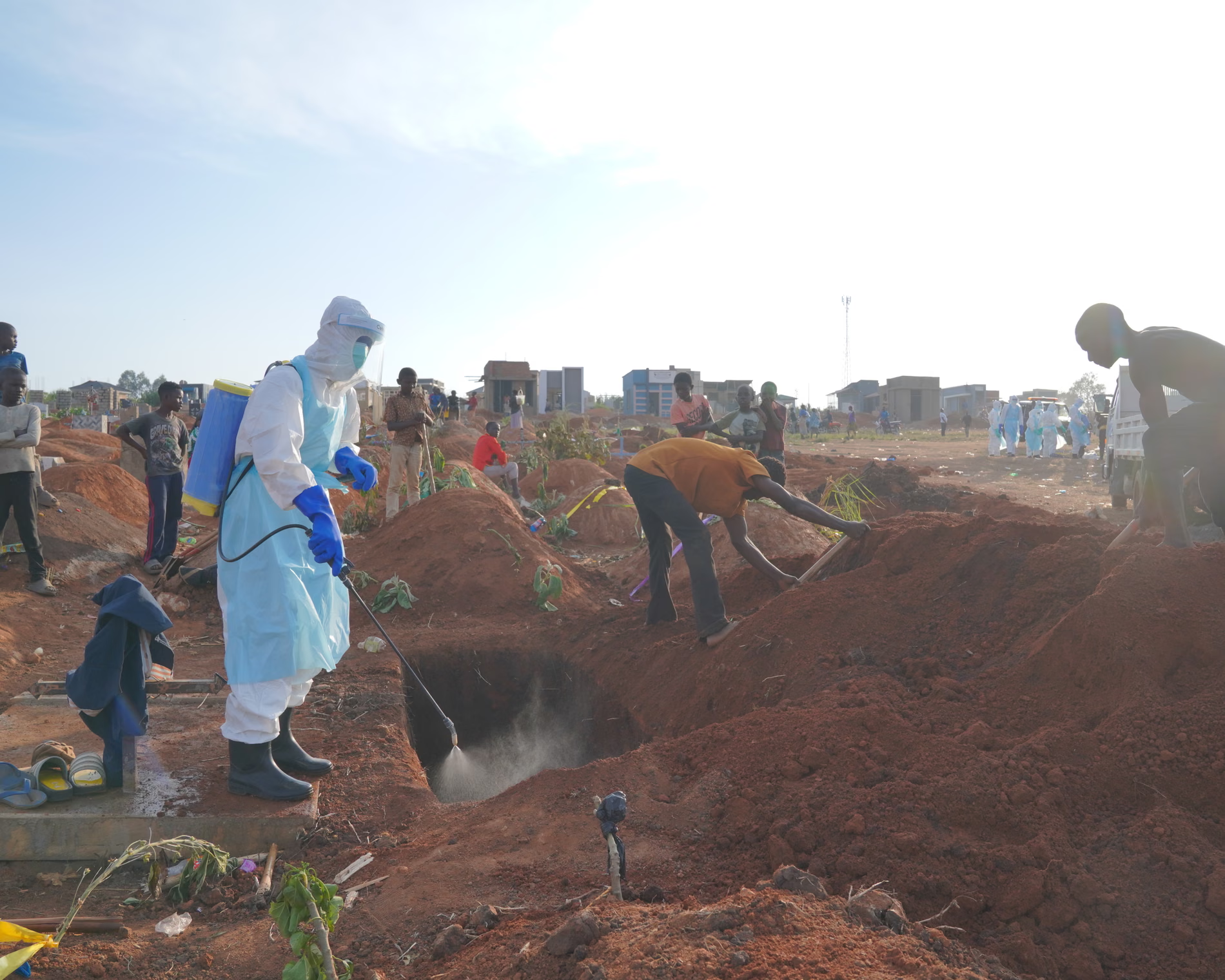
People who die from Ebola can remain infectious, making safe and dignified burial procedures an important part of outbreak control.
Public trust is therefore crucial. Families and communities need reliable information and confidence in health authorities if suspected infections are to be reported quickly, contacts identified and burials conducted safely.
WHO has identified community engagement as a central part of the response, alongside surveillance, contact tracing, clinical management, supplies and cross-border preparedness.
Why this
story matters
DR Congo has more experience responding to Ebola outbreaks than almost any other country.
The latest epidemic nevertheless demonstrates the continuing vulnerability created when a less common Ebola virus emerges in communities affected by weak health infrastructure, insecurity and substantial population movement.
It also exposes a gap in the world’s Ebola defences.
Scientific advances following earlier epidemics produced an effective licensed vaccine against the more common Ebola virus. Equivalent licensed protection against Bundibugyo virus disease is not yet available.
At the same time, the relatively contained outbreak in Uganda shows that cross-border transmission does not inevitably lead to uncontrolled spread when cases are detected and isolated quickly.
For DRC and neighbouring countries, the immediate priority remains identifying infections earlier, tracing contacts and preventing transmission into additional communities.
For the wider international health system, the outbreak is also a test of whether research into experimental vaccines and treatments can be translated rapidly and safely into effective tools against one of Ebola’s less common forms.
DR Congo’s Ebola outbreak
Latest reported outbreak indicators
Figures reflect the latest government data reported on 16 August 2026 and remain subject to revision as surveillance and laboratory investigations continue.
What readers need to know
Four essential questions about the outbreak.
Is there a vaccine?
There is no licensed vaccine specifically for Bundibugyo virus disease. Candidate vaccines are being evaluated.
Is there a treatment?
There is no specific licensed treatment for Bundibugyo virus disease. WHO-backed clinical research is evaluating experimental therapies.
Has Ebola spread outside DRC?
Yes. Uganda recorded linked cases but subsequently brought its outbreak under control.
Is Ebola airborne?
Ebola primarily spreads through direct contact with infected bodily fluids or contaminated materials rather than routine airborne transmission.
Related posts:
 DR Congo Ebola deaths rise to 447 as WHO launches first treatment trial
  WHO Warns DR Congo Ebola Outbreak May Be Spreading Faster as Death Toll Hits 131
  Ebola Outbreak Passes 530 Cases as Africa Races to Contain Rare Strain With No Approved Vaccine DR Congo Health Workers Battle Ebola Outbreak Amid Equipment Shortages and Security Risks
  DR Congo Ebola outbreak grows as Oxford scientists fast-track vaccine