
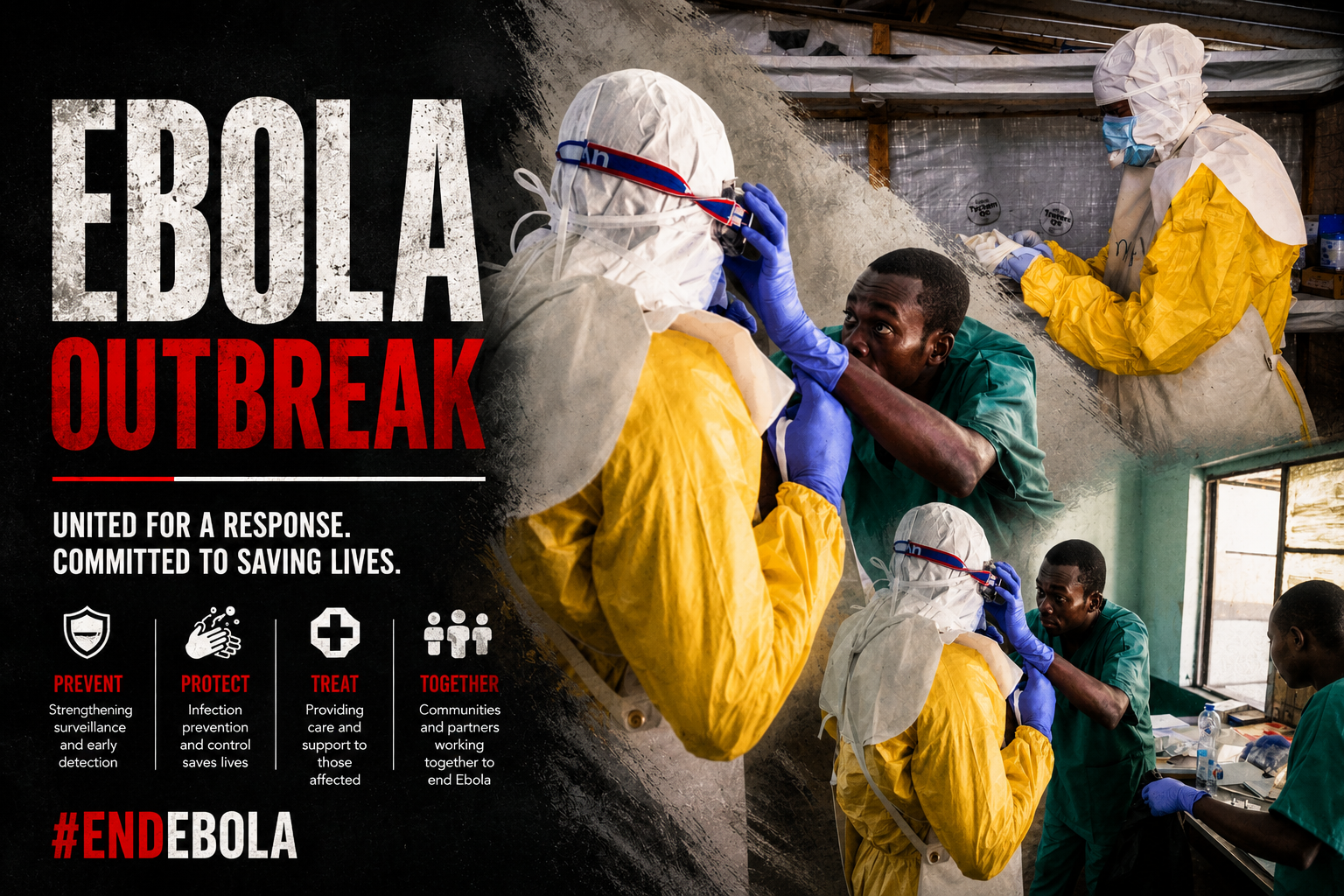
DR Congo Health Workers Battle Ebola Outbreak Amid Equipment Shortages and Security Risks


Follow Nukunya
Get the latest breaking news and updates from Nukunya.
Medical teams in the eastern Democratic Republic of Congo are racing to contain a growing Ebola outbreak while protecting themselves from infection amid shortages of protective equipment and ongoing insecurity in the region.
Frontline medical teams in eastern DR Congo face rising infection risks as authorities work to contain the spread of Ebola in conflict-affected areas.
BUNIA, Democratic Republic of Congo — Health workers in eastern Democratic Republic of Congo are working under intense pressure to contain a growing Ebola outbreak while protecting themselves from infection in a region already affected by insecurity and fragile healthcare systems.
Medical teams in Ituri Province, the epicentre of the outbreak, are isolating suspected cases, tracing contacts and providing treatment to infected patients as authorities seek to prevent further spread of the virus.
The latest outbreak has placed frontline health workers at the centre of the response. Doctors, nurses and laboratory staff face daily risks of exposure while caring for patients and conducting testing in affected communities.
According to health authorities, more than 280 confirmed Ebola cases have been recorded during the outbreak, alongside more than 1,000 suspected cases. More than 220 deaths have also been reported.
The World Health Organization has repeatedly stressed the importance of rapid detection and isolation of cases to break chains of transmission and prevent wider community spread.
Health workers treating Ebola patients are required to wear full personal protective equipment, including masks, gloves, gowns and face shields. Medical teams say shortages of protective equipment remain a significant challenge in some areas, increasing concerns about staff safety.
Aid organisations have introduced specialised isolation units designed to allow patients to receive treatment while reducing direct contact between healthcare workers and infected individuals. The facilities are intended to improve both patient care and infection control.
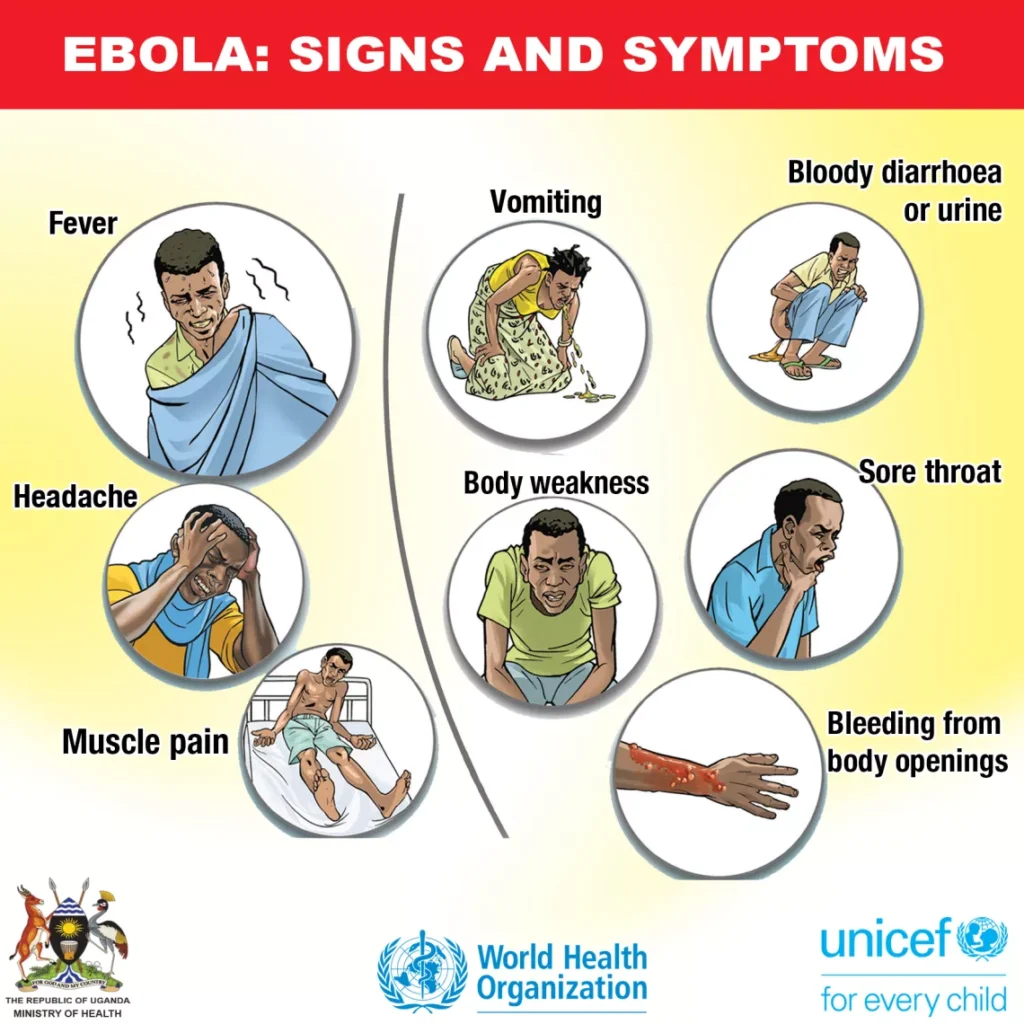
The outbreak has been complicated by delays in identifying cases. Ebola symptoms often resemble those of more common illnesses, including malaria and typhoid fever, making early diagnosis difficult.
Health officials say patients presenting with fever, weakness, headaches and muscle pain are initially treated as suspected cases until laboratory testing confirms or rules out Ebola infection.
Beyond the medical challenge, insecurity continues to hamper response efforts. Armed conflict in parts of eastern DR Congo has restricted access to some communities and complicated contact tracing operations.
International health agencies have warned that attacks on healthcare facilities and aid workers could undermine efforts to control the outbreak and increase the risk of further transmission.
The outbreak has also affected healthcare personnel directly. Several health workers have contracted Ebola during the response, highlighting the dangers faced by those on the front line.
Despite those challenges, medical teams continue to report recoveries among patients and healthcare workers who have successfully completed treatment.
The current outbreak is a reminder of the recurring threat posed by Ebola in central Africa, where health authorities must often respond to public health emergencies alongside security, logistical and humanitarian challenges.
Officials say strengthening surveillance, improving testing capacity and ensuring adequate supplies of protective equipment will remain critical to bringing the outbreak under control.
Related posts:
 Ebola Cases Nearly Double in DR Congo as WHO Chief Visits Outbreak Epicentre
  WHO Warns DR Congo Ebola Outbreak May Be Spreading Faster as Death Toll Hits 131
  Ghana’s malaria cases decline as vaccination rollout expands
  DR Congo Ebola outbreak grows as Oxford scientists fast-track vaccine
  Social media linked to higher loneliness, as study highlights limits of online friendships