
Ghana’s malaria cases decline as vaccination rollout expands

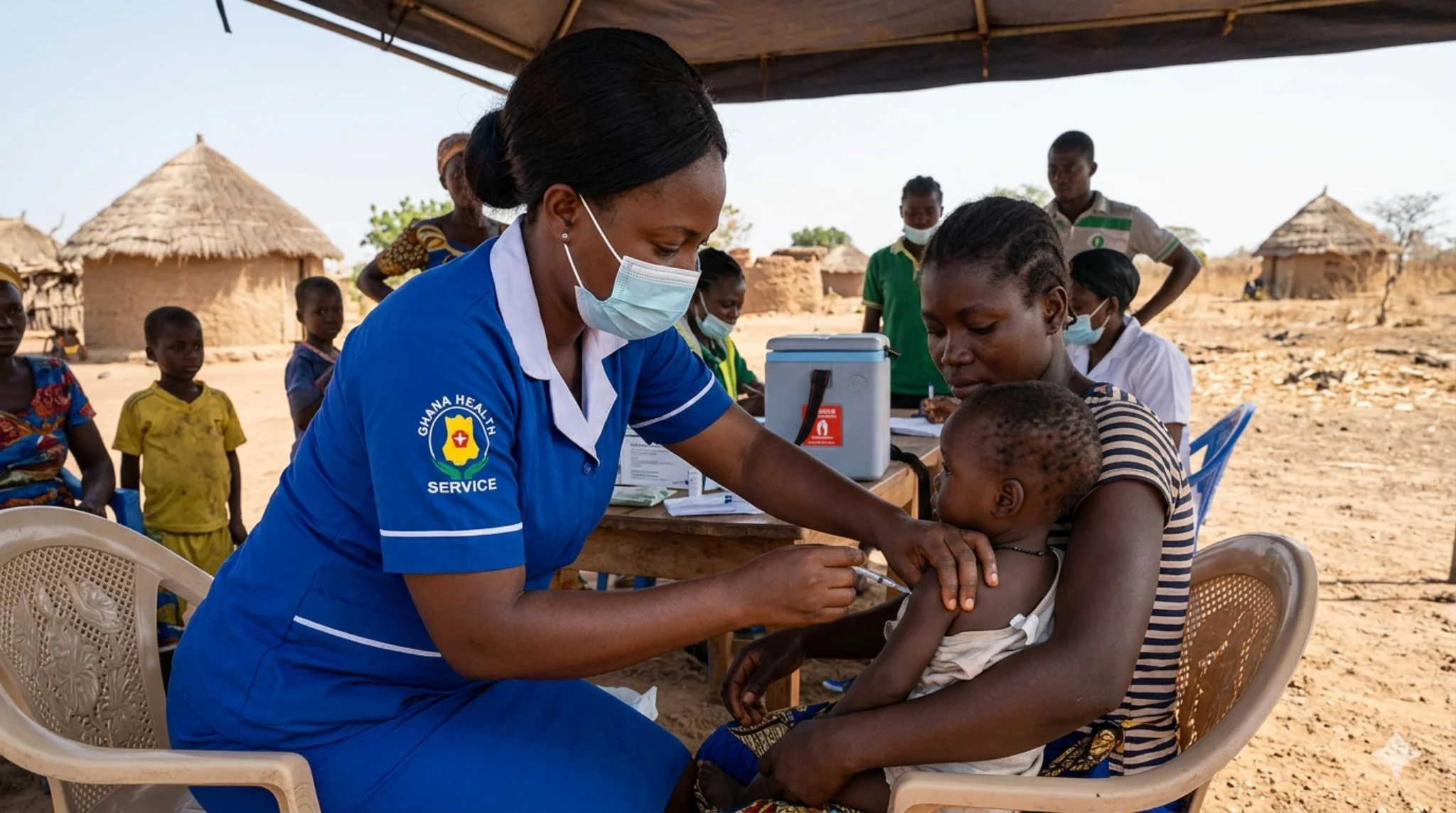

Ghana’s malaria cases decline following expanded vaccination and prevention campaigns, with health officials reporting reduced infections in high-risk regions.
ACCRA, Ghana — 5 May 2026
Ghana’s malaria cases have declined, with health authorities reporting a reduction in infections following the expansion of vaccination programmes and intensified prevention campaigns across the country. The Ghana Health Service said recent data show a measurable drop in confirmed malaria cases in several regions, particularly among children under five, who are most vulnerable to the disease. Officials attribute the improvement to a combination of vaccination rollout, increased distribution of insecticide-treated bed nets, and enhanced community health interventions.
Ghana’s malaria cases decline with vaccination rollout
Health officials say that introducing and expanding malaria vaccines in some areas has been critical for reducing infections. The Ghana Health Service confirmed that the RTS,S malaria vaccine, given through routine immunisation programmes, is helping to lower case numbers in pilot and expansion areas. “Early data show that vaccination is helping reduce severe malaria cases among children,” a senior official at the Ghana Health Service said. In addition to vaccination, public health campaigns have focused on early diagnosis and treatment, as well as preventive measures such as indoor residual spraying. Despite recent progress, malaria continues to be one of the leading causes of outpatient visits and hospital admissions in Ghana, according to official figures.
Human impact: families report fewer hospital visits
For many families, the decline in malaria cases is already having a tangible impact. In Tamale, mother of three Amina Sulemana said her children have experienced fewer malaria episodes over the past year. “Before, we were going to the clinic many times,” she said. “Now it is less frequent, and the children are healthier.” Healthcare workers also report that in some areas, facilities can allocate more resources to other medical needs because of reduced pressure. However, health officials caution that malaria remains endemic, and continued vigilance is required to sustain progress.
Opposing view: challenges in coverage and access
Public health experts warn that uneven access to vaccination and prevention tools could limit the overall impact of current efforts. Dr Kwesi Boateng, a public health specialist, said logistical challenges remain in reaching remote communities. “Vaccination coverage is improving, but gaps still exist,” he said. “Without consistent access, some populations remain at high risk.” He also noted that climate factors, such as rainfall patterns, continue to influence malaria transmission. “If environmental conditions change, we could see a resurgence,” he added.
Global context and WHO guidance
The World Health Organization has endorsed malaria vaccines as part of a broader strategy to reduce the disease burden in high-transmission areas. Ghana was among the first African countries to pilot the RTS,S vaccine, alongside Kenya and Malawi, before expanding its use. WHO data indicate that malaria remains a major public health challenge globally, with sub-Saharan Africa accounting for the majority of cases and deaths. Efforts to combat malaria include a combination of vaccination, vector control, and improved healthcare access.
What this means
The decline in malaria cases in Ghana reflects progress in public health interventions, but the disease remains a significant threat. According to the World Health Organization, malaria cases globally have shown mixed trends, with some countries achieving reductions while others face setbacks due to funding gaps and environmental factors. In Ghana, sustained investment in vaccination and prevention will be critical to maintaining the current downward trend.
Compared with previous years, the reduction in cases suggests that integrated approaches combining vaccines and traditional prevention methods are effective. However, the gap between policy and reality remains evident. While national data show improvement, localised disparities persist, particularly in rural and underserved areas. For households, fewer malaria cases mean reduced healthcare costs and improved productivity, as families spend less time caring for sick members.
For the health system, the decline eases pressure on facilities and lets us redirect resources to other priorities. The long-term impact will depend on consistent funding, continued public health campaigns, and adaptation to changing environmental conditions.
Sources: Ghana Health Service; World Health Organization; Ministry of Health Ghana.
Additional reporting and analysis by Nukunya News Desk
Related posts:
 WHO Warns DR Congo Ebola Outbreak May Be Spreading Faster as Death Toll Hits 131
  Ghana Rejects $109m US Health Deal Over Data-Sharing Concerns
  Social media linked to higher loneliness, as study highlights limits of online friendships
  Mahama Calls for New Global Health Order Built on Self-Reliance
  Mifepristone access restored by US Supreme Court for now