
Nigeria’s currency reforms stabilise naira after months of volatility

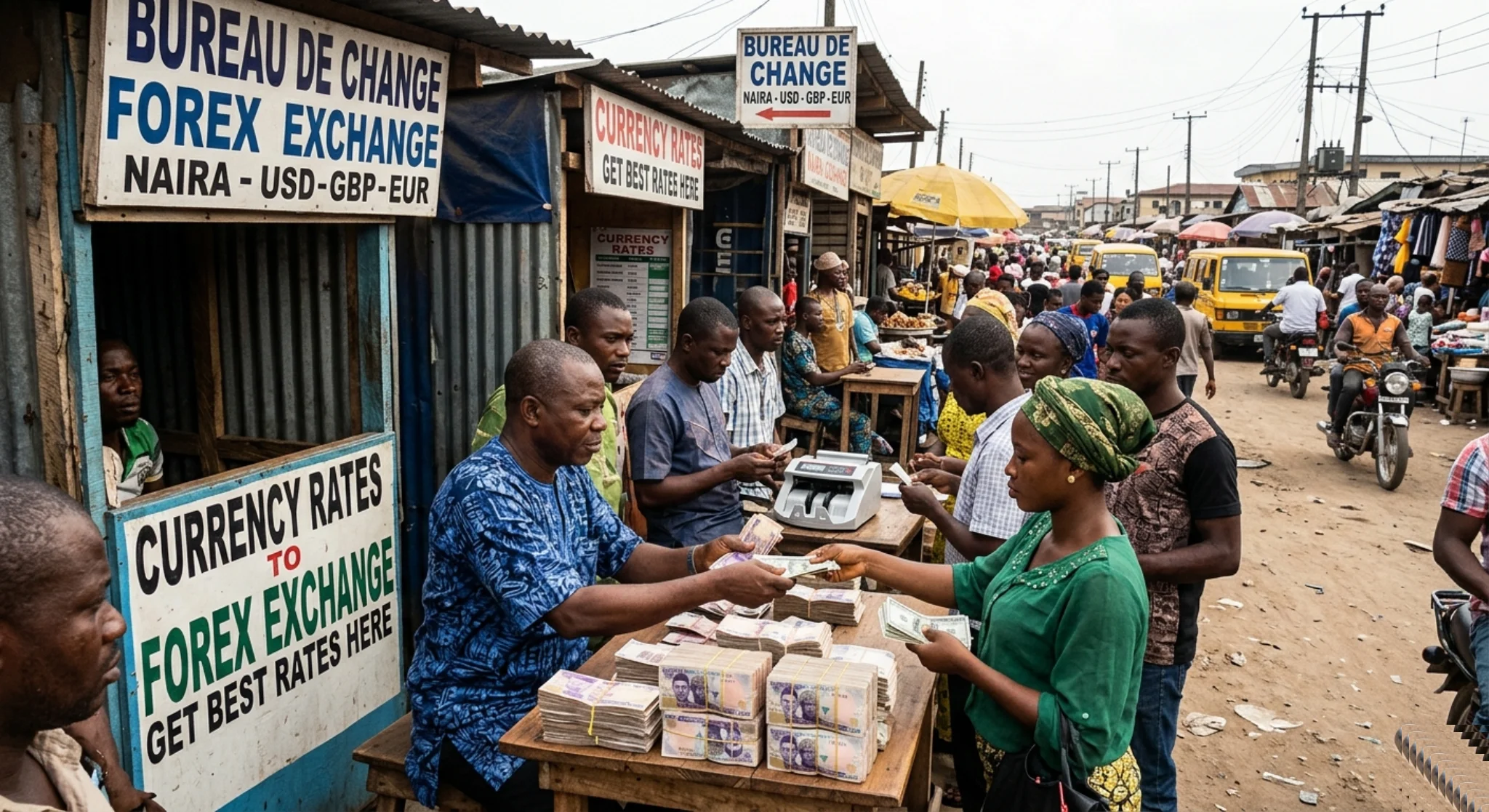

Nigeria’s currency reforms show early signs of stabilising the naira as authorities tighten monetary policy and adjust foreign exchange rules.
Nigeria — 5 May 2026
Nigeria’s currency reforms are beginning to stabilise the naira after months of volatility as authorities implement tighter monetary policies and overhaul foreign exchange systems. The Central Bank of Nigeria has introduced measures aimed at improving liquidity in the foreign exchange market, including changes to exchange rate management and increased transparency in currency trading. Officials say the reforms are designed to restore investor confidence and address long-standing distortions in the currency market.
Nigeria’s currency reforms target exchange rate stability
The naira has experienced significant fluctuations over the past year, driven by foreign exchange shortages, declining oil revenues, and investor uncertainty. Recent policy adjustments include the unification of multiple exchange rates and efforts to attract foreign capital into the market. A Central Bank official said the reforms aim to create a more market-driven exchange rate system. “We focus on improving transparency and ensuring that the foreign exchange market functions efficiently,” the official said. Market analysts note that increased supply of foreign currency has helped ease pressure on the naira in recent weeks.
Human impact: businesses adjust to new rates
For businesses and consumers, the stabilisation of the naira has begun to ease some of the uncertainty caused by rapid currency fluctuations. In Lagos, importer Chinedu Okafor said the situation has improved compared with previous months. “Before, it was very difficult to price goods because the exchange rate kept changing,” he said. “Now it is more stable, even if rates are still high.” Consumers, however, continue to face elevated prices for imported goods, reflecting earlier depreciation of the currency.
Opposing view: concerns over inflation and sustainability
Some economists caution that Nigeria’s currency reforms may have limited benefits if inflation remains high. Dr Amina Bello, an economist at Ahmadu Bello University, said that currency stabilisation alone may not resolve broader economic challenges. “Inflation is still a major issue,” she said. “Without addressing structural factors, the gains could be temporary.” She also noted that higher interest rates, used to support the currency, could slow economic growth. “Policy tightening has trade-offs that must be carefully managed,” she added.
Policy context and economic outlook
Nigeria’s reforms are part of a broader strategy to address macroeconomic imbalances and improve fiscal stability. The International Monetary Fund has highlighted the importance of exchange rate flexibility and policy consistency in restoring economic stability. Oil exports remain a key source of foreign exchange for Nigeria, making the economy vulnerable to global price fluctuations. Analysts view efforts to diversify the economy and increase non-oil exports as critical to long-term stability.
What this means
The impact of Nigeria’s currency reforms reflects a wider trend among African economies seeking to stabilise currencies and manage inflation. Historical data show that exchange rate reforms can improve market efficiency but often require complementary measures, including fiscal discipline and structural reforms. Compared with previous periods of volatility, the recent stabilisation suggests that policy changes are having an effect, though challenges remain.
For businesses, a more stable currency environment can improve planning and investment decisions. For households, however, the benefits may take longer to materialise, particularly if inflation remains high. The World Bank has noted that sustained economic stability depends on a combination of sound monetary policy, fiscal reforms, and external conditions. The gap between policy objectives and real-world outcomes will depend on how effectively we implement reforms and manage external shocks.
Sources: Central Bank of Nigeria; International Monetary Fund; World Bank.
Additional reporting and analysis by Nukunya News Desk
Related posts:
 Ghana’s inflation slows for third consecutive month as food prices ease
  Gabon’s social media clampdown draws rights concerns after platform suspensions and phone seizures
  Ghana Pushes Border Cooperation as Sahel Insecurity Raises Regional Security Risks
  Ghana Repatriates Nearly 300 Citizens From South Africa Amid Migrant Tensions
  Senegal power struggle escalates as ousted Sonko elected parliament speaker