
Senegal power struggle escalates as ousted Sonko elected parliament speaker

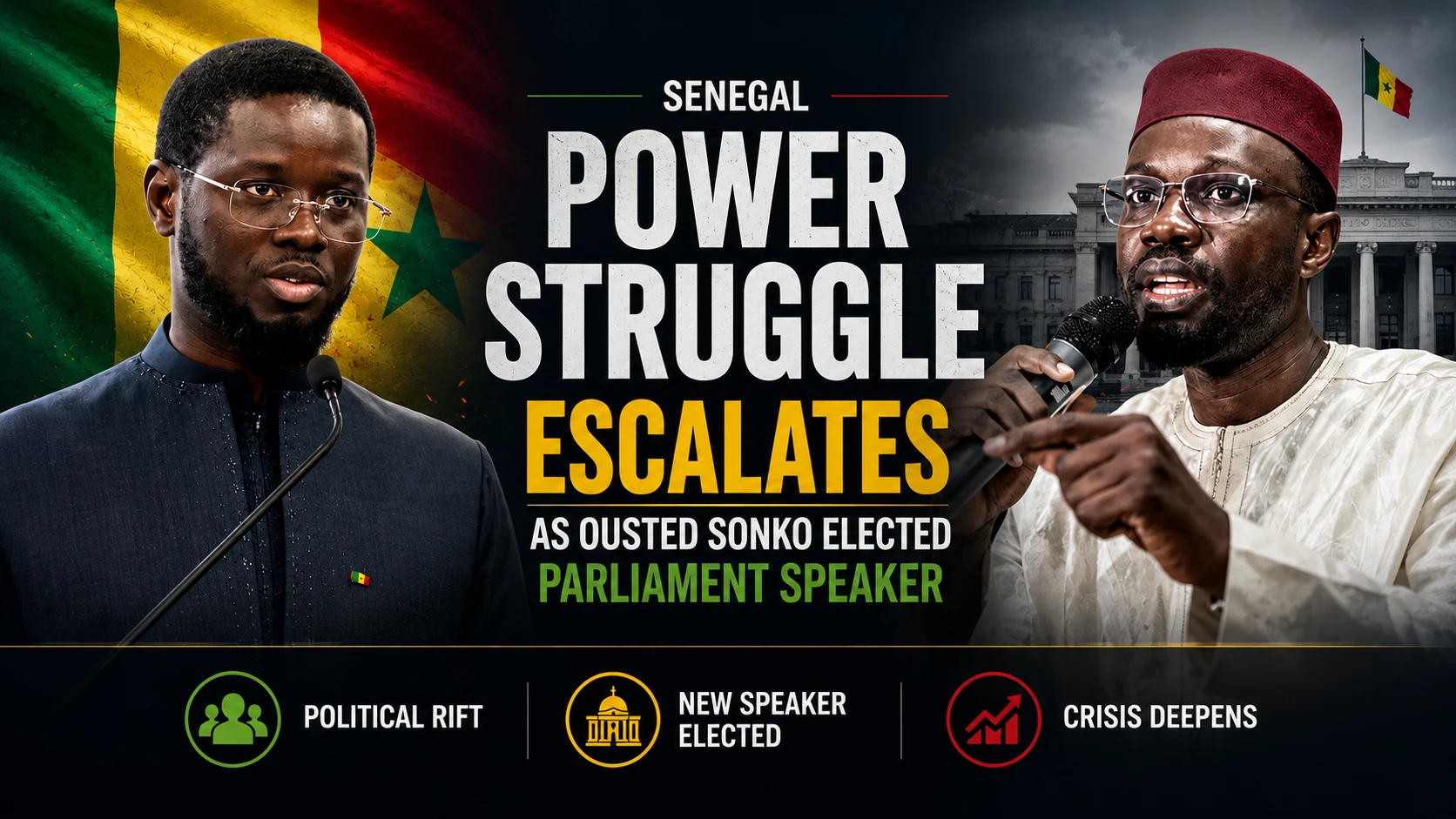

Senegal’s political crisis deepened after former Prime Minister Ousmane Sonko was elected speaker of parliament days after being dismissed by President Bassirou Diomaye Faye, intensifying concerns over political stability, economic reforms and IMF-backed recovery efforts.
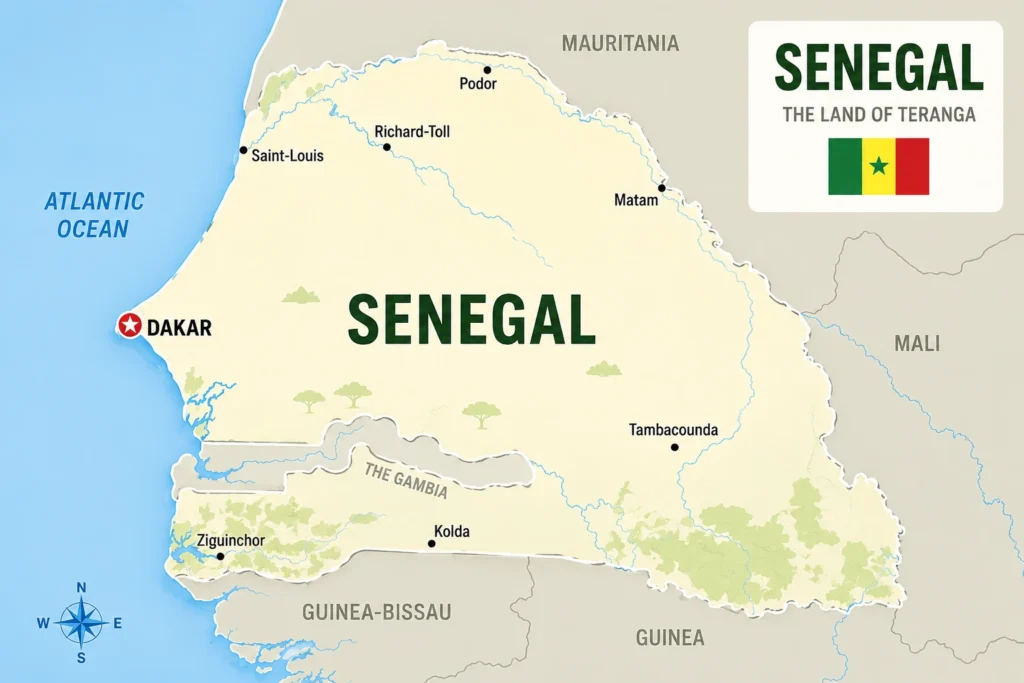
DAKAR, Senegal —
Senegal’s political crisis intensified after former Prime Minister Ousmane Sonko was elected speaker of parliament days after President Bassirou Diomaye Faye dismissed him from government, deepening a power struggle inside the ruling Pastef movement and raising concerns over economic stability. Sonko secured the parliamentary position with overwhelming support from lawmakers allied to the ruling coalition, strengthening his political influence despite his removal as prime minister earlier this week.
The development has transformed what initially appeared to be a cabinet reshuffle into a broader institutional confrontation between the presidency and parliament in one of West Africa’s most closely watched democracies.
Alliance collapse exposes split at top of government
Faye and Sonko rose to power together during Senegal’s 2024 presidential election after Sonko, barred from contesting because of a defamation conviction, endorsed Faye as his replacement candidate under the slogan “Diomaye is Sonko, Sonko is Diomaye”. Their victory ended years of rule under former president Macky Sall and was celebrated by many younger Senegalese voters frustrated by unemployment, corruption allegations and rising living costs.
However, tensions between the two leaders have increasingly surfaced in recent months over control of government, party direction and economic management, according to analysts and local political observers. Sonko’s dismissal marked the most serious rupture yet inside the ruling alliance.
IMF concerns and investor anxiety grow
The political confrontation comes at a delicate time for Senegal’s economy. The government has been attempting to restore investor confidence after officials disclosed that public debt had reached around 132% of gross domestic product by the end of 2024, significantly higher than previously reported figures.
The International Monetary Fund subsequently suspended a $1.8 billion lending programme pending clarification over Senegal’s debt position. Reuters reported that Morgan Stanley analysts warned the escalating political crisis could increase Senegal’s sovereign default risk and complicate ongoing negotiations linked to fiscal reforms and debt restructuring.
Financial markets have been closely monitoring developments amid concerns that prolonged instability could weaken economic recovery efforts and undermine confidence in Senegal’s oil, gas and infrastructure expansion plans.
Sonko retains strong political base
Despite his removal from government, Sonko remains one of Senegal’s most influential political figures, particularly among younger urban voters and grassroots supporters. Crowds gathered in Dakar following his election as parliamentary speaker, while several lawmakers described the vote as a demonstration of his continued political authority inside the ruling coalition.
Political analysts said Sonko’s new role could significantly strengthen his ability to challenge the presidency from within parliament, increasing the risk of institutional paralysis if relations between the executive and legislature deteriorate further. “The crisis has evolved into a dual-centre power struggle,” political analyst Mamadou Ndiaye told local broadcaster TFM. “The presidency controls the executive, but Sonko still commands major political legitimacy inside the movement.”
Regional stability concerns emerge
Senegal has long been regarded as one of West Africa’s most stable democracies, avoiding the coups and prolonged constitutional crises that have affected several neighbouring countries in recent years. The latest developments are therefore being closely monitored by regional governments, investors and international financial institutions.
The crisis also comes as Senegal seeks to expand revenues from newly launched offshore oil and gas production projects intended to support long-term economic growth. Although no major unrest has been reported nationwide, observers warned that a prolonged confrontation between the presidency and parliament could deepen political polarisation and slow the government’s reform agenda. Neither Faye nor Sonko has publicly indicated whether reconciliation efforts are under way.
Related posts:
 South Africa Police Chief Suspended Over $21m Corruption Probe
  Africa’s drought crisis intensifies as food insecurity rises
  Ghana seeks AU intervention over xenophobic attacks in South Africa
  WHO Warns DR Congo Ebola Outbreak May Be Spreading Faster as Death Toll Hits 131
  Power outages expected in Accra, Volta and Ashanti during ECG maintenance