
Harry Kane backs PSG as slight favourites in Arsenal Champions League final

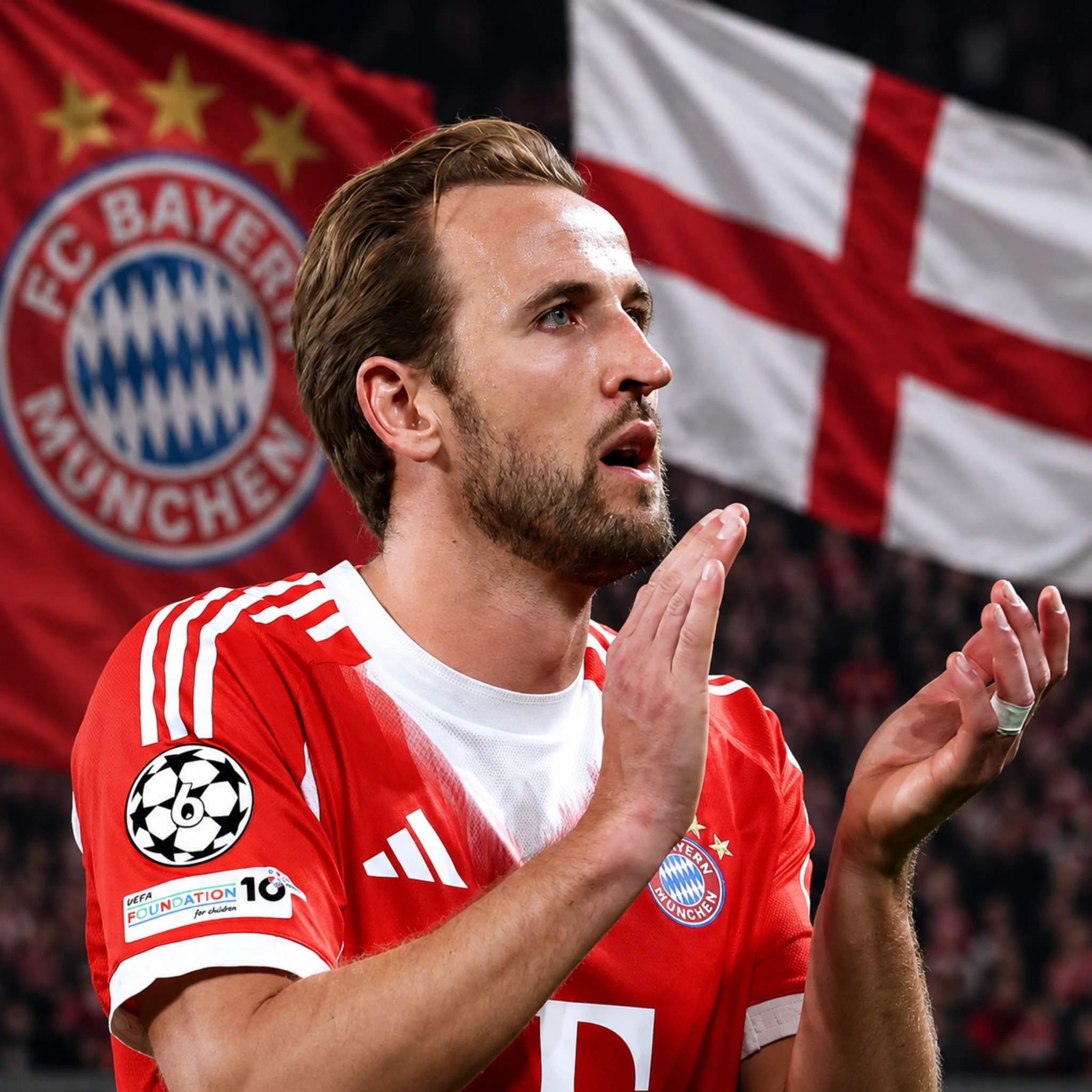

Harry Kane says PSG are slight favourites against Arsenal in the Champions League final, but he predicts an evenly balanced contest after Bayern Munich’s semi-final exit.
Germany — 7 May 2026
PSG vs Arsenal Champions League final debate has intensified after England captain Harry Kane described Paris Saint-Germain as slight favourites, while predicting a closely contested match between two contrasting teams. Kane made the assessment after Bayern Munich’s semi-final exit to PSG, where the German side lost 6–5 on aggregate despite a late equaliser in the second leg. The result sends PSG through to face Arsenal in the final in Budapest on 30 May.
Kane: PSG vs Arsenal final will be ‘even’
Kane said the final would be balanced despite PSG’s status as defending champions. “It is really even. “They are two entirely different teams in the way they play, but both are very strong,” he said. He added that PSG “probably hold the right to be slight favourites” but emphasised that both sides have the quality to win. His view is consistent with broader assessments that highlight PSG’s recent European success against Arsenal’s resurgence under Mikel Arteta.
Bayern exit shapes Champions League narrative
Bayern Munich were eliminated after a high-scoring two-legged tie, losing 5–4 in Paris before drawing 1–1 in Munich. Kane scored late in the second leg but was unable to force extra time. The striker later criticised Bayern’s finishing, saying that missed chances proved decisive in the tie. His stoppage-time goal, however, may still carry significance beyond the result.
Wider impact: European places and competition stakes
According to UEFA competition metrics, Kane’s goal contributed points to Germany’s coefficient ranking, which could influence qualification spots for future Champions League tournaments. Germany remains in close competition with Spain for an additional European performance spot, highlighting how individual matches can affect broader league standings. This further increases the significance of late-stage matches, even when teams are eliminated.
Human impact: fans and clubs
For Bayern Munich supporters, the defeat is another chance lost to return to a Champions League final. Kane was visibly emotional after the match, reflecting the narrow margin between success and elimination. For Arsenal fans, the final marks a rare opportunity. The club has reached the Champions League final only once before, losing to Barcelona in 2006. PSG, meanwhile, are seeking to secure back-to-back titles, reinforcing their position among Europe’s elite clubs.
Opposing view: Arsenal’s momentum and tactical edge
While PSG are considered the favourites, analysts highlight Arsenal’s consistency and tactical structure as key strengths. Mikel Arteta’s team reached the final after a strong campaign, including a decisive semi-final victory over Atletico Madrid. PSG manager Luis Enrique has acknowledged Arsenal’s performance level, stating they “deserved to get to the final” after a consistent season. This suggests the outcome remains uncertain despite PSG’s experience advantage.
What this means
The PSG vs Arsenal Champions League final reflects two different football models. PSG represents a club built on sustained investment and recent European success, while Arsenal’s return to the final signals a longer-term rebuild centred on youth development and tactical cohesion. Historically, PSG have had greater recent exposure to late-stage European competition, while Arsenal are returning to the final for the first time in nearly two decades.
The contrast highlights a broader trend in European football, where established contenders face emerging teams built through structured development. At league level, the match also sits within a wider competitive framework shaped by UEFA coefficient rankings, where results influence future qualification spots and revenue distribution. For fans, the final represents a high-stakes contest between experience and momentum. For clubs, it emphasises the strategic value of European performance beyond individual matches.
Sources: UEFA competition data; player interviews
Additional reporting and analysis by Nukunya News Desk
Related posts:
 Arsenal beat Atletico Madrid to reach first Champions League final in 20 years
  Real Madrid training ground fight leaves Valverde hospitalised ahead of El Clásico
  Asamoah Gyan appointed Ghana football ambassador ahead of 2026 World Cup push
  Mexico beat Ghana 2-0 as Black Stars exposed in World Cup warm-up
  Tottenham’s Mohammed Kudus ruled out of 2026 World Cup with injury