
WHO Warns DR Congo Ebola Outbreak May Be Spreading Faster as Death Toll Hits 131


Follow Nukunya
Get the latest breaking news and updates from Nukunya.
Health officials say more than 500 suspected Ebola cases and at least 131 deaths have been recorded in the eastern Democratic Republic of Congo, with regional authorities warning that limited testing and cross-border movement are complicating containment efforts.
KINSHASA, DR Congo —
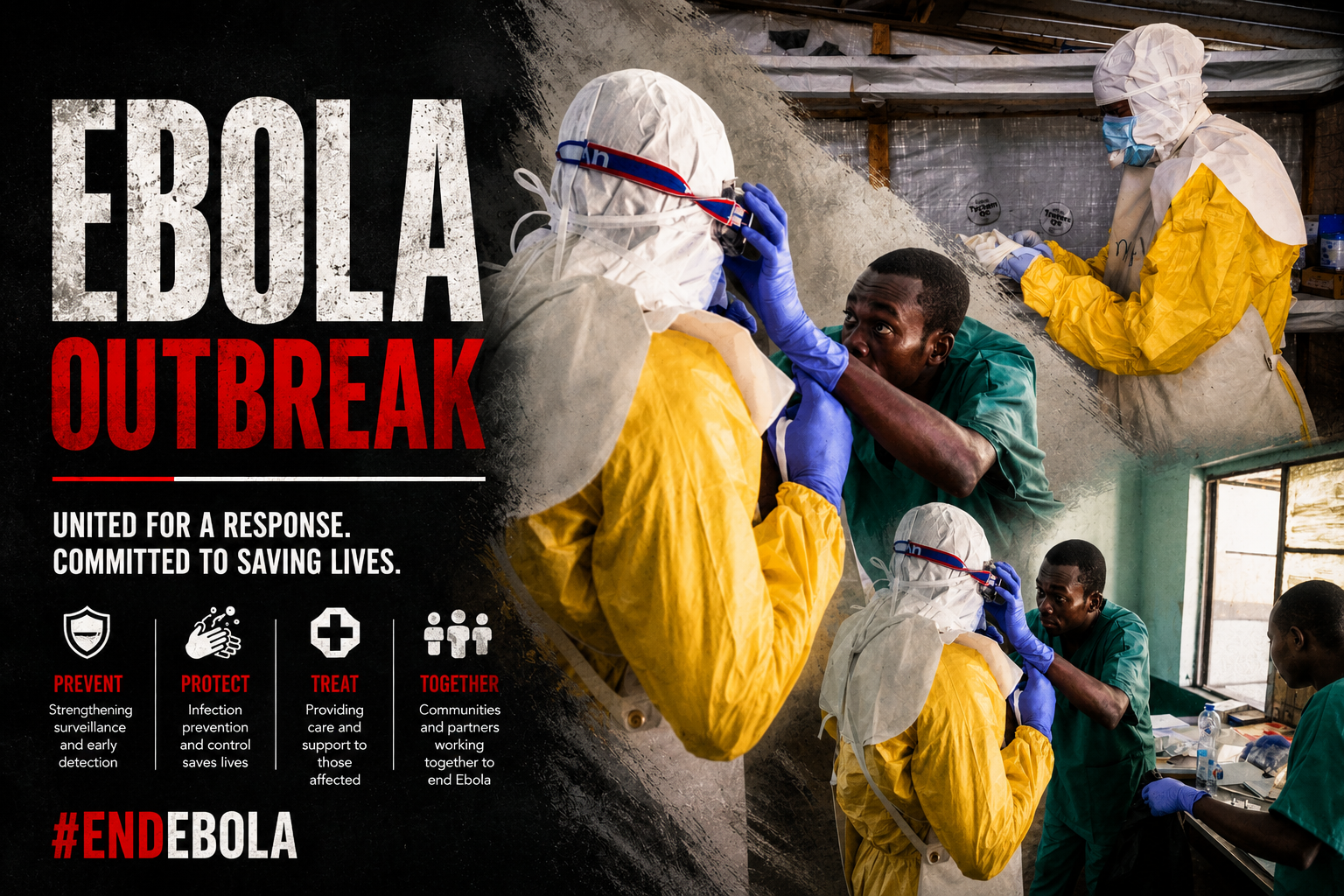
The World Health Organization has warned that a deadly Ebola outbreak in the eastern Democratic Republic of Congo may be spreading faster than first thought, as health officials reported more than 500 suspected cases and at least 131 deaths.
The outbreak, centred in Ituri Province, has already spread into neighbouring Uganda through cross-border infections, while regional health authorities say weak surveillance systems and limited testing capacity are slowing containment efforts.
As of Monday evening, Congolese health authorities had reported more than 500 suspected infections linked to the outbreak, which involves the rare Bundibugyo strain of Ebola. Unlike the more common Zaire strain, there is currently no approved vaccine or targeted treatment for Bundibugyo Ebola.
WHO warns outbreak may already be wider than reported.
World Health Organization officials say investigations increasingly suggest the virus may already have spread beyond the initially affected zones.
“The more we investigate this outbreak, the more we realise that it has already disseminated at least a little bit across borders and also in other provinces,” Anne Ancia, WHO representative in Congo, told the reporters.
Researchers at the London-based MRC Centre for Global Infectious Disease Analysis estimate the true number of infections could already exceed 1,000 because of under-reporting and delayed diagnosis.
The WHO last week declared the outbreak a Public Health Emergency of International Concern, citing fears of wider regional spread and persistent weaknesses in healthcare access across conflict-affected communities.
Officials stressed, however, that the outbreak does not currently meet the criteria for a global pandemic.
Limited testing capacity slowing containment
Health officials say one of the biggest operational challenges is the lack of rapid testing capability for the Bundibugyo strain.
Reuters reported that laboratories in affected areas were capable of processing only about six tests per hour because most diagnostic systems were designed for the Zaire strain of Ebola.
WHO officials believe delayed detection may have allowed the virus to circulate for weeks before the first confirmed case was identified in April.
“The surveillance capacity and investigation capacity are very limited in this region in general,” Ancia told Reuters.
The United Nations humanitarian agency OCHA said it had received only 34% of the US$1.4 billion requested for humanitarian operations in DR Congo this year, adding further strain to emergency response operations.
Conflict and mobility complicate response.
The outbreak is unfolding in a conflict-hit region already affected by armed violence, population displacement and weak healthcare infrastructure.
WHO and Africa CDC officials say heavy movement between mining towns, border communities and trading centres is increasing the risk of wider transmission.
Cases have been identified in areas including Mongwalu, Rwampara, Nyakunde, Butembo and Goma, a major eastern city near the Rwandan border.
Health authorities say Goma remains a particular concern because of its dense population and regional transport links.
Jean Kaseya, Director-General of the Africa Centres for Disease Control and Prevention, warned earlier that mistrust of health authorities and traditional burial practices were contributing to transmission risks.
Some residents in affected communities told local media they feared the outbreak was spreading faster than authorities could track, while others continued seeking treatment from prayer centres and traditional healers instead of medical facilities.
Regional governments tighten health surveillance.
Several African governments have begun strengthening border screening and public health monitoring in response to the outbreak.
Rwanda said it would tighten health checks along its border with DR Congo, while Uganda advised citizens to avoid large gatherings involving cross-border visitors.
Nigeria said it was monitoring developments closely, and the Africa CDC warned that neighbouring countries, including Uganda, Rwanda and South Sudan, remained at elevated risk.
An American doctor working in the DR Congo was also evacuated to Germany for treatment after contracting the virus, according to US health authorities and medical mission officials.
The mining sector increases precautions.
The outbreak has also raised concerns among mining companies operating in eastern Congo.
Reuters reported that Barrick Mining had intensified Ebola screening at its Kibali gold mine, introducing travel declarations, temperature checks and worker awareness campaigns.
The company said no workers had tested positive for Ebola, but officials acknowledged that extensive mobility between mining hubs and surrounding communities complicated containment efforts.
Past Ebola outbreaks have caused severe economic disruption across Central and West Africa, affecting trade, transport, mining activity and investment flows.
The 2014–2016 West African Ebola epidemic infected more than 28,000 people and killed over 11,000 across Guinea, Liberia and Sierra Leone, according to WHO data.
Public health specialists say the current outbreak remains highly serious but stress that rapid detection, contact tracing and community cooperation remain critical to preventing wider regional spread.
Sources: Reuters · BBC News · World Health Organization · Africa CDC.
Related posts:
 DR Congo Ebola outbreak grows as Oxford scientists fast-track vaccine
 Ghana’s malaria cases decline as vaccination rollout expands
 Social media linked to higher loneliness, as study highlights limits of online friendships
 Mahama Calls for New Global Health Order Built on Self-Reliance
 DR Congo seek FIFA ticket refunds after Ebola outbreak threatens World Cup travel