Black Stars Denied Late Win, But Queiroz Sees Encouraging Signs Ahead of World Cup

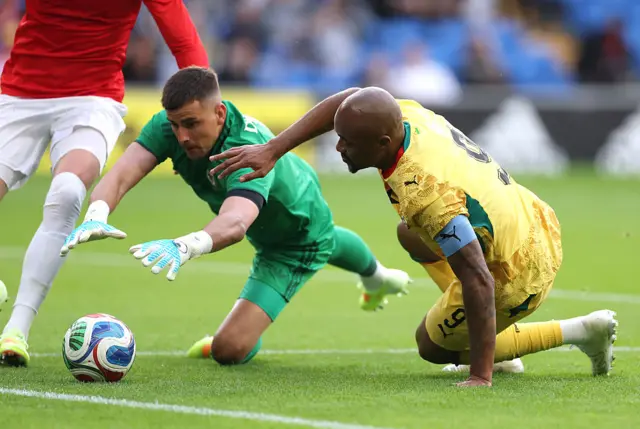

Ghana was seconds away from handing Carlos Queiroz a winning start as Black Stars coach before Wales struck deep into stoppage time to secure a 1-1 draw in Cardiff. While the late equaliser stung, the performance offered valuable encouragement ahead of the 2026 FIFA World Cup.
CARDIFF, Wales — Ghana’s preparations for the 2026 FIFA World Cup ended in frustration on Tuesday night after Wales scored in stoppage time to rescue a 1-1 draw, denying Carlos Queiroz victory in his first match as Black Stars head coach.
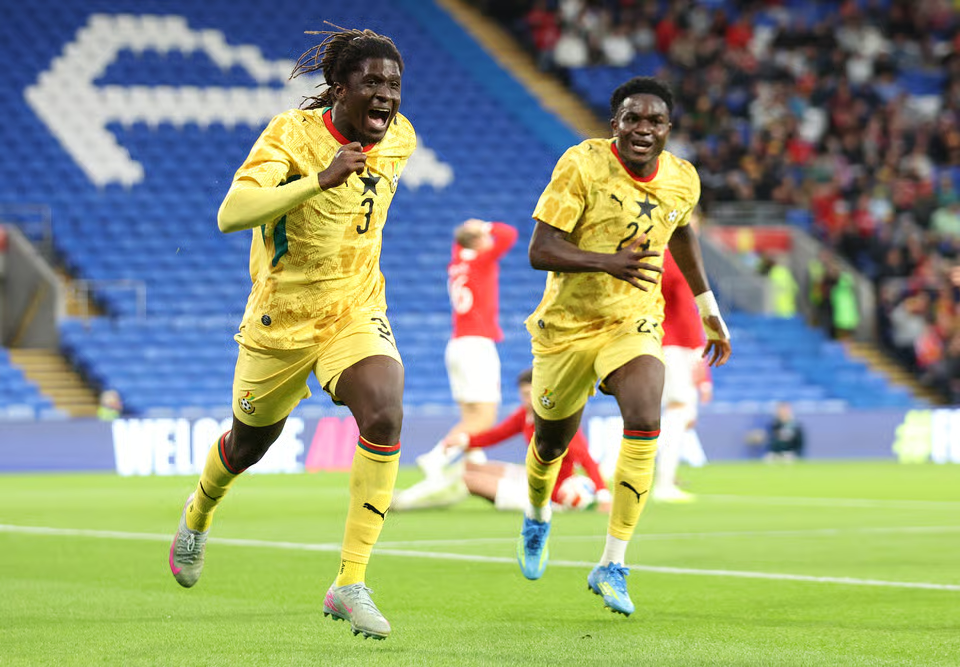
Caleb Yirenkyi’s second-half strike appeared set to hand Ghana an impressive away victory against European opposition. Instead, Lewis Koumas found an equaliser in the closing moments to ensure the hosts left Cardiff City Stadium with a share of the spoils.
The result means Queiroz begins his tenure unbeaten, but the scoreline tells only part of the story. For Ghana, this was more than a friendly. It was the final competitive test before the World Cup and the first opportunity to assess how quickly a new coaching team could reshape a squad carrying the hopes of a football-mad nation.
While the late goal denied the Black Stars a morale-boosting victory, the performance offered clues about what supporters can expect when Ghana begin their World Cup campaign later this month.
A Difficult First Half for Ghana
The opening stages belonged largely to Wales. Playing in front of a home crowd and under the guidance of Craig Bellamy, the hosts controlled possession, dictated the tempo and repeatedly tested Ghana’s defensive organisation. Wales enjoyed long spells on the ball and frequently pushed the Black Stars deep into their own half.
Goalkeeper Lawrence Ati-Zigi proved crucial in keeping Ghana level. The experienced shot-stopper produced several important interventions and was called into action repeatedly as Wales searched for an opening. Dan James struck the woodwork and remained a constant threat throughout the first half, while Ghana struggled to establish sustained possession.
Statistics reflected Wales’ dominance. The hosts controlled possession for much of the contest and attempted significantly more passes than Ghana. Yet despite the territorial advantage, they were unable to break through.
For Queiroz, that defensive resilience may have been one of the evening’s most encouraging developments.
Recent Black Stars performances have often been criticised for defensive lapses and a lack of structure. In Cardiff, Ghana absorbed pressure more effectively and remained organised even when momentum appeared to be against them.
Tactical Changes Shift the Momentum
The match changed after the interval.
Ghana emerged with greater energy, improved organisation and a clearer attacking threat. Queiroz’s adjustments helped the Black Stars become more compact without the ball while creating better opportunities to attack in transition. Kamaldeen Sulemana, Ernest Nuamah and Jordan Ayew became increasingly influential as Ghana began finding space behind the Welsh defence.
The breakthrough arrived in the 67th minute.
After Nuamah’s effort was saved, Yirenkyi reacted quickest to convert the rebound and put Ghana ahead. The goal rewarded a much-improved second-half display and appeared to place the Black Stars on course for a significant result. From that moment, Ghana looked more confident.
The team defended with discipline, disrupted Wales’ rhythm and appeared capable of seeing out the victory. For long periods, the tactical changes introduced by Queiroz worked exactly as intended.
The Lesson in Stoppage Time
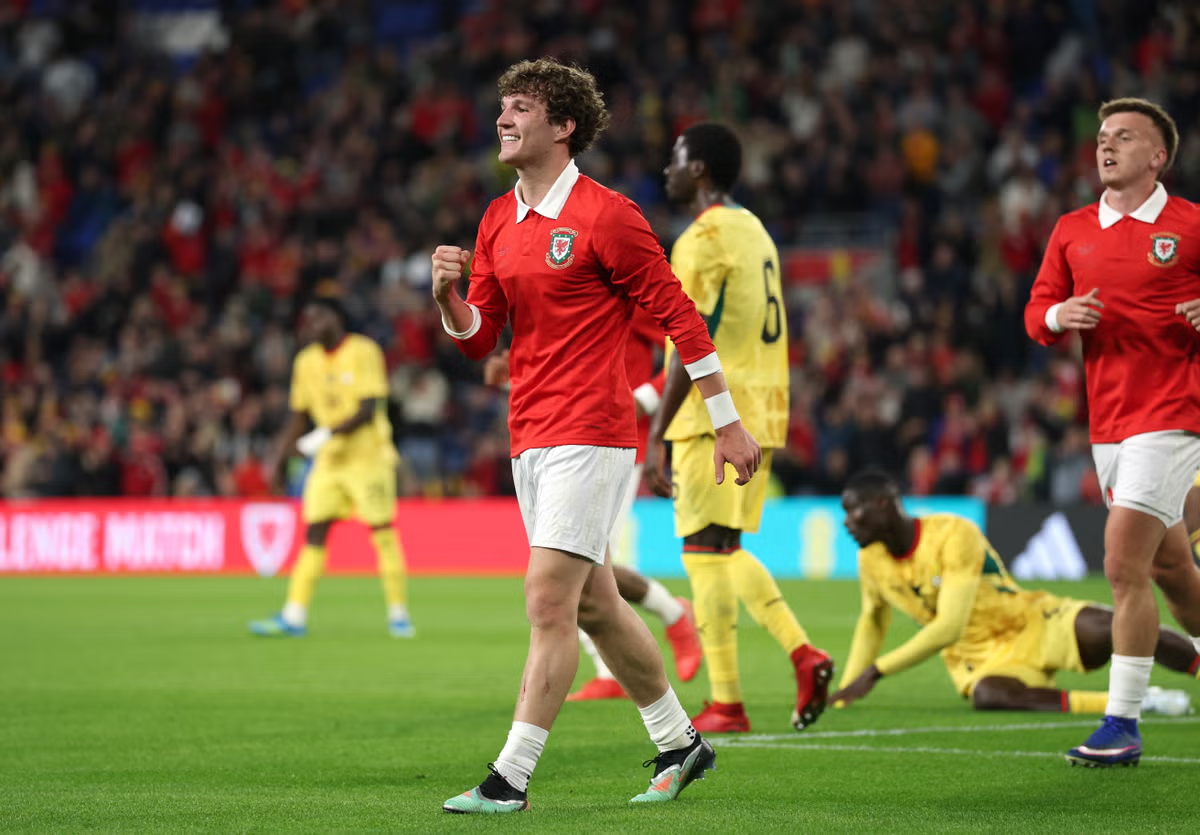
Football, however, can be unforgiving. Just as Ghana seemed set to secure victory, Wales produced one final attack. Koumas scored deep into stoppage time to level the match and deny the Black Stars what would have been a memorable result in Queiroz’s debut.
The equaliser exposed an issue that Ghana will need to address before the World Cup begins. Elite international tournaments are often decided by moments of concentration. Teams that defend effectively for 90 minutes can still be punished if they switch off at crucial moments.
For Queiroz, the final minutes may ultimately provide as much learning value as the positive spells that preceded them.
Why the Performance Matters
The Black Stars qualified for the World Cup with ambitions of progressing beyond the group stage, but they face a daunting challenge.
Ghana has been drawn alongside England, Croatia and Panama in a group that offers little margin for error. That reality makes every pre-tournament performance significant.
This match suggested Ghana possess qualities capable of causing problems for strong opponents. The team’s defensive organisation improved as the game progressed, substitutions made an impact and several attacking players demonstrated their ability to threaten in transition.
Perhaps most importantly, the players appeared receptive to Queiroz’s tactical ideas despite having limited time to work under the new coach.
Speaking before the tournament, Bellamy described Ghana as a dangerous side with pace and quality capable of troubling opponents. Such assessments from rival coaches provide useful perspective as Ghana prepare for football’s biggest stage.
What It Means for Ghana’s World Cup Hopes
Supporters will understandably focus on the disappointment of conceding so late. Yet the broader picture is more encouraging. The Black Stars showed defensive discipline, tactical adaptability and resilience against a strong European opponent away from home.
Questions remain about ball retention, game management and concentration in key moments. Those issues could prove decisive against elite opponents at the World Cup. However, there was enough evidence in Cardiff to suggest Ghana are moving in the right direction.
The draw does not transform expectations overnight. What it does provide is something equally important: belief that the Black Stars can compete. The victory slipped away in stoppage time.
The evidence that Ghana can become a more organised and competitive side under Queiroz did not. As the countdown to the World Cup continues, that may be the more important takeaway.
Related posts:
 Tottenham’s Mohammed Kudus ruled out of 2026 World Cup with injury
  Ghana Name Final World Cup Squad as Kudus and Dede Ayew Miss Out
  Ghana Coach Queiroz Stands By Partey’s Inclusion Ahead of World Cup
  Asamoah Gyan appointed Ghana football ambassador ahead of 2026 World Cup push
  Mexico beat Ghana 2-0 as Black Stars exposed in World Cup warm-up