Iran-Israel Escalation Raises Fears of Wider Middle East Conflict as Iraq Faces Growing Pressure since April 2026


Follow Nukunya
Get the latest breaking news and updates from Nukunya.
Missile Strikes Intensify Regional Crisis
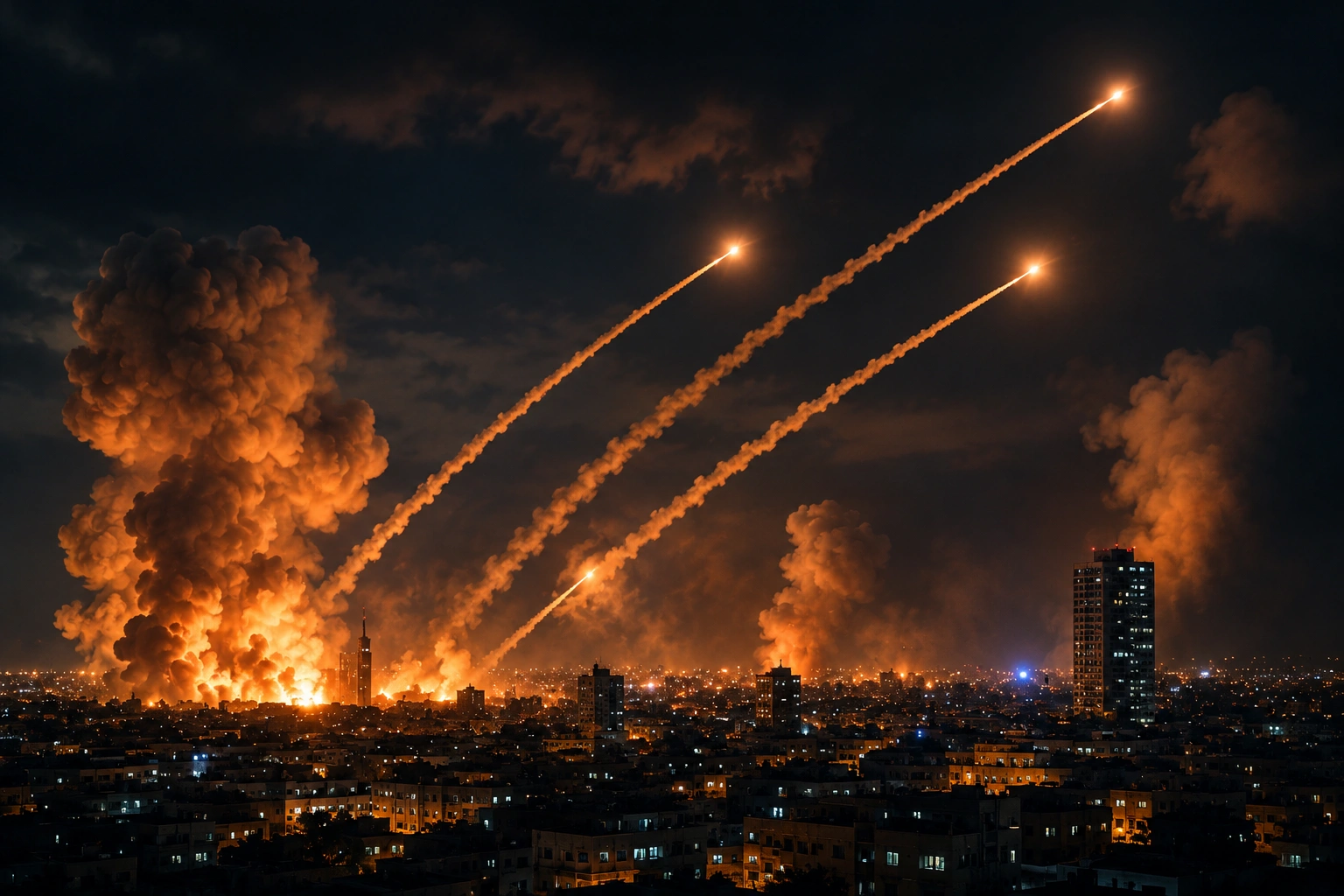
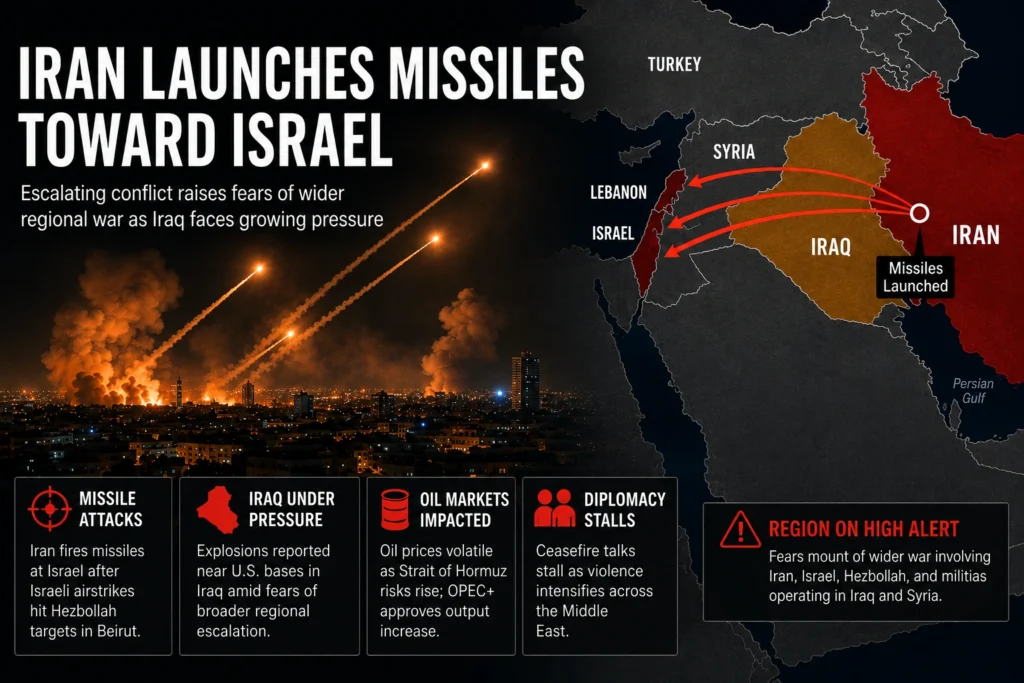
Iran launched missiles toward Israel on Sunday following Israeli airstrikes on Hezbollah-linked targets in Beirut, escalating tensions across the Middle East and raising fears of a broader regional conflict that could further destabilise Iraq and neighbouring countries.
Air raid sirens sounded across parts of Israel after the missile launches, while Israeli defence systems were activated to intercept incoming projectiles. Israeli authorities said assessments of damage and casualties were still ongoing, with emergency services deployed to several areas.
The missile exchange followed overnight Israeli strikes on southern Beirut, where the Israeli military said it had targeted Hezbollah infrastructure and command facilities. Lebanese security sources reported heavy explosions in densely populated districts associated with the Iran-backed armed group.
Iranian state media described the missile launches as a response to what Tehran called “continued aggression” against allied forces in Lebanon. Israeli officials accused Iran of directly escalating the conflict and warned of further military action against Hezbollah positions.
The latest developments mark one of the most dangerous periods of confrontation in the region since fighting intensified between Israel and Hezbollah along the Lebanon-Israel border earlier this year.
Iraq Caught Between Regional Powers
The escalating conflict has placed Iraq in an increasingly difficult position as the country attempts to balance its relationships with both Iran and the United States.
Iraq hosts Iran-backed militias alongside government security forces, while U.S. military personnel remain stationed in the country as part of anti-Islamic State operations. Analysts say this makes Iraq particularly vulnerable to being drawn deeper into the crisis.
Earlier this week, explosions and heightened security alerts were reported near areas hosting U.S. personnel in northern Iraq, according to local security and military sources. While no group immediately claimed responsibility, Iraqi officials expressed concern that retaliatory attacks linked to the broader regional conflict could increase.
The Iraqi government has repeatedly called for restraint and warned against the country becoming a battlefield for foreign powers. Officials in Baghdad have also stepped up diplomatic contacts with regional governments in an effort to prevent further escalation.
Political analysts say Iraq’s fragile stability could face renewed strain if fighting intensifies between Iran and Israel or if militia groups become more directly involved.
Global Oil Markets React to Rising Tensions
The growing instability has also affected global financial and energy markets, with investors closely monitoring developments near the Strait of Hormuz, one of the world’s most critical oil shipping routes.
Oil prices remained volatile on Sunday as traders assessed the risk of potential supply disruptions in the Gulf region. Shipping companies and insurers were also reported to be reviewing security measures for vessels operating near key maritime routes.
OPEC+, which includes Iraq and other major oil-producing nations, agreed over the weekend to another increase in oil production quotas amid concerns that prolonged instability could threaten global energy supplies.
Energy analysts warned that any disruption to shipping through the Strait of Hormuz could significantly affect international crude prices and place additional pressure on economies already facing inflation concerns.
Iraq, heavily dependent on oil exports for government revenue, could face economic challenges if regional insecurity begins affecting production, transport infrastructure, or foreign investment.
Diplomatic Efforts Face Growing Challenges
International diplomatic efforts to contain the conflict appeared increasingly fragile following the latest military exchanges.
U.S. officials have continued indirect contacts with Tehran in recent weeks, though Iranian officials suggested negotiations had become more difficult after the Israeli strikes in Beirut. Regional mediators, including Gulf states, have also urged restraint and renewed calls for de-escalation.
The United Nations expressed concern over the rising violence and warned that continued military escalation risked triggering a wider humanitarian and security crisis across the Middle East.
Regional analysts said the involvement of multiple armed groups, including Hezbollah and Iran-backed militias operating in Iraq and Syria, increases the risk of miscalculation and rapid escalation.
With tensions continuing to rise, governments across the region remain on high alert as fears grow that the conflict could expand beyond Israel and Lebanon into a broader confrontation involving several Middle Eastern states.
Independent verification of some battlefield claims made by the parties involved remains difficult due to the fast-moving nature of the conflict and restrictions on access in affected areas.
Related posts:
 Tenerife prepares for cruise ship with hantavirus cases amid local concern
  Trump discusses Taiwan arms sale with China’s Xi Jinping
  US pauses $14bn arms sale to Taiwan amid Iran conflict, navy chief says
  China coal mine explosion kills at least 82 in Shanxi province disaster
  Israel Launches Strikes Inside Iran After Missile Attack as Regional Tensions Escalate