
Israel Launches Strikes Inside Iran After Missile Attack as Regional Tensions Escalate

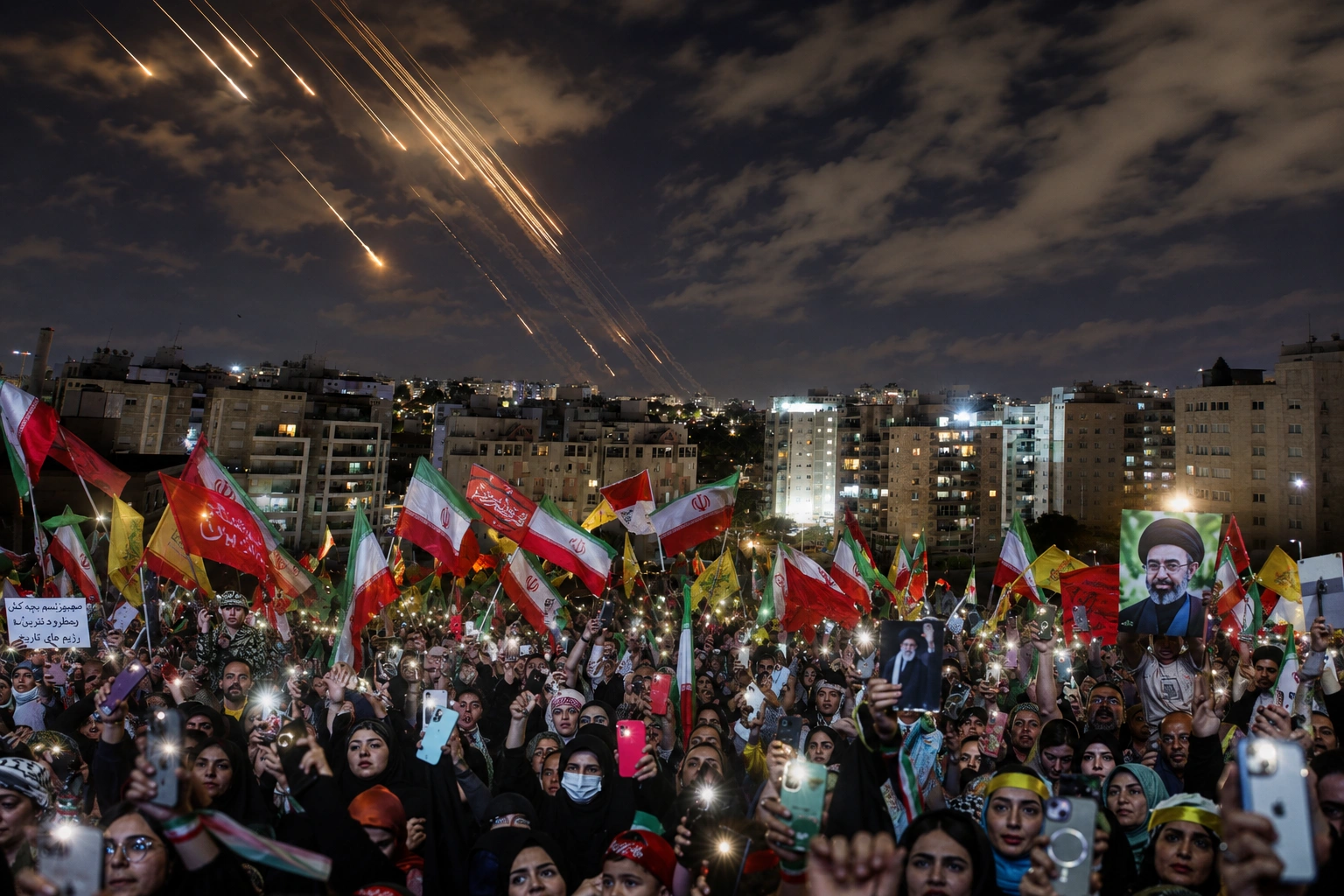

Israel says it struck military targets in western and central Iran after Iranian missile attacks triggered air raid alerts across Israel, raising fears of a broader regional conflict and pushing oil prices higher.
JERUSALEM/TEHRAN — Israel says it has carried out strikes on military targets inside Iran after Iranian missile attacks triggered air raid alerts across parts of Israel, marking the most serious exchange of fire between the two countries since an April ceasefire agreement.
Israeli officials said military targets in western and central Iran were struck early Monday in response to missile launches from Iran. Explosions were reported in several Iranian cities, including Tehran, Isfahan, Tabriz and Karaj, according to Iranian media reports.
Iran’s Revolutionary Guards said multiple waves of missiles had been launched towards Israel, while Israeli defence systems worked to intercept incoming projectiles. Air raid warnings were activated across parts of Israel, including Jerusalem and central regions of the country.
The latest confrontation comes after months of fragile diplomacy following an April ceasefire agreement intended to reduce tensions between Israel, Iran and regional proxy groups. That ceasefire has faced repeated challenges in recent weeks amid renewed hostilities involving Lebanon and the wider region.
Trump Urged Restraint
US President Donald Trump reportedly urged Israeli Prime Minister Benjamin Netanyahu not to retaliate against Iran before the latest strikes occurred. According to multiple media reports, Trump warned that further military action risked undermining diplomatic efforts and said both sides should avoid a broader escalation. The White House has continued to pursue diplomatic channels with Tehran even as military tensions have intensified.
Oil Prices Rise
Financial markets reacted quickly to the renewed confrontation.
Oil prices rose as investors assessed potential risks to energy supplies and shipping routes across the Middle East. The escalation has also renewed concerns about disruptions around the Bab al-Mandab Strait, one of the world’s most important maritime trade corridors linking the Red Sea to international shipping routes.
Iran also temporarily suspended flights at Tehran’s Imam Khomeini International Airport following the attacks.
International Calls for De-escalation
Governments and diplomats have renewed calls for restraint amid fears that continued exchanges could draw additional countries and armed groups into the conflict. UK Foreign Secretary Yvette Cooper urged both sides to “show restraint and de-escalate immediately,” warning that renewed conflict threatens regional stability and international trade.
The United States Embassy in Jerusalem also announced temporary operational restrictions because of the deteriorating security environment.
What Happens Next?
Analysts say the immediate question is whether either side chooses to escalate further or returns to diplomatic negotiations.
Any prolonged confrontation could affect:
- Global energy prices
- International shipping
- Aviation routes
- Regional security
- Ongoing US-Iran diplomatic efforts
For now, the situation remains fluid, with military alerts active across parts of the region and governments closely monitoring developments.
Related posts:
 Iran-Israel Escalation Raises Fears of Wider Middle East Conflict as Iraq Faces Growing Pressure since April 2026
  Iran delays response to US proposal as nuclear programme and Strait of Hormuz emerge as key obstacles
  Australia Approves Stronger Mouse Poison as Farmers Battle Growing Rodent Plague
  Massive Russian Strikes Hit Kyiv and Dnipro: At Least 10 Dead and Dozens Trapped in Rubble
  Avenor Building Collapse Kills Two as Officials Demand Tougher Enforcement of Building Regulations