
From Poverty to Cambridge: Three Ghanaian Women Defy the Odds to Earn Master’s Degrees
Franciska Arhinful, Jemimah Mensah and Fadila Issah have completed master's degrees at Cambridge after overcoming poverty and educational barriers in Ghana.

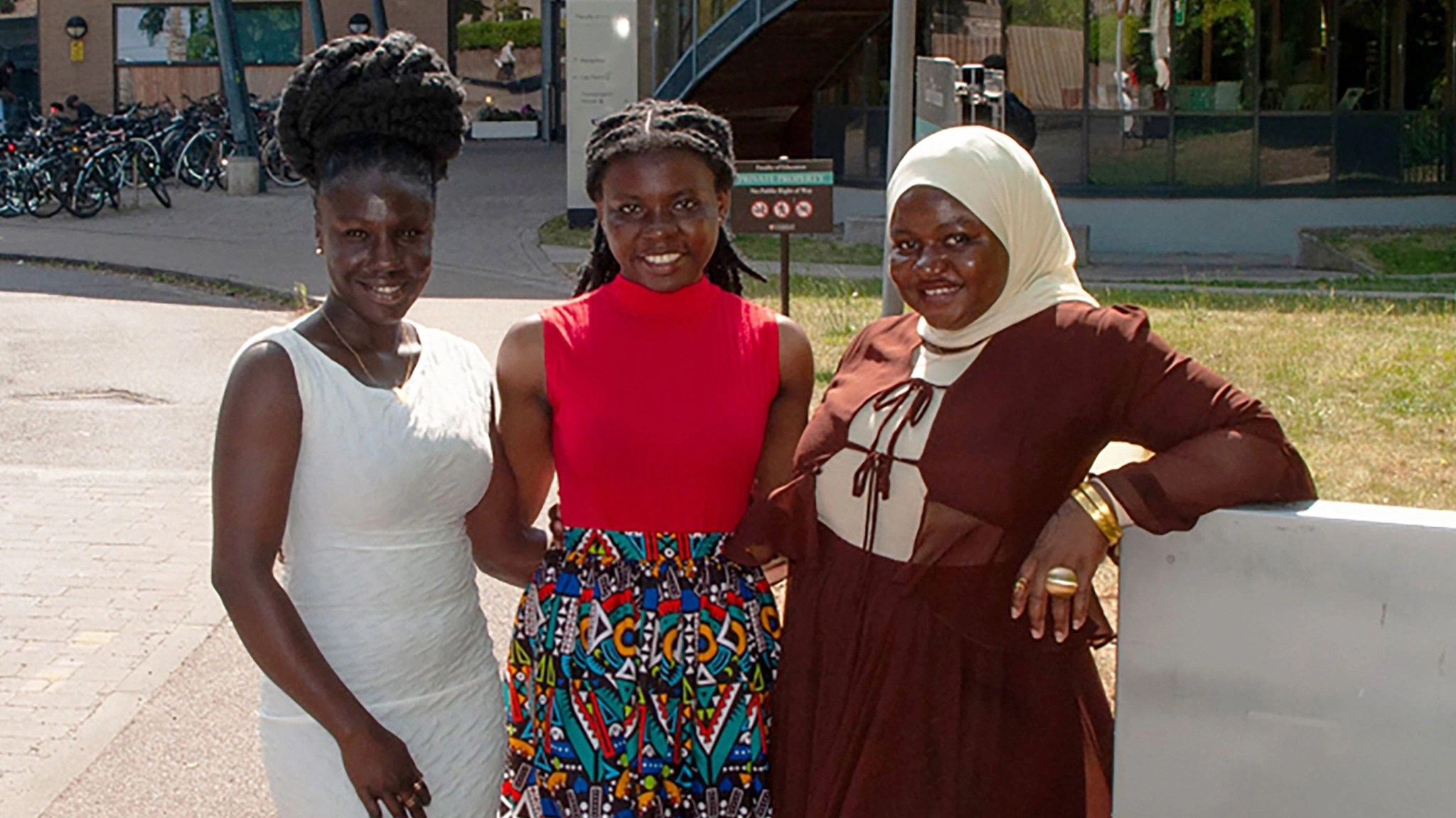

Three Ghanaian women who once faced the prospect of leaving school because of poverty are graduating from the University of Cambridge this week, highlighting how education, mentorship and targeted scholarships can transform lives and communities.
CAMBRIDGE, United Kingdom – Three Ghanaian women who grew up facing financial hardship and barriers to education are celebrating an extraordinary achievement this week as they complete master’s degrees at one of the world’s most prestigious universities.
Franciska Arhinful, Jemimah Mensah and Fadila Issah are graduating with MPhil degrees in Education from the University of Cambridge after a journey that began in communities where completing secondary school was far from guaranteed. Their story is being hailed as a powerful example of how education can break cycles of poverty and create opportunities that once seemed impossible. The three women were supported by Camfed, a charity focused on girls’ education in Africa, while their studies at Cambridge were funded through the Mastercard Foundation Scholars Programme.
A Journey That Began Against the Odds
For Fadila Issah, 26, the road to Cambridge began in Savelugu in northern Ghana, an area where educational opportunities for girls have historically been limited. She told the BBC she became the first person in her community to attend Cambridge and hopes her achievement will inspire other young girls to pursue their ambitions.
“I hope to help girls in similar situations realise their dreams,” she said.
Issah’s family often struggled financially, and after her father became unable to work, continuing her education became increasingly difficult. She balanced school with multiple jobs before receiving support from a Camfed mentor who helped cover school-related costs.
That intervention, she said, changed the course of her life.
Education Opens New Doors
Franciska Arhinful’s experience was equally challenging. Growing up in Ghana’s Central Region, she faced the prospect of abandoning her education when her family could not afford secondary school fees. At one point, relatives explored the possibility of having her adopted so that she could continue her studies.
Instead, support from Camfed provided scholarship assistance and connected her with a network of young women who had faced similar challenges.
“It really improved my self-esteem and encouraged me to keep going,” Arhinful said.
For Jemimah Mensah, now 29, the challenge came when she left school at the age of 14 to help support her family.
Her mother operated a catering business, which served as the family’s primary source of income. Returning to education seemed unlikely.
“I dreamed of going back [to education], but I didn’t know when it would happen,” she said. “For people like me, that was normal.”
Mensah eventually resumed her education after a free secondary school opened near her community, enabling her to continue her academic journey.
What Their Success Says About Ghana
The story arrives at a time when Ghana continues to debate educational access, youth opportunity and social mobility. While the country’s Free Senior High School policy has expanded access to secondary education for millions of students, challenges remain, particularly for girls in rural communities, low-income households and underserved regions.
The experiences of Arhinful, Mensah and Issah suggest that access alone is not always enough. Mentorship, financial support, role models and community networks can be equally important in helping talented young people realise their potential. According to figures cited by UNESCO and referenced in the BBC report, four out of every ten girls in Africa do not complete secondary school, highlighting the scale of the challenge that remains across the continent.
Beyond Individual Achievement
The significance of the women’s success extends beyond personal accomplishment.
All three have trained as peer mentors through Camfed and are helping support younger girls and women facing similar obstacles. Their aim is to ensure that the opportunities they received are passed on to the next generation. This reflects a broader lesson increasingly recognised by educators and development organisations: investing in girls’ education often produces benefits that extend well beyond the individual student, strengthening families, communities and local economies.
A Story That Resonates Beyond Ghana
For many Ghanaians living abroad, the achievements of Arhinful, Mensah and Issah will resonate deeply. Their journey reflects a familiar theme within the Ghanaian diaspora: education as a pathway to opportunity, social mobility and global influence.
At a time when stories about migration, economic hardship and youth unemployment often dominate headlines, their success offers a different narrative — one centred on resilience, determination and possibility. As they graduate from Cambridge this week, the three women are not only collecting degrees.
They are demonstrating what can happen when talent meets opportunity. For Ghana, their achievement is a reminder that some of the country’s greatest assets are not found beneath the ground or in financial markets, but in the aspirations of its young people.
Source
Based on reporting by BBC.
Related posts:
 NSMQ Star Prince Debrah Jr Lands Google Engineering Role After MIT Graduation
  Ghana Embassy in US Yet to Receive World Cup Tickets for Diaspora Distribution
  Government Repatriates 327 Ghanaians Displaced by Demolitions in Côte d’Ivoire
  Drug Networks Increasingly Target Ghana’s Schools, Education Ministry and NACOC Warn
  Ghana to Begin Final Evacuation of Nearly 900 Citizens from South Africa on July 25