US Judge Strikes Down Trump Immigration Restrictions Affecting 39 Countries


Follow Nukunya
Get the latest breaking news and updates from Nukunya.
A federal judge has invalidated immigration restrictions affecting applicants from 39 countries, including more than two dozen in Africa, ruling that the measures unlawfully delayed asylum, work permit, green card and citizenship decisions.
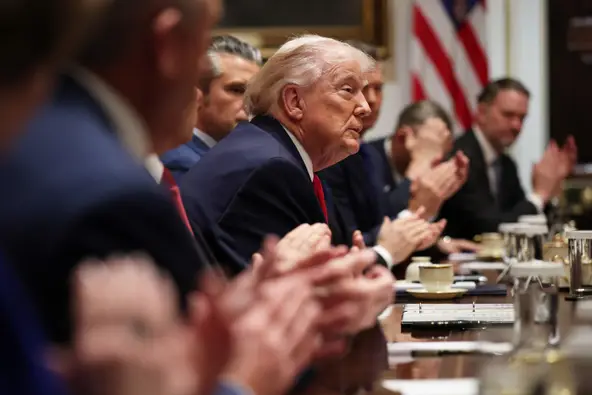
WASHINGTON, DC — A federal judge has struck down immigration restrictions affecting applicants from 39 countries, including more than two dozen in Africa, ruling that the measures unlawfully delayed decisions on asylum claims, work permits, permanent residency applications and citizenship requests.
The ruling could have significant implications for African migrants, students, workers and families whose immigration applications were placed on hold under policies adopted by US Citizenship and Immigration Services (USCIS). Chief US District Judge John McConnell, sitting in Rhode Island, found that the agency lacked the legal authority to implement the measures and said applicants had been left in what he described as an “indeterminate legal limbo” because of their nationality rather than their individual circumstances. The decision stems from a lawsuit brought by immigrant advocacy organisations and labour unions challenging the restrictions, which affected applicants from countries across Africa, Asia, Latin America and the Middle East.
African Countries Among Those Affected
The case carries particular significance for Africa because more than two dozen African countries were affected by the restrictions. Among them were Nigeria, Senegal, Sierra Leone, Somalia, Sudan, Tanzania, Zimbabwe, Zambia, Togo, Mali, Niger and The Gambia. Applicants from these countries could face delays or suspensions in requests for asylum, work authorisation, permanent residency and citizenship despite complying with existing immigration procedures.
Countries Affected in Africa
Angola, Benin, Burkina Faso, Burundi, Chad, Republic of the Congo, Côte d’Ivoire, Equatorial Guinea, Eritrea, Gabon, The Gambia, Libya, Malawi, Mali, Mauritania, Niger, Nigeria, Senegal, Sierra Leone, Somalia, South Sudan, Sudan, Tanzania, Togo, Zambia and Zimbabwe.
Judge Says USCIS Exceeded Its Authority
Judge McConnell ruled that USCIS lacked the statutory and regulatory authority required to impose the restrictions. “The rule of law has to apply to everyone equally,” he wrote in the judgement. According to the ruling, immigration authorities failed to follow procedures established under federal law and unlawfully delayed applications based on nationality. The court further concluded that applicants were effectively penalised because of where they were born rather than because of any individual conduct.
How the Restrictions Were Introduced
The measures were adopted after the November 2025 shooting of two National Guard members in Washington, DC. Prosecutors allege the attack was carried out by an Afghan national, although criminal proceedings remain ongoing and the accused has pleaded not guilty.
Following the incident, the Trump administration expanded restrictions affecting nationals from countries already subject to full or partial travel limitations. USCIS subsequently delayed or suspended decisions on immigration benefit applications from affected countries, including requests for asylum, work permits, green cards and citizenship. Countries specifically cited in reporting on the case included Afghanistan, Somalia, Iran, Haiti, Venezuela and Syria.
Advocacy Groups Welcome the Decision
The ruling was welcomed by organisations involved in the lawsuit. Skye Perryman, president of Democracy Forward, one of the groups representing the plaintiffs, said the judgement reaffirmed the principle that lawful immigration pathways should not be administered in a discriminatory manner. The Department of Homeland Security did not immediately comment following the ruling.
What Happens Next?
The decision could accelerate processing for affected applicants and reopen access to immigration benefits that had been delayed under the restrictions. Legal experts expect the administration to consider whether to appeal the ruling, potentially setting up a further court battle over the limits of executive authority in immigration policy.
For many migrants and families, however, the significance of the judgement extends beyond legal arguments made by the Trump administration. The ruling offers the prospect that applications which have remained stalled for months may finally move forward, allowing people to work, reunite with relatives, pursue education and make long-term plans for their future.
Related posts:
 32 Ghanaians Listed in US Homeland Security ‘Worst of the Worst’ Database as Immigration Enforcement Intensifies
  How New UK, US and EU Immigration Rules Are Affecting Ghanaians Abroad
  Ghana Evacuates 345 More Citizens from South Africa as Other African States Study Rescue Plan
  US Tightens Visa Rules for Foreign Students and Journalists Under Trump Administration
  ECOWAS backs Ghana’s anti-xenophobia push as West African ministers endorse AU petition and reparatory justice framework