US Warns Travellers: Bushmeat Can Be Seized and Destroyed

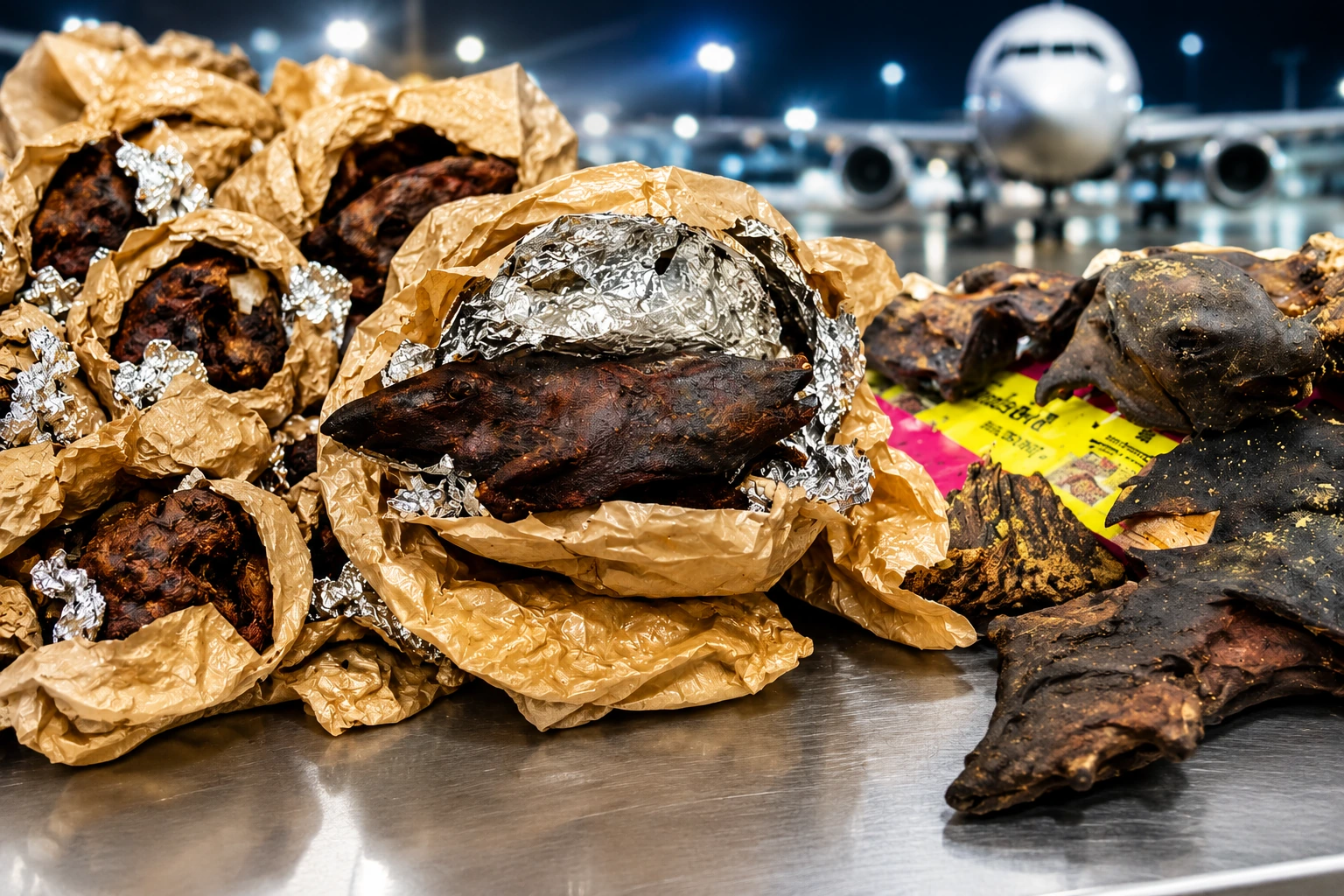

US authorities have renewed warnings that travellers carrying bushmeat into the United States risk confiscation, fines and possible enforcement action. The advisory has particular relevance for Ghanaian and African diaspora communities as international travel continues to increase.
WASHINGTON, D.C. — United States authorities have renewed warnings to travellers from Ghana and other African countries that bushmeat brought into America can be seized and destroyed, with officials citing public health, wildlife protection and agricultural concerns. The advisory comes as international travel between West Africa and the United States continues to grow, increasing the importance of public awareness around customs and import regulations. US authorities say many travellers remain unaware that products commonly accepted in their home countries may be prohibited at American ports of entry.
According to U.S. Customs and Border Protection (CBP) and the U.S. Centers for Disease Control and Prevention (CDC), bushmeat remains prohibited from entering the United States regardless of whether it is intended for personal consumption, family members or cultural gatherings.
CBP says prohibited products discovered during inspections may be confiscated and destroyed, while travellers could face penalties depending on the circumstances. The warning carries particular significance for Ghanaian and wider African diaspora communities, where smoked or dried bushmeat remains a traditional food item and is often shared among family members or carried abroad as gifts.
Why Bushmeat Is Restricted
The CDC defines bushmeat as meat sourced from wild animals, including rodents, bats, non-human primates and other wildlife. Health authorities say such products can carry infectious diseases capable of spreading from animals to humans. The restrictions are therefore designed to reduce risks to public health and prevent the introduction of diseases that could affect people, livestock and wildlife populations.
The CDC notes that smoking, drying or salting bushmeat does not necessarily eliminate all disease risks. US authorities also argue that the restrictions help protect American agriculture from foreign animal diseases that could have serious economic consequences.
“Products prevented from entering the United States are those that would injure community health, public safety, American workers, children, domestic plant and animal life, or those that would defeat our national interests,” CBP states in guidance issued to travellers.
A Reminder for Ghanaian Travellers
For many Ghanaians, bushmeat remains part of traditional cuisine.
Products such as smoked grasscutter and other forms of wild game continue to be consumed in parts of Ghana and are often viewed as cultural delicacies. However, customs regulations in the United States differ significantly from those in Ghana.
US authorities stress that cultural familiarity does not exempt products from import restrictions. The warning serves as a reminder that food items commonly purchased, consumed or shared in Ghana may face strict controls when carried across international borders. Travel experts advise passengers to check destination-country regulations before travelling, particularly when carrying food products, meat, agricultural goods or animal-derived items.
Previous Seizures Involving Ghana
The renewed advisory follows previous enforcement actions involving travellers arriving from Ghana.
In one case highlighted by CBP, agriculture specialists at Newark Liberty International Airport confiscated nearly nine pounds of meat carried by a passenger arriving from Ghana. Laboratory analysis later identified the product as bushmeat, and it was subsequently destroyed. US authorities frequently cite such cases as examples of why travellers should familiarise themselves with customs rules before departure.
Why This Matters for the Diaspora
For members of the Ghanaian diaspora, the issue goes beyond customs enforcement. Bushmeat is often associated with family traditions, cultural identity and social gatherings. Yet authorities say travellers must balance those traditions with the legal requirements of destination countries.
The warning therefore highlights a broader reality faced by many migrants and international travellers: practices that are common and culturally accepted in one country may be restricted or prohibited in another. Understanding those differences can help travellers avoid delays, confiscations, fines and additional scrutiny at airports.
What Happens Next?
US authorities are expected to continue enforcement efforts at airports, seaports and border crossings. Travellers entering the United States are being encouraged to review official customs guidance before departure and to declare any food products carried in their luggage.
The warning is also likely to gain greater attention ahead of the busy summer travel season, when many Ghanaians visit relatives in the United States. For travellers, the message from US authorities remains straightforward: check the rules before you fly.
For many people, the issue is not simply food. It is understanding how cultural traditions intersect with international health, agricultural and customs regulations. What is commonplace in Ghana may not be permitted at a US airport.
Related posts:
 Ghana Embassy in US Yet to Receive World Cup Tickets for Diaspora Distribution
  32 Ghanaians Listed in US Homeland Security ‘Worst of the Worst’ Database as Immigration Enforcement Intensifies
  Ghana Evacuates 345 More Citizens from South Africa as Other African States Study Rescue Plan
  Nearly 1,000 Ghanaians Repatriated as South Africa Evacuation Operation Concludes
  Diaspora Affairs Office Backs New Volunteerism Initiative to Harness Ghanaian Talent Abroad