
Pregnant Ghanaian Teacher Returns Home After Week-Long Detention at US Airport


Follow Nukunya
Get the latest breaking news and updates from Nukunya.
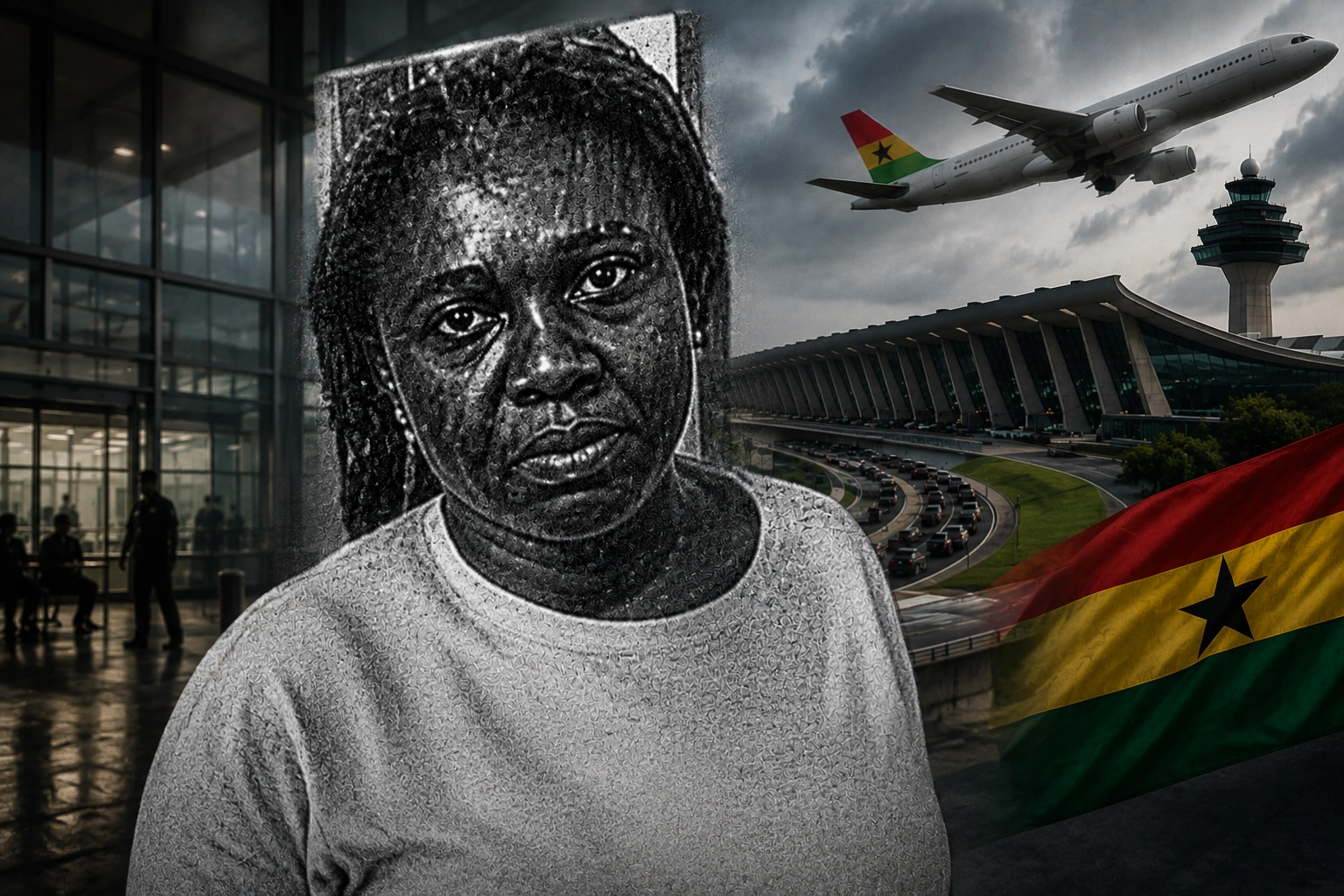
A federal judge ordered the release of a Ghanaian woman and her young son after they spent more than a week in detention at Washington Dulles International Airport following her disclosure that she intended to seek asylum in the United States.
WASHINGTON, D.C. — A pregnant Ghanaian teacher and her four-year-old son have returned to Ghana after spending more than a week in detention at Washington Dulles International Airport, following a federal court intervention that ended a legal dispute over her attempted asylum claim.
Annabella Gyasi, 38, arrived in the United States on 19 May on a valid tourist visa with her son, who was scheduled to attend a medical consultation at Akron Children’s Hospital in Ohio for a condition affecting his hands. Instead of boarding a connecting flight, the pair were taken into custody by US Customs and Border Protection officers after Gyasi disclosed fears about returning to Ghana and indicated an intention to seek asylum.
A US federal judge later ordered that Gyasi and her son be allowed to leave the airport and return home, ruling that their welfare and the interests of justice were best served by allowing them to depart immediately.
Medical Visit Turned Into Immigration Dispute
According to court filings cited by multiple US media outlets, Gyasi had travelled to the United States seeking specialist medical advice for her son after previously being told he was too young for a surgical procedure. The family’s tourist visas remained valid until 2028.
The situation changed during questioning by immigration officials.
Court documents cited by CNN and other outlets state that Gyasi disclosed concerns about persecution if she returned to Ghana. Her legal representatives later argued that she was effectively penalised for openly discussing those fears with US authorities.
US government lawyers argued that her tourist visa was no longer valid because she had acknowledged an intention to seek asylum rather than return to Ghana after her visit. Immigration authorities subsequently processed her asylum claim, which was later rejected by an immigration judge.
Disputed Conditions of Detention
The American Civil Liberties Union (ACLU) of Virginia, which represented Gyasi, alleged that she and her son were held in a windowless room with limited access to food, hygiene facilities and medical support. The organisation argued that the conditions were unsuitable, particularly given Gyasi’s pregnancy and her son’s medical needs.
Court filings stated that Gyasi was hospitalised twice during the detention period after experiencing high blood pressure, light-headedness and vaginal bleeding. Her lawyers said medical staff expressed concern that she was not eating enough and that stress was affecting her health.
The US Department of Homeland Security disputed the allegations.
In statements reported by several news organisations, the department said individuals in custody receive access to medical evaluations, medication, food and other appropriate care. Officials rejected claims that Gyasi had been mistreated while in detention.
Wider Immigration Debate
The case has attracted attention beyond the immediate circumstances of the family because it intersects with broader debates over US immigration enforcement and the treatment of asylum seekers.
Civil liberties groups argued that the detention reflected increasingly restrictive immigration policies, particularly toward asylum applicants and pregnant migrants. Government officials, however, maintained that immigration laws and border procedures were being applied appropriately.
The judge ultimately ordered that Gyasi and her son should not spend another night at the airport and directed the government to arrange their departure. They subsequently boarded a flight back to Ghana.
While the family’s attempt to remain in the United States came to an end, the case has raised wider questions about the treatment of asylum seekers, detention conditions and the balance between immigration enforcement and humanitarian concerns.
Reporting by Edem Hodasi
Additional sourcing: CNN
Related posts:
 Ghana Parliament Passes Human Sexual Rights and Family Values Bill
  Nigeria Begins Repatriation from South Africa as Anti-Migrant Tensions Spark Regional Concern
  Government Repatriates 327 Ghanaians Displaced by Demolitions in Côte d’Ivoire
  South Africa anti-migrant protests: Thousands flee as Ramaphosa calls for calm ahead of unofficial deadline
  Ghana Extradites Abu Trica to US Over Alleged $8 Million AI-Linked Romance Fraud Scheme