
UK net migration falls as visa applications decline sharply

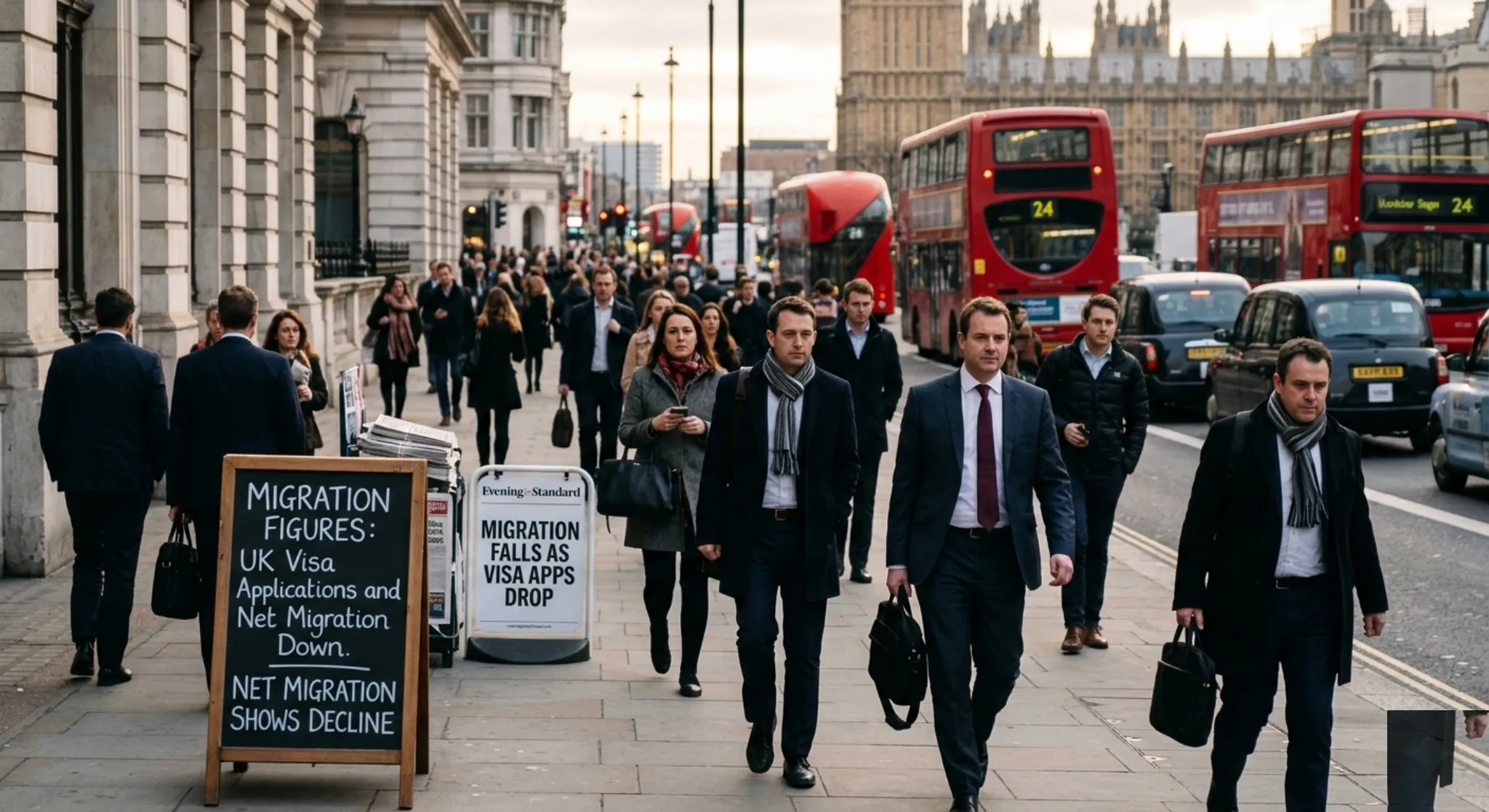

Net migration to the United Kingdom has dropped as visa demand slows, with implications for Ghanaian communities, labour markets and immigration policy.
LONDON, United Kingdom — 5 May 2026
UK net migration falls in the latest official estimates as visa applications decline sharply, signalling a shift in the country’s immigration patterns after record highs in recent years. The change matters for Ghanaian communities across the UK, particularly students, skilled workers and families navigating visa routes. Lower migration flows may ease political pressure on immigration policy, but they also raise concerns for sectors that rely on overseas labour. Data published by the Office for National Statistics shows a noticeable drop in net migration, driven primarily by reduced inflows of international students and dependants.
Why UK net migration falls as visa applications decline
The Home Office has tightened rules affecting student dependants and certain work routes, contributing to a fall in visa demand. At the same time, economic conditions and policy changes have influenced decisions by prospective migrants. According to official figures from the Home Office, applications for study visas and health and care worker routes have both slowed compared with the previous year.
An analysis published by the Migration Observatory at the University of Oxford notes that policy adjustments and global economic factors are shaping migration patterns. An economist specialising in migration policy said the decline reflects “a combination of deliberate policy tightening and changing global demand for UK education and work opportunities”.
Which sectors have been affected?
Changes in migration flows particularly expose sectors such as healthcare, social care, and higher education. Universities have relied heavily on international students, including many from Ghana, to sustain their enrolment levels and funding. A reduction in student visas could affect institutional finances and course availability. Healthcare providers have also depended on overseas workers to address staffing shortages. A slower pace of recruitment may increase pressure on existing services.
A representative from a UK-based healthcare organisation said that workforce planning would need to adjust to the new reality. “International recruitment has been critical. Any slowdown will require careful management to avoid service disruption,” the representative said.
What does this development mean for Ghanaian communities?
For Ghanaians living in the UK or considering relocation, the shift has practical implications. Stricter visa rules may make it harder for families to move together, particularly under student routes. At the same time, reduced migration could change job market dynamics, potentially affecting opportunities in sectors that have relied on international talent.
A Ghanaian postgraduate student in Manchester said recent policy changes have altered decision-making for many applicants. “People are thinking more carefully before applying now because the rules are tighter and costs are higher,” the student said.
What are the political and policy implications?
Immigration remains a central issue in UK politics. The government has argued that reducing net migration is necessary to manage public services and maintain economic balance. However, critics say the focus on headline figures may overlook the contribution of migrants to the economy and society.
A policy analyst at a London-based think tank said the debate needs to move beyond numbers. “Migration policy should consider economic needs, skills shortages and long-term demographic trends, not just short-term targets,” the analyst said.
What happens next?
The government has indicated it will continue to monitor migration trends and adjust policy where necessary. Future changes may depend on labour market conditions, economic performance and political priorities ahead of upcoming policy reviews. For Ghanaian readers, both in the UK and at home, the decline in migration signals a changing environment that could affect study, work and family pathways.
The key question now is whether the reduction reflects a temporary adjustment or a longer-term shift in the UK’s approach to migration.
Sources: Office for National Statistics · Home Office · Migration Observatory.
Additional reporting by Nukunya News Desk.
Related posts:
 UK rent prices rise as housing supply remains constrained
  UK Raises Terror Threat Level to ‘Severe’ After Golders Green Terror Attack
  Bank of England holds rates at 3.75% and warns Iran war could push UK inflation higher
  EU digital border checks for Brits to continue as Portugal and Italy reject suspension
  DR Congo Ebola outbreak grows as Oxford scientists fast-track vaccine