
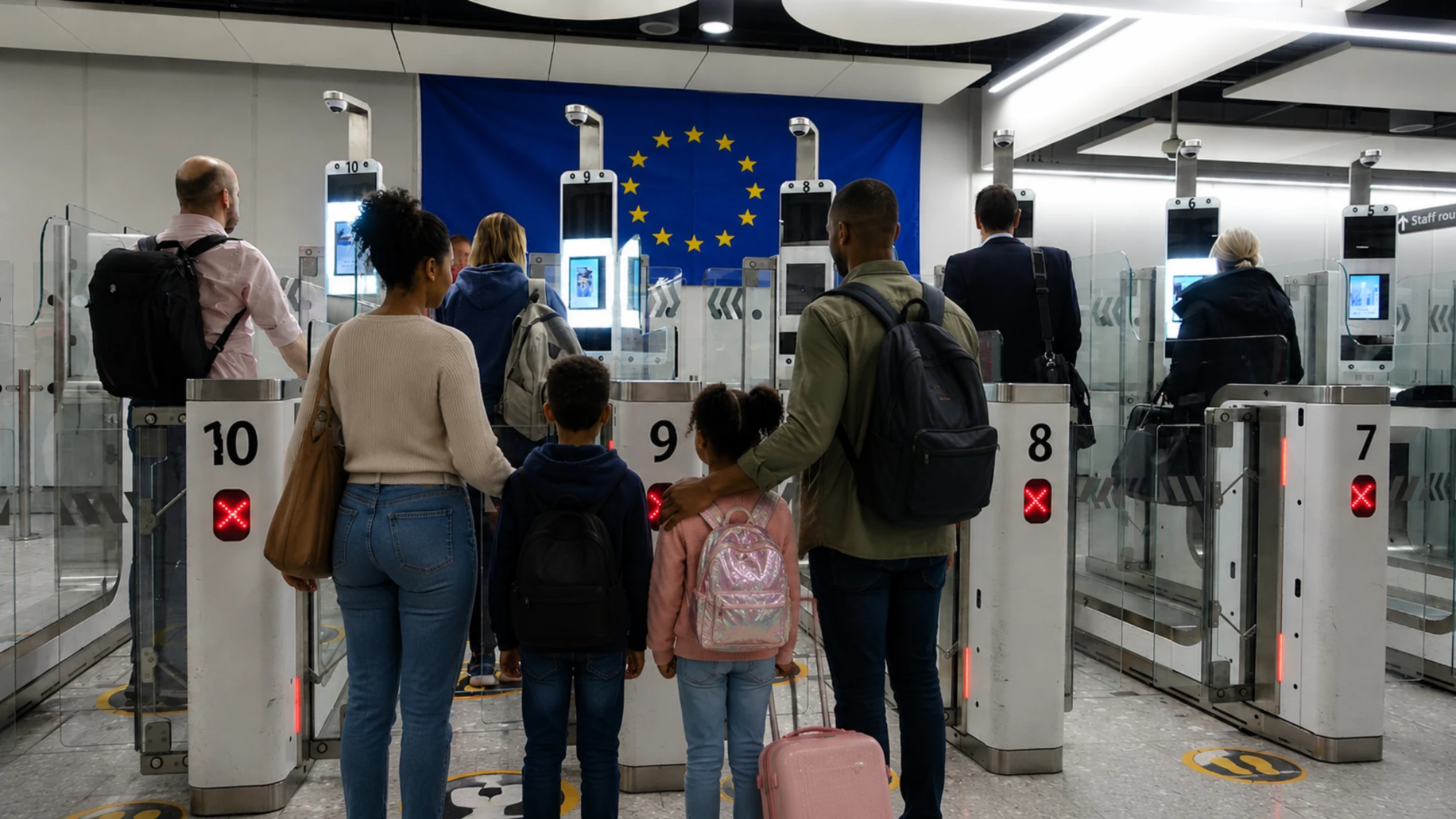
EU digital border checks for Brits to continue as Portugal and Italy reject suspension


Follow Nukunya
Get the latest breaking news and updates from Nukunya.
EU digital border checks for Brits will remain in place after Portugal and Italy confirmed they will not suspend biometric controls, despite disruption concerns ahead of peak holiday travel.
BRUSSELS, Belgium — 7 May 2026
EU digital border checks Brits must comply, which will remain in force after Portugal and Italy confirmed they will not suspend biometric entry requirements, according to the European Commission. The confirmation comes amid conflicting reports suggesting some countries might ease the rules to avoid delays during the summer travel season. Officials said both countries had reaffirmed their commitment to fully implementing the European Union’s Entry-Exit System (EES), which requires fingerprint and facial recognition checks for non-EU travellers.
EU digital border checks Brits face under new system
The entry-exit system, introduced as part of the EU’s border modernisation programme, requires most visitors from outside the EU and the European Economic Area to register biometric data when entering or leaving the Schengen zone. The system is designed to strengthen border security and improve the tracking of short-term visitors. However, its rollout has caused operational challenges at several airports, with reports of long queues and missed flights linked to processing delays. In one instance, more than 100 passengers missed a flight from Milan after being held at passport control, according to airline officials.
Confusion over possible suspension
Reports earlier this week suggested Portugal and Italy could temporarily relax biometric checks, following Greece, where controls have reportedly been reduced in practice to ease congestion. Those reports cited concerns that processing times of around 90 seconds per passenger could significantly slow throughput during peak travel periods. However, EU officials said the rules do not allow broad exemptions based on nationality and confirmed that no such suspension is planned in Portugal or Italy. The Commission said temporary suspensions may only be applied in limited circumstances at specific border points and for short durations.
Human impact: delays, missed flights and travel uncertainty
For travellers, particularly those from the UK, the continued enforcement of EU digital border checks means longer processing times and potential disruption. Passengers have already reported delays at major European airports, with some missing flights due to extended queues. Airlines and airport operators have warned that congestion could worsen during the summer holiday period as travel volumes increase. For families travelling during peak periods, the situation raises the risk of missed connections and extended waiting times.
Opposing view: pressure to ease rules during peak travel
Industry groups and travel operators have argued for more flexible implementation of the system. Tourism bodies have warned that strict enforcement could affect travel demand, particularly during high-volume periods such as school holidays. Some countries have explored temporary adjustments to reduce queue times, reflecting concerns about operational capacity. However, EU officials maintain that consistent enforcement is necessary to ensure the system functions as intended.
Wider context: border security and system rollout
The EES is part of a broader EU effort to digitise border controls and improve migration management. Originally scheduled for full implementation earlier this year, the system has faced delays and technical challenges during rollout. Despite these issues, the European Commission said the system is largely functioning as planned, with ongoing adjustments to improve efficiency. The changes come at a time when global travel demand is recovering, increasing pressure on border infrastructure.
What this means
The decision by Portugal and Italy to continue enforcing EU digital border checks reflects a priority on long-term border security over short-term operational flexibility. Previously, travellers from the UK could enter EU countries with minimal biometric processing. The introduction of EES marks a shift towards data-driven border control and increases verification requirements. While individual countries can apply limited operational adjustments, EU-wide rules restrict broad exemptions, ensuring consistency across the Schengen area. Although the system aims to streamline border management, early implementation has revealed capacity constraints, particularly during peak travel periods. Read more from Business
Practical consequences
- Longer wait times at airports
- Increased risk of missed flights
- Greater administrative burden for travellers
- Improved long-term tracking and security
For travellers, preparation will be critical, including arriving earlier at airports and allowing for extended processing times. For policymakers, the challenge remains balancing efficiency with security as the system scales across Europe.
Sources: European Commission; EU Entry-Exit System documentation; aviation and travel industry data
Additional reporting and analysis by Nukunya News Desk
Related posts:
 Bank of England holds rates at 3.75% and warns Iran war could push UK inflation higher
  UK Raises Terror Threat Level to ‘Severe’ After Golders Green Terror Attack
  UK net migration falls as visa applications decline sharply
  Appeal Court reverses GN Savings licence revocation in major BoG setback
  Ghana Nears First Non-Interest Banking Licence as BoG Warns on Fintech Trust