
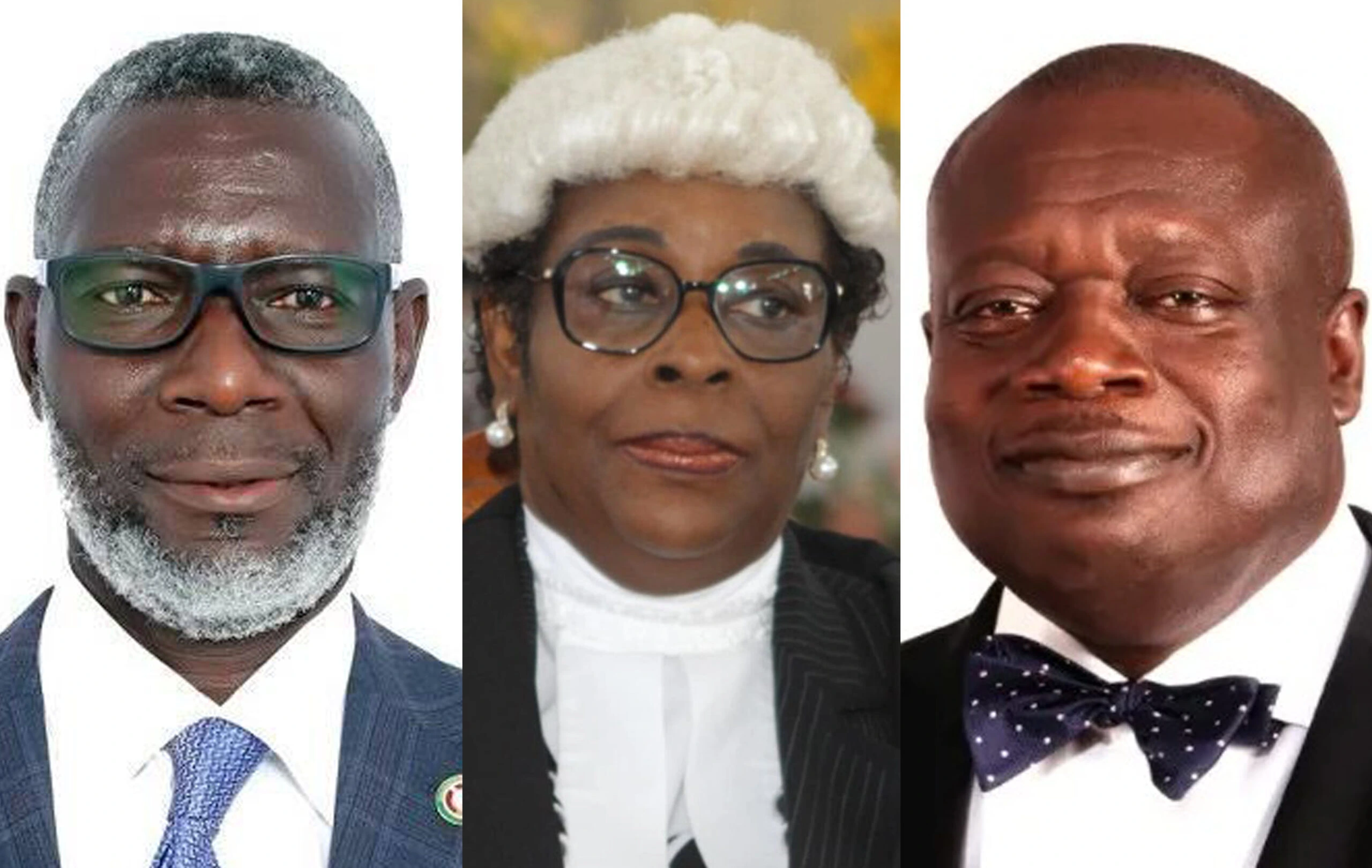
Mahama Nominates Three to Ghana Supreme Court, Parliament to Vet Appointments


Follow Nukunya
Get the latest breaking news and updates from Nukunya.
President John Dramani Mahama has nominated two Court of Appeal judges and former Ghana Bar Association President Tony Forson for appointment to Ghana’s Supreme Court. If approved by Parliament, the appointments will increase the number of justices on the country’s highest court from 18 to 21.
ACCRA, Ghana — President John Dramani Mahama has nominated three legal professionals for appointment to Ghana’s Supreme Court, beginning the constitutional process to strengthen the country’s highest court.
The nominees are Court of Appeal Justices Sophia Rosetta Bernasko Essah and Edward Amoako Asante, together with Tony Forson, a private legal practitioner and former President of the Ghana Bar Association. The nominations were made in consultation with the Judicial Council, as required under Ghana’s 1992 Constitution.
The appointments are subject to vetting by Parliament’s Appointments Committee before a final approval vote by the House. If approved, the number of serving Supreme Court justices will increase from 18 to 21, expanding the court’s capacity to hear constitutional, civil and criminal matters.
The Supreme Court is Ghana’s apex judicial body and exercises final appellate jurisdiction in civil and criminal cases. It also has exclusive authority over constitutional interpretation and enforcement, making its composition a matter of significant public interest.
Justice Edward Amoako Asante brings extensive judicial experience to the nomination. Before returning to Ghana’s Court of Appeal, he served as President of the ECOWAS Court of Justice, the regional court responsible for interpreting Community law and adjudicating human rights cases across West Africa.
Justice Sophia Rosetta Bernasko Essah has also served on the Court of Appeal and has accumulated years of experience within Ghana’s judiciary.
Tony Forson is the only nominee drawn from private legal practice. A former President of the Ghana Bar Association, he has been recognised within the legal profession for his advocacy and extensive legal practice.
Under Ghana’s Constitution, the President appoints Supreme Court justices acting in consultation with the Judicial Council and with the approval of Parliament. The parliamentary vetting process is expected to examine each nominee’s professional qualifications, judicial philosophy, integrity and suitability for appointment before recommendations are presented to the House.
The nominations come at a time when Ghana’s judiciary continues to play a central role in constitutional interpretation, electoral disputes and major public interest litigation. An expanded bench could assist in managing the court’s growing caseload while strengthening its ability to determine complex constitutional and appellate matters.
No timetable for parliamentary vetting has yet been announced.
What Happens Next?
The nominees must pass through parliamentary scrutiny before they can formally take office as justices of Ghana’s Supreme Court.
-
Appointments Committee Vetting
Parliament’s Appointments Committee will examine each nominee’s qualifications, professional record, judicial philosophy and suitability for the Supreme Court.
-
Committee Recommendations
After the hearings, the committee will submit its findings and recommendations to Parliament for consideration.
-
Parliamentary Decision
Members of Parliament will consider the committee’s report and vote on whether to approve the appointments.
-
Swearing-In
Successful nominees will complete the required constitutional formalities before being sworn in as Supreme Court justices.
Nukunya Analysis
Why This Matters
Ghana’s Supreme Court is the final judicial authority on constitutional questions and the highest appellate court in the country.
Changes to its composition can affect the speed at which important cases are heard, the range of professional expertise available to the court and the development of legal precedent.
New appointments may prove particularly significant in constitutional, electoral, administrative and human-rights disputes, where Supreme Court decisions can shape public institutions and national governance for years.
What the Appointments Could Influence
Constitutional Interpretation
The Court determines disputes over the meaning, scope and application of Ghana’s Constitution.
Electoral Disputes
Justices may hear cases involving elections, political rights and the lawful exercise of public power.
Judicial Capacity
Additional members may affect caseload management, panel composition and the speed of appellate decisions.
Public Confidence
Transparent vetting and credible appointments can reinforce trust in judicial independence and institutional legitimacy.
What Is Confirmed and What Remains Pending
What Is Confirmed
- The candidates have been nominated.
- Parliament’s Appointments Committee will vet them.
- The committee will report to Parliament.
- Parliament will consider the appointments.
What Remains Pending
- The timing and outcome of the vetting hearings.
- The committee’s recommendation on each nominee.
- Parliament’s final decision.
- The date of any subsequent swearing-in ceremony.
Related posts:
 Ghana Parliament Passes Human Sexual Rights and Family Values Bill
  Supreme Court Halts Reinstatement of GN Savings Licence Pending Bank of Ghana Appeal
  NDC Renames Headquarters ‘Jerry Rawlings House’ on Founder’s 79th Birthday.
  Adwoa Safo petitions the Attorney-General to move alleged shooting case to High Court
  EOCO under pressure to explain detention of Dennis Miracles Aboagye as NPP supporters protest