Ghana Bans Ghana Card Photocopies for Transactions, Makes Biometric Verification Mandatory


Follow Nukunya
Get the latest breaking news and updates from Nukunya.
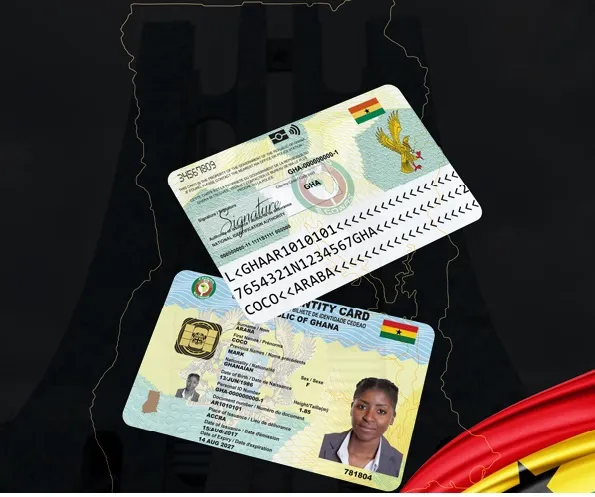
Ghana has introduced new identity verification rules requiring biometric authentication for regulated transactions while prohibiting organisations from relying on photocopies or visual inspection of the Ghana Card. The National Identification Authority says the reforms are designed to strengthen digital security and reduce identity fraud.
ACCRA, Ghana – Millions of Ghanaians will no longer be able to rely on photocopies or visual inspection of the Ghana Card when completing regulated transactions after new regulations made biometric verification the legally recognised method of identity authentication.
The National Identification Authority (NIA) says the changes, introduced under the National Identity Register (Amendment) Regulations, 2026 (L.I. 2523), represent a major step in strengthening Ghana’s digital identity system and combating identity-related fraud. The reforms require organisations to verify identities electronically through approved biometric systems rather than accepting photocopies or manually inspecting identity cards.
Announcing the reforms, NIA Executive Secretary Wisdom Yayra Koku Deku said it is now an offence to photocopy a Ghana Card or rely solely on visual inspection for transactions where biometric verification is required.
“It is now an offence to photocopy or visually inspect the Ghana Card for transactions. Biometric verification is now mandatory,” he said.
The amendment marks one of the most significant changes to Ghana’s national identity framework since the nationwide rollout of the Ghana Card, which has become the country’s principal identity document for banking, telecommunications, taxation, healthcare, pensions, passport applications and numerous government services.
What changes under the new regulations?
The amended regulations replace paper-based identity checks with electronic verification through the NIA’s Identity Verification Platform.
Instead of requesting photocopies or examining the physical card, authorised institutions are expected to authenticate identities using approved biometric verification systems linked to the National Identification Register. The NIA says this approach provides stronger protection against identity theft, forged documents and fraudulent transactions while improving confidence in Ghana’s digital public services.
Digital Identity Explainer
Compliance update
Ghana Card Verification Is Moving From Photocopies to Biometrics
Banks, telecom companies, public agencies and other regulated organisations are expected to authenticate customers electronically through approved National Identification Authority systems.
At a glance
What the Rules Change
Identity checks should use an approved electronic verification platform where biometric authentication is required.
Photocopies and visual inspection should no longer serve as the main verification method in regulated transactions.
Existing Ghana Cards remain valid. The reform changes the verification process, not the card itself.
Organisations and individuals may face statutory penalties where compliance duties are breached.
Institutions in scope
Who Will Be Affected?
The new verification requirements are expected to apply to organisations that regularly confirm customer identities.
Including specialised deposit-taking institutions.
Customer onboarding and transaction authentication.
Policyholder and claimant identity checks.
SIM registration and customer-account verification.
Identity checks linked to travel and nationality services.
Public services that rely on verified citizen records.
Regulated entities conducting customer due diligence.
Other organisations legally required to verify identities.
Enforcement
Organisations 500–2,000 Individuals 50–500
Penalties for Non-Compliance
The amended regulations introduce penalties for organisations and individuals that fail to comply with the applicable verification requirements.
Penalty units upon summary conviction, according to the NIA’s stated position.
Penalty units, depending on the offence and applicable legal provisions.
Consumer guide
What Should Ghana Card Holders Do?
Nukunya Analysis
Why This Matters
Reducing Identity Fraud
Electronic verification may make it harder to use copied, altered or fraudulently obtained identity documents.
Faster Transactions
Automated checks could reduce manual processing and improve the speed of onboarding and public-service delivery.
Traceable Verification
Digital systems can create auditable records showing when and how an identity check was performed.
Privacy and Inclusion
Successful implementation will require strong data protection, accessible alternatives and support when biometric checks fail.
Editorial transparency
What Is Clear — and What Still Needs Guidance
What the Rules Establish
- Biometric verification is the recognised authentication method.
- Affected institutions should use approved NIA systems.
- Existing Ghana Cards do not need general replacement.
- Non-compliance may attract statutory penalties.
Implementation Questions
- How failed biometric checks will be resolved.
- What alternatives will exist for vulnerable users.
- How personal data will be retained and protected.
- How compliance will be inspected and enforced.
Reader guide
Frequently Asked Questions
Can organisations still photocopy my Ghana Card?
Where biometric verification is required under the amended regulations, organisations should no longer rely on photocopies or visual inspection as the primary method of identity authentication.
Do I need a new Ghana Card?
No. The rules change how identity is verified. They do not invalidate existing Ghana Cards or create a general replacement requirement.
What is biometric verification?
It is the electronic confirmation of a person’s identity through an authorised system using biometric or linked identity information, rather than relying only on visual inspection of the physical card.
Why has Ghana introduced these changes?
The NIA says the reforms are intended to strengthen digital security, reduce identity fraud and improve confidence in Ghana’s national identity infrastructure.
What happens if the biometric check fails?
The detailed escalation process should follow official NIA and sector-specific guidance. Institutions should have a lawful and accessible process for resolving failed or disputed verification.
Quick brief
Key Takeaways
- 01
Biometric verification is the recognised method of Ghana Card authentication under the amended framework.
- 02
Photocopies and visual inspection should not replace biometric checks where electronic verification is required.
- 03
Businesses and public institutions are expected to integrate with the NIA’s approved verification platform.
- 04
Organisations and individuals that breach the rules may face statutory penalties.
- 05
Ghana Card holders do not need to replace valid cards because of the verification reforms.
- 06
Strong data protection and accessible alternatives will be essential to public confidence.
Related posts:
 Avenor Building Collapse Death Toll Rises to Three as Safety Concerns Intensify
  Teacher Arrested After Viral Assault Video Sparks Safeguarding Concerns at Nyinahin Catholic SHS
  Three Arrested in Police Raid on Illegal Mining Site Along Ghana Water Pipeline
  Adwoa Safo petitions the Attorney-General to move alleged shooting case to High Court
  EOCO Explains Dennis Miracles Aboagye’s Arrest in Alleged GH¢55m IMCCoD Probe