
Asantehene’s Howard University engagement puts Ghana-diaspora ties in focus

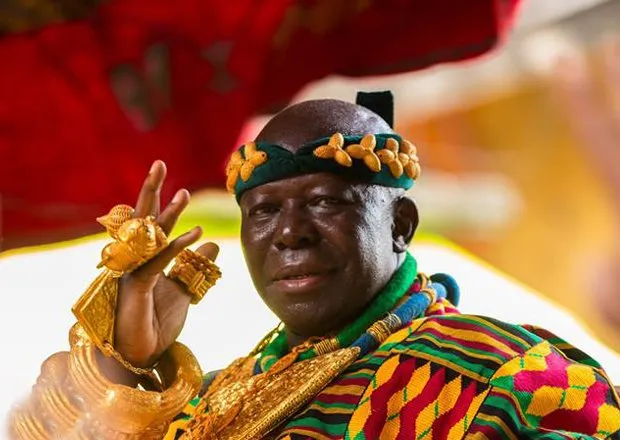

Howard University hosted Asantehene Otumfuo Osei Tutu II for a distinguished lecture in Washington, with the university framing the engagement around governance, cultural preservation, traditional leadership and the enduring relationship between Ghana and the global African diaspora.
WASHINGTON, D.C. – Ghana’s relationship with the global African diaspora was placed in focus at Howard University on Tuesday as the Washington institution hosted Asantehene Otumfuo Osei Tutu II for a distinguished lecture.
Howard University scheduled the engagement for 5 p.m. on 25 August at Cramton Auditorium, bringing the Asantehene to one of the United States’ most historically significant Black universities. Ahead of the event, Howard said the lecture would explore governance, cultural preservation, traditional leadership and the enduring connections between Ghana and the global African diaspora.
The university described the engagement as an exchange centred on scholarship, leadership, culture and the advancement of people of African descent. Howard Provost Anthony Wutoh, Associate Professor of African Studies, Greg Carr and Howard senior Madelyn Animwaah Esi Boamah were also listed by the university as participants.
The engagement formed part of a wider visit to the Washington region during Millennium Excellence Week America 2026. For Ghana and its diaspora, the significance goes beyond the ceremonial presence of one of Africa’s best-known traditional rulers on an American university campus.
Howard’s own history, its longstanding intellectual relationship with Africa and the wider programme’s emphasis on education, investment and cultural exchange place the visit within a much deeper relationship between Ghana and Black America.
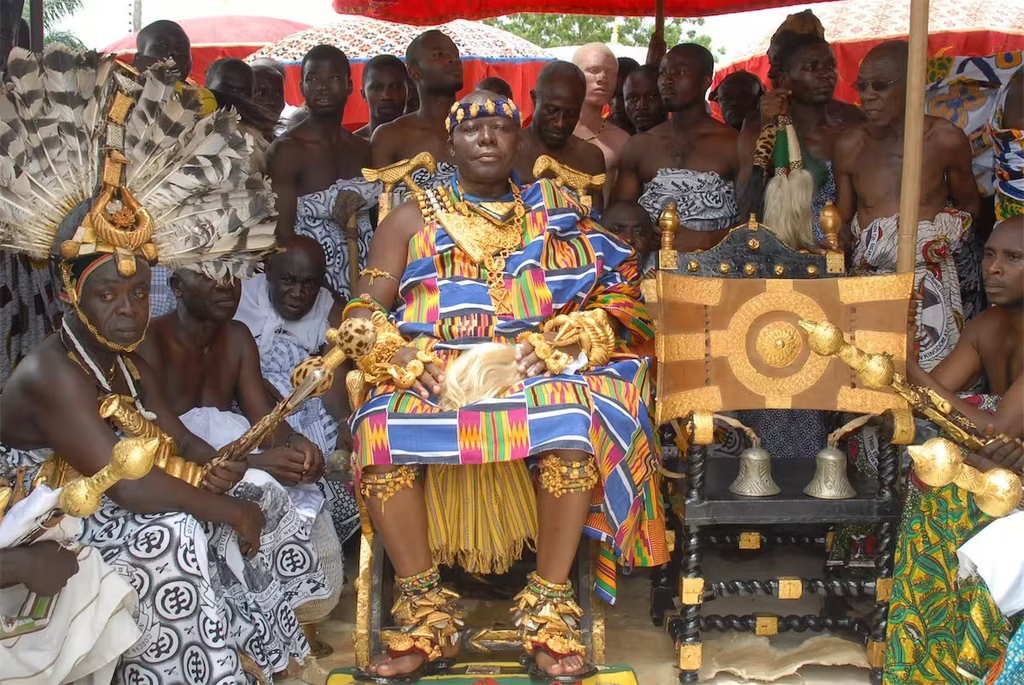
Why Howard University is a significant setting
Howard University was established in Washington in 1867 and has become one of America’s leading historically Black universities.
Its role in Black intellectual and political life makes the choice of venue particularly relevant to a discussion involving Africa and its global diaspora. Howard said ahead of the event that the visit reflected the university’s longstanding role as a global centre for intellectual leadership and its deep connections with Africa and the African diaspora.
The engagement also involved Howard’s Department of African Studies.
There is a further institutional connection through Howard’s Moorland-Spingarn Research Center, whose mission centres on preserving and interpreting the global Black experience.
Against that background, the Asantehene’s appearance at Howard brings together two institutions rooted in different but interconnected histories. The Asante institution predates the modern Ghanaian state and remains an important centre of traditional and cultural authority.
Howard emerged in the aftermath of slavery in the United States and developed into an institution closely associated with Black education, scholarship and public leadership.
Their meeting provides a contemporary setting for a relationship between Africa and Black America that stretches across generations.

What Howard said the lecture would address
Precision matters when reporting the content of the engagement.
Howard University’s official media advisory said the distinguished lecture would explore four broad areas: governance, cultural preservation, traditional leadership and the enduring connections between Ghana and the global African diaspora.
Howard’s Moorland-Spingarn Research Center separately promoted the address as one centred on the unity of African people across the world, the preservation of cultural heritage and the strength of the African diaspora.
Those descriptions establish the intended themes of the lecture.
They should not, however, be treated as a verbatim account of Otumfuo’s remarks.
At the time of publication, Nukunya had not identified an authoritative full transcript or detailed post-event account from Howard University or another primary source establishing the precise remarks delivered by the Asantehene. For that reason, this report does not attribute quotations or specific policy positions to Otumfuo that cannot currently be independently verified.
A wider week of Africa-diaspora engagement
The Howard engagement sits within a broader programme in the Washington metropolitan area.
Otumfuo’s visit forms part of Millennium Excellence Week America 2026, organised by the Millennium Excellence Foundation.
The programme runs through 30 August and includes events focused on education, business, investment and culture across Washington, D.C., National Harbor and Bowie, Maryland.
The programme would move towards an economic focus with an Africa Business Summit at MGM National Harbor, designed to connect African business opportunities with investors in the United States.
The Millennium Excellence Awards and Gala is scheduled to follow at the Warner Theatre, before the programme concludes with an Akwasidae Kese celebration at Bowie State University in Maryland.
That broader programme provides important context.
It suggests that the diaspora dimension of the Asantehene’s visit is not being framed solely around history and cultural identity. Education, investment and institutional relationships are also part of the conversation.
From cultural connection to practical relationships
This distinction matters.
Relations between Ghana and the African diaspora frequently draw on powerful historical and cultural connections.
But the longer-term value of diaspora engagement increasingly depends on whether those connections produce sustainable relationships in education, investment, business, research and cultural exchange.
TheGrio reported that organisers see the Washington programme partly through that lens.
Dr Adjoa B. Asamoah, who helped develop the United States programming around the visit, told the publication that education, investment and business partnerships should form part of efforts to strengthen relationships across the African diaspora.
The Howard engagement therefore provides a useful meeting point between cultural identity and institution-building.
A distinguished lecture can create visibility. Its longer-term significance will depend on whether the relationships surrounding it continue after the ceremonial programme ends.

Ghana’s distinctive place in the African diaspora
Ghana already occupies a prominent place in relations between Africa and Black communities abroad.
Its independence in 1957 gave the country particular symbolic importance during the era of African decolonisation and the international struggle for Black political equality.
Ghana’s first president, Kwame Nkrumah, placed Pan-Africanism at the centre of his political project and developed relationships with thinkers and activists across Africa and the diaspora.
That history continues to influence how Ghana presents itself internationally.
More recently, initiatives such as the 2019 Year of Return encouraged people of African descent to visit Ghana and reconnect with the country’s history and culture. The subsequent Beyond the Return programme sought to extend that relationship beyond tourism towards longer-term engagement.
The Asantehene’s Washington visit should be understood within this broader history, while also recognising an important distinction. Otumfuo is a traditional ruler, not a representative of Ghana’s elected government.
His international role therefore differs from formal state diplomacy.
His influence derives from the cultural and traditional authority of the Asante institution and the profile he has developed through engagements involving education, culture and development. That distinction is important when assessing what the Howard visit represents.
Traditional authority in a modern international setting
The Asantehene’s appearance at Howard also raises a broader question about the role traditional institutions can play in contemporary international engagement. Ghana’s constitutional system separates traditional authority from partisan political government.
Yet traditional rulers remain influential within cultural and community life.
International engagements provide one way those institutions can participate in conversations that extend beyond Ghana’s borders without replacing the diplomatic functions of the state. Howard’s framing of Tuesday’s lecture reflects that intersection.
Governance and traditional leadership were placed alongside cultural preservation and diaspora relationships. That combination is particularly relevant in a period when African countries and diaspora communities are examining how cultural heritage can coexist with modern institutions and global mobility.
What should come next?
The strongest measure of the Howard engagement will not be the ceremony itself.
It will be what follows.
Howard described the event as an exchange involving scholarship, leadership and culture.
The wider Millennium Excellence Week programme adds education, business and investment to that agenda. That creates several areas in which measurable outcomes could eventually emerge: academic collaboration, educational exchange, cultural programmes, research partnerships or new connections between African institutions and diaspora communities.
There is no basis yet to claim that Tuesday’s lecture produced any of those outcomes.
That would be premature. But the institutional setting creates an opportunity for relationships that extend beyond a single visit.
For Ghana’s diaspora engagement, that is the more consequential question. Symbolism can reopen historical connections.
Institutions are required to sustain them.
Why this engagement matters
Otumfuo’s Howard University engagement brought together institutions representing different parts of the global Black experience.
The Asante institution carries a history stretching back centuries in West Africa. Howard has occupied a central place in African American education and intellectual life since the nineteenth century.
Their interaction in Washington therefore carries genuine symbolic significance.
But its value should not be exaggerated.
At this stage, the strongest verified conclusion is that Howard provided a prominent institutional platform for an engagement explicitly framed around governance, traditional leadership, cultural preservation and Ghana’s connections with the African diaspora.
Whether the visit produces enduring educational, cultural or economic relationships will require evidence that emerges after the ceremonies. For now, the Howard engagement adds another chapter to a much longer conversation between Ghana and Black America. What follows will determine how consequential that chapter becomes.
Related posts:
 Ghana Embassy in US Yet to Receive World Cup Tickets for Diaspora Distribution
  Diaspora Affairs Office Backs New Volunteerism Initiative to Harness Ghanaian Talent Abroad
  Ghana’s UK High Commissioner Calls on Diaspora to Drive Investment and Growth
  Ghana moves nearly 900 citizens to safe havens ahead of South Africa protests
  British Teen Gwen Klu Chooses Ghana for Billie Jean King Cup Debut