Council of State Advises Parliament Against Ghana’s Dual Citizenship Amendment Bill



The Council of State has advised Parliament not to pass the Constitution of Ghana (Amendment) Bill, 2025, which seeks to remove constitutional restrictions preventing dual citizens from holding certain public offices. Although the advice carries constitutional weight, Parliament retains the authority to decide whether to proceed with the legislation.
ACCRA, Ghana — Ghana’s Council of State has advised Parliament not to proceed with the Constitution of Ghana (Amendment) Bill, 2025, a proposed constitutional amendment that seeks to remove restrictions preventing dual citizens from occupying a number of sensitive public offices. The development marks a significant shift in the constitutional review process and could reshape the debate over the political participation of Ghanaians living abroad.
Speaker of Parliament Alban Sumana Kingsford Bagbin informed Members of Parliament on Tuesday that the advisory opinion had been received after the Bill was referred to the Council of State in accordance with Article 291(2) of the 1992 Constitution. Following its review, the Council recommended that Parliament should not pass the Bill.
The Council’s recommendation does not automatically halt the legislative process. Under Ghana’s constitutional framework, its opinions are advisory rather than binding, meaning Parliament remains constitutionally empowered to continue debating and deciding the fate of the proposed amendment.
The recommendation, nevertheless, represents an important intervention because the Council of State serves as the President’s principal advisory body on matters of national importance, including constitutional amendments.
What the Bill Seeks to Change
The Constitution of Ghana (Amendment) Bill, 2025, seeks to amend provisions that currently prevent dual citizens from occupying specified public offices.
If enacted, the reforms would allow eligible dual citizens to hold offices including:
- Member of Parliament
- Ambassador or High Commissioner
- Secretary to Cabinet
- Chief of Defence Staff
- Service Chiefs
- Inspector-General of Police
- Director-General of the Ghana Immigration Service
Current constitutional provisions require holders of many of these offices to owe sole allegiance to Ghana. Supporters say the proposed reforms would widen opportunities for qualified Ghanaians with dual nationality to participate in national governance.
A reversal from the previous Parliament
One of the most notable aspects of the Council’s latest advice is that it differs from its earlier position.
According to Speaker Bagbin, the Council of State had endorsed a similar proposal during the Eighth Parliament. However, because Parliament was dissolved before the amendment process was completed, the legislation had to be reintroduced in the current Parliament.
Following its latest constitutional review, the Council has now advised against passage of the bill, representing a significant change from its earlier recommendation. The Speaker stressed that Parliament should consider the Council’s opinion as an important constitutional contribution to legislative deliberations while emphasising that it does not determine Parliament’s final judgement.
Government backing and diaspora expectations
The proposed reforms have received public support from President John Dramani Mahama.
During a Diaspora Town Hall Meeting in London in May, the President said his administration intended to expand opportunities for Ghanaians living abroad to participate more fully in national governance, including at parliamentary and ministerial levels.
He described the Ghanaian diaspora as the country’s “virtual region”, highlighting its economic contribution through remittances and investment and arguing that citizens living abroad should play a greater role in national development.
Supporters of the Bill argue that Ghana’s constitutional framework should reflect modern realities, given that many highly qualified Ghanaians have acquired additional citizenship while pursuing education, employment and business opportunities overseas.
They contend that dual nationality should not automatically disqualify otherwise qualified citizens from public service.
Concerns over national allegiance
Opponents of the proposed amendment argue that holders of certain sensitive public offices should maintain exclusive constitutional allegiance to Ghana because of the national security responsibilities attached to those positions.
The debate has become one of the most closely watched constitutional questions before Parliament, touching on issues of national identity, public trust, security and diaspora engagement.
It also follows recent judicial and constitutional debates surrounding citizenship qualifications for public office, adding further legal and political significance to Parliament’s deliberations.
Why this matters
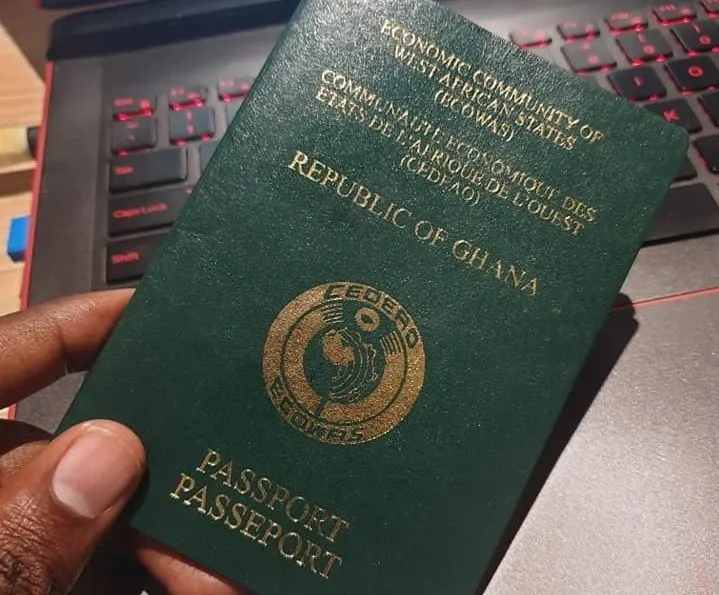
The outcome of the Dual Citizenship Amendment Bill extends beyond eligibility for public office.It reflects broader questions about how Ghana balances constitutional safeguards with the evolving role of millions of citizens living abroad, whose remittances, investment and professional expertise contribute significantly to the country’s development. Whatever Parliament ultimately decides, the debate is likely to influence future constitutional reforms and shape discussions about diaspora participation in Ghanaian public life for years to come.
Related posts:
 Mahama Calls for Renewed Pan-African Unity and Reparations Agenda During UK Visit
  Mahama Meets King Charles III as Ghana Seeks UK Investment
  Diaspora Affairs Office Backs New Volunteerism Initiative to Harness Ghanaian Talent Abroad
  NDC Renames Headquarters ‘Jerry Rawlings House’ on Founder’s 79th Birthday.
  Ghana moves nearly 900 citizens to safe havens ahead of South Africa protests