
Cristiano Ronaldo’s World Cup Dream Ends in Tears as Portugal Exit to Spain
Cristiano Ronaldo's World Cup career ends after Portugal's defeat to Spain at FIFA World Cup 2026. Analysis of his legacy, Roberto Martínez's decisions, Portugal's future and lessons for African football.


Follow Nukunya
Get the latest breaking news and updates from Nukunya.
Cristiano Ronaldo confirmed he has played his final FIFA World Cup match after Portugal’s last-16 defeat by Spain, bringing an end to one of the most remarkable international careers in football history. As Portugal reflects on another missed opportunity, the tournament also raises difficult questions about succession planning, tactical choices and the future of one of Europe’s most talented squads.
DALLAS, United States — Cristiano Ronaldo’s pursuit of the one major trophy that eluded him throughout an extraordinary international career came to an end on Monday after Portugal were eliminated 1-0 by Spain in the last 16 of the FIFA World Cup 2026.
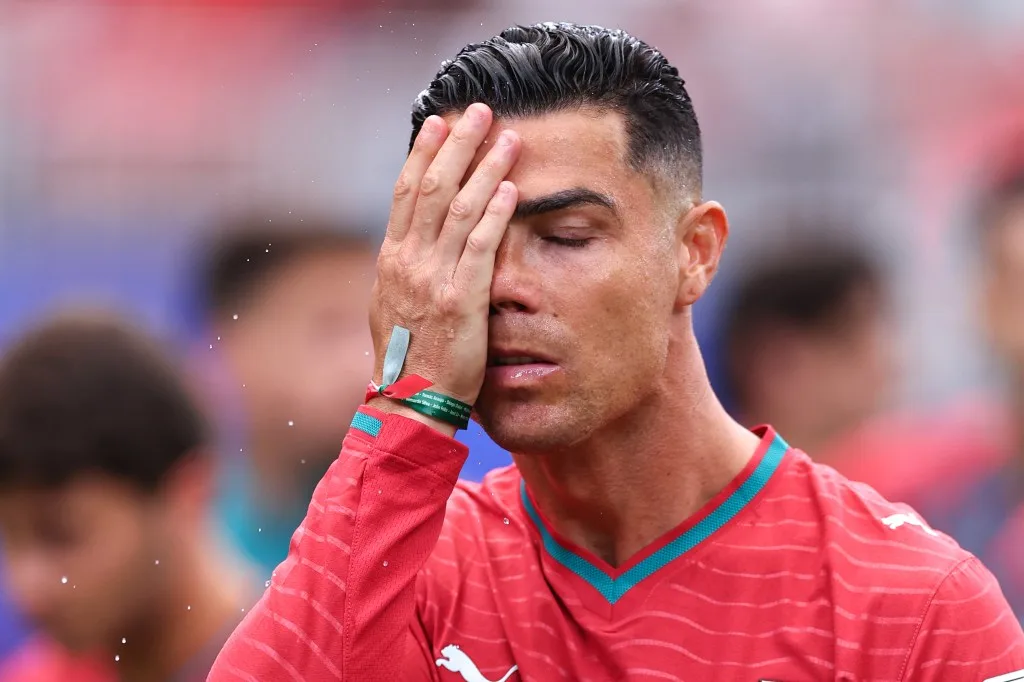
The 41-year-old captain left the field in tears after Mikel Merino’s stoppage-time winner sent Spain into the quarter-finals before confirming afterwards that the defeat marked his final appearance at football’s biggest tournament.
“I am sad to leave like this, but I have given everything,” Ronaldo said after the match.
“It was my last World Cup, yes, but I leave with a clear conscience.”
His departure closes one of football’s most influential international careers, spanning six World Cups, 233 appearances for Portugal and 146 international goals. While he leaves as the only player to score in six different World Cup tournaments, the game’s biggest prize ultimately remained beyond his reach. Spain’s victory also brought an end to Roberto Martínez’s tenure as Portugal coach, with the Spaniard announcing his departure immediately after the final whistle following three years in charge.
A painful ending to a remarkable journey
Ronaldo entered the tournament knowing it would almost certainly be his final World Cup. Although he remained Portugal’s leading figure and scored three goals during the competition, including becoming the first footballer to score at six different World Cups, questions over his place in Portugal’s starting line-up intensified as the tournament progressed.
Against Spain, those concerns resurfaced.
The veteran forward touched the ball only 19 times across 90 minutes, registered three shots and created just one chance for a team-mate, illustrating Portugal’s difficulty in involving their captain against one of the tournament’s strongest defensive sides.
The statistics tell only part of the story.
Spain controlled possession for long periods, restricted Portugal’s attacking transitions and gradually imposed themselves before Merino’s late intervention finally separated the teams. For Ronaldo, there would be no dramatic farewell goal. Instead, there was only silence at the final whistle and an emotional walk from the field.
More than one player
Portugal’s elimination should not be viewed solely through the lens of Ronaldo’s performance. The squad arrived in North America with arguably its strongest generation since winning UEFA Euro 2016.
Players such as Bruno Fernandes, Vitinha, João Neves, Nuno Mendes and Gonçalo Ramos have enjoyed outstanding seasons at club level and were widely regarded as capable of challenging for the title.
Yet Portugal never consistently converted that talent into cohesive attacking football. Throughout the tournament, the team often appeared caught between two identities: building around Ronaldo’s experience while also attempting to maximise the mobility of a younger generation. That balance proved difficult to achieve.
Roberto Martínez leaves with difficult questions
Martínez defended his decision to keep Ronaldo on the pitch, arguing that the striker’s experience, movement inside the penalty area and threat from set pieces remained valuable until the closing stages.
His critics disagreed.
Some questioned whether Portugal’s tactical approach had become too dependent on accommodating their captain rather than adapting to the strengths of an increasingly youthful squad. Those debates are likely to continue long after Martínez’s departure. What is beyond dispute is that Portugal once again fell short despite possessing one of Europe’s deepest pools of talent.
The trophy that never came
Ronaldo’s World Cup journey stretched across two decades. He reached the semi-finals in Germany in 2006 as an emerging star.
Subsequent tournaments in South Africa, Brazil, Russia, Qatar and North America produced memorable moments and individual records but never another genuine opportunity to lift the trophy.
Instead, his greatest achievements with Portugal came elsewhere. He captained the nation to its first major international title at UEFA Euro 2016 before adding the UEFA Nations League, transforming Portugal from perennial outsiders into consistent contenders.
After the defeat to Spain, Ronaldo insisted those triumphs remain equally significant to him. “The biggest title the national team has ever won was in 2016, the European Championship, which for me has the same dimension as the World Cup,” he said.
The Messi comparison
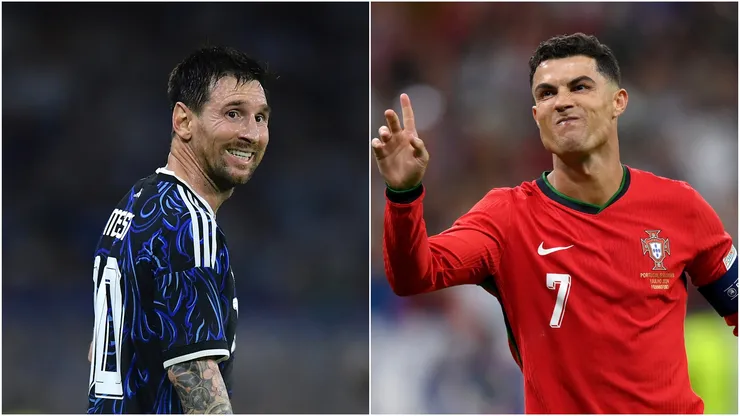
The conclusion of Ronaldo’s World Cup career will inevitably reignite football’s longest-running debate. Lionel Messi’s triumph with Argentina in Qatar in 2022 ensured he secured the one major honour that Ronaldo never claimed.
For many observers, that achievement settles the debate.
Others point instead to Ronaldo’s unmatched longevity, goal-scoring record, consistency across multiple leagues and extraordinary international career. The reality is that football may never again witness two players sustaining elite performance over such an extended period while redefining expectations of professionalism, fitness and global influence. Their careers should perhaps be viewed less as a competition than as a shared era that elevated modern football.
What Africa Can Learn
Portugal’s experience offers valuable lessons for African football: replacing an iconic player is rarely about finding another superstar. It is about building systems strong enough to survive beyond one generation.
The Succession Challenge
Portugal’s transition beyond Cristiano Ronaldo is not only a European football story. It reflects a wider challenge faced by national teams that have built eras around players whose influence extends beyond the pitch.
African football has lived through similar transitions. Ghana confronted that question after Asamoah Gyan. Cameroon did so following Samuel Eto’o. Côte d’Ivoire rebuilt after Didier Drogba. Egypt is also likely to face similar succession questions as Mohamed Salah’s international career progresses.
Experience from leading football nations suggests that successful transitions are more often built on strong development systems than on replacing one iconic player with another.
Three Lessons for African Football
1. Build Beyond Personalities
Strong national teams cannot depend indefinitely on one defining figure. Succession planning must begin before a star player leaves the international stage.
2. Protect the Talent Pipeline
Youth development, domestic football, coaching quality and performance infrastructure determine whether the next generation is ready when leadership changes.
3. Create Tactical Continuity
Successful transitions are easier when national teams have a clear football identity that outlasts individual coaches and players.
The Bigger Lesson
Portugal now faces a comparable transition as it prepares for the post-Cristiano Ronaldo era. Its next chapter will be judged not only by how effectively it replaces Ronaldo, but by whether its younger generation can fulfil the promise many believe it possesses.
That broader lesson may prove equally relevant for football associations across Africa. The most durable football nations are not those that simply wait for another exceptional player. They are the ones that build structures capable of turning talent into sustained performance.
Key Takeaways
- Portugal’s transition beyond Cristiano Ronaldo offers lessons for African football.
- Ghana, Cameroon, Côte d’Ivoire and Egypt have all faced or will face similar succession questions around iconic players.
- Successful transitions depend on systems, not only individual replacements.
- Youth development, coaching continuity and domestic football structures are central to long-term national team performance.
- The post-superstar era can become a reset opportunity if football associations plan early and invest consistently.
Frequently Asked Questions
Why is Portugal’s transition relevant to African football?
Many African national teams have also built eras around iconic players. Portugal’s experience shows why succession planning, youth development and tactical continuity matter when such players begin to leave the international stage.
Which African teams have faced similar transitions?
Ghana faced succession questions after Asamoah Gyan, Cameroon after Samuel Eto’o and Côte d’Ivoire after Didier Drogba. Egypt is also likely to face similar questions as Mohamed Salah’s international career progresses.
What is the main lesson for football associations?
The main lesson is that replacing one superstar with another is not a sustainable strategy. Strong football associations build talent pathways, coaching systems and team identities that survive beyond individual players.
What should Ghana learn from this?
Ghana should continue strengthening youth development, domestic football, technical planning and national team succession structures so that transitions after iconic players are less disruptive.
Cristiano Ronaldo: Key Career Facts
Cristiano Ronaldo’s Portugal career is defined by record-breaking longevity, historic goal-scoring numbers and major international honours across more than two decades.
Editorial Context
These statistics reflect Ronaldo’s senior international career at the conclusion of Portugal’s FIFA World Cup campaign.
Career Milestones
233 Portugal appearances
146 International goals
6 FIFA World Cups
11 World Cup goals
Key Career Facts
| Achievement | Record |
|---|---|
| Portugal appearances | 233 |
| International goals | 146 |
| FIFA World Cups | 6 |
| World Cup goals | 11 |
| UEFA European Championship | Winner, 2016 |
| UEFA Nations League | Winner, 2019 and 2025 |
| Ballon d’Or | 5 awards — 2008, 2013, 2014, 2016 and 2017 |
What These Numbers Show
Ronaldo’s international career stands out not only because of the volume of goals and appearances, but because of the length of time over which he remained decisive for Portugal.
Six World Cup appearances and more than 140 international goals underline a level of consistency rarely seen in international football. Yet the absence of a World Cup title also shows how even the greatest individual careers depend on wider team cycles, squad depth and tournament timing.
Frequently Asked Questions
Why was Cristiano Ronaldo emotional after Portugal’s defeat?
The defeat confirmed the end of his FIFA World Cup career after six appearances in the tournament.
Has Ronaldo retired from international football?
Ronaldo said the tournament would be his final FIFA World Cup, although he has not announced his retirement from international football altogether.
Did Ronaldo ever win the World Cup?
No. Portugal never won the FIFA World Cup during Ronaldo’s career. His major international honours include UEFA Euro 2016 and UEFA Nations League titles in 2019 and 2025.
Is Cristiano Ronaldo Portugal’s all-time leading scorer?
Yes. Ronaldo is Portugal’s record appearance-maker and all-time leading goalscorer.
What happens next for Portugal?
The Portuguese Football Federation is expected to begin searching for a new head coach as the team prepares for UEFA Euro qualifying and the 2030 World Cup cycle.
Related posts:
 Ronaldo honours Diogo Jota as Portugal edge Croatia to reach World Cup last 16
  Portugal Edge Nigeria 2-1 as Conceição’s Wonder Goal Ends Super Eagles’ Resistance
  Messi Scores as Argentina Survive Cape Verde Scare to Reach World Cup Last 16
  Amad Diallo’s Late Winner Gives Ivory Coast Crucial World Cup Victory
  Morocco Move Closer to Knockouts After Fastest Goal of World Cup 2026