
England’s World Cup Bronze Reveals Thomas Tuchel’s Biggest Lesson Ahead of Euro 2028


Follow Nukunya
Get the latest breaking news and updates from Nukunya.
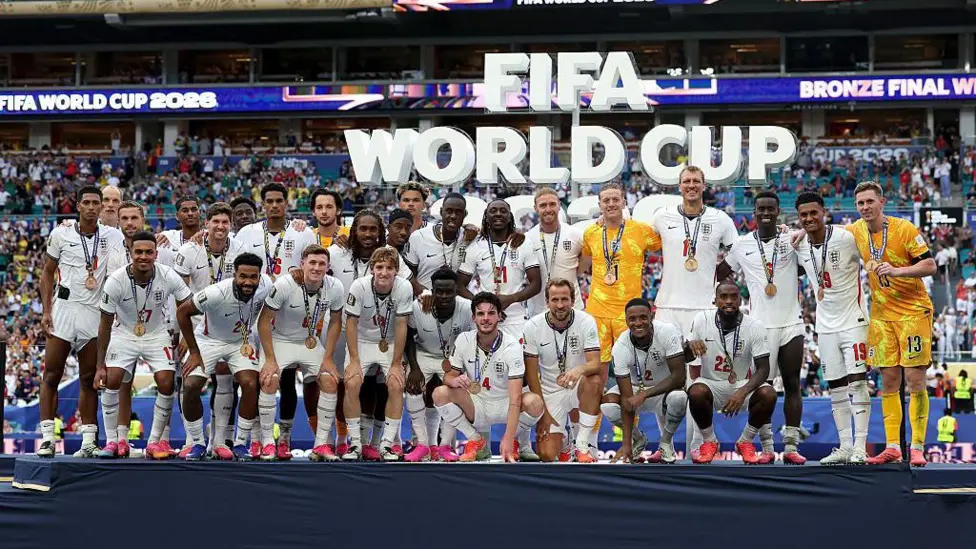
England’s thrilling 6-4 victory over France secured third place at the 2026 FIFA World Cup, but the bigger story lies in what the tournament revealed about Thomas Tuchel’s evolving England project. Bukayo Saka’s brilliance, Jude Bellingham’s leadership and a more adventurous tactical approach may have reshaped England’s future.
MIAMI, United States — England departed the 2026 FIFA World Cup with a bronze medal, renewed confidence and perhaps the most important tactical lesson of Thomas Tuchel’s tenure so far.
The exhilarating 6-4 victory over France in the third-place play-off will be remembered for Bukayo Saka’s stunning hat-trick and one of England’s most fluent attacking displays in years. Yet the significance of the result extends beyond the scoreline.
Rather than simply ending the tournament on a positive note, the performance may have revealed the blueprint England had been searching for throughout the competition. For Tuchel, the bronze medal is unlikely to define his first major tournament. Whether he builds upon the tactical lessons learned in Miami almost certainly will.
England finally played with freedom.
For much of the World Cup, England were disciplined, organised and difficult to break down.
They were also, at times, predictable. Against the strongest opposition, particularly during the semi-final defeat to Argentina, England frequently appeared reluctant to commit numbers forward, preferring structure over attacking risk.
The contrast against France could hardly have been greater. England pressed higher, attacked with greater speed through midfield and consistently committed runners beyond the French defensive line. Their wide players remained aggressive, while midfielders looked to play forward earlier rather than recycling possession.
The result was an open, high-tempo contest in which England repeatedly created quality chances. Whether that tactical shift reflected lessons learned during the tournament or the reduced pressure of a third-place play-off remains open to debate. Either way, it offered the clearest indication yet of how Tuchel may ultimately want England to play.
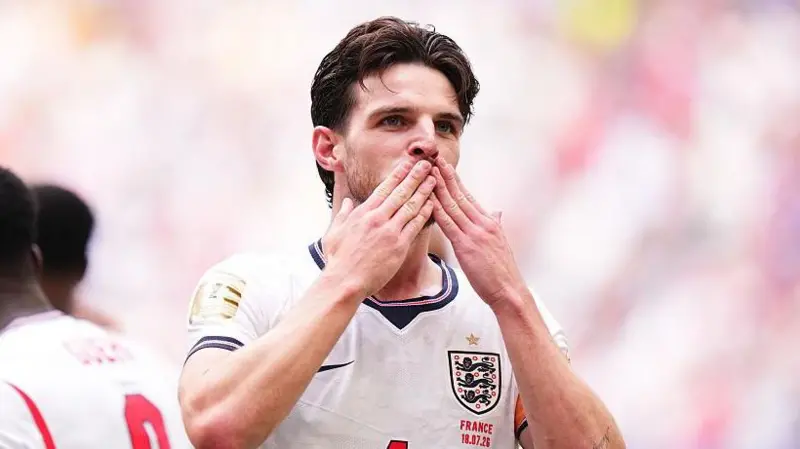
Tuchel may finally have found England’s blueprint
The biggest tactical story was not simply that England scored six goals.
It was how they scored them.
England’s attacking structure appeared considerably more fluid than earlier in the tournament. Rather than relying solely on Harry Kane as the central attacking reference point, England rotated positions intelligently, allowing Bukayo Saka and Jude Bellingham to exploit spaces between France’s midfield and defence.
The full-backs provided width, midfielders supported attacks more aggressively, and England’s pressing forced repeated turnovers high up the pitch. Those adjustments reflected a side prepared to control matches through proactive football rather than cautious containment.
For Tuchel, the challenge now is consistency. Finding an effective tactical system is only the first step. Successfully reproducing it against elite opposition in knockout football is considerably more difficult.
Bukayo Saka reminded the world of his importance.
No player benefited more from England’s tactical freedom than Bukayo Saka. His hat-trick was not merely a clinical finishing display.
It demonstrated intelligent movement, relentless pressing and outstanding decision-making throughout the match. Rather than remaining isolated on the wing, Saka repeatedly drifted into central channels, combining with Jude Bellingham before attacking space behind the French defence.
Few England wingers have dominated a World Cup knockout match with such authority in recent decades. His performance also reopened an important tactical discussion.
England looked considerably more dangerous when their attacking system prioritised pace, width and direct running rather than patient possession alone.
Saka remains central to that identity.
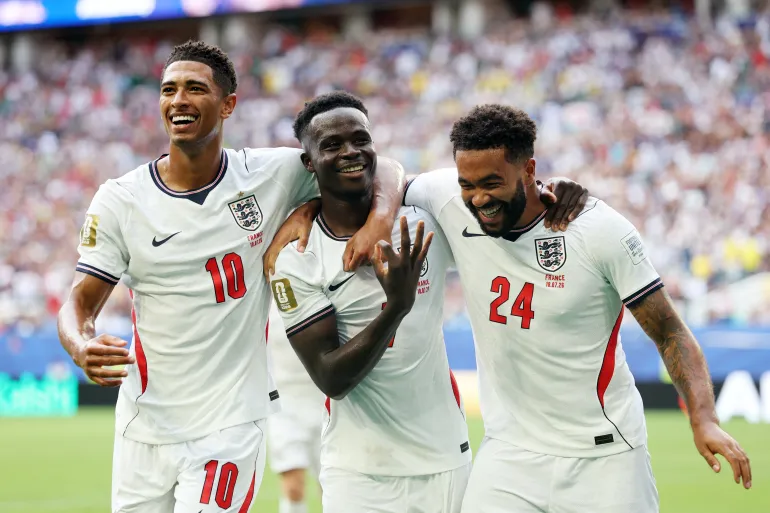
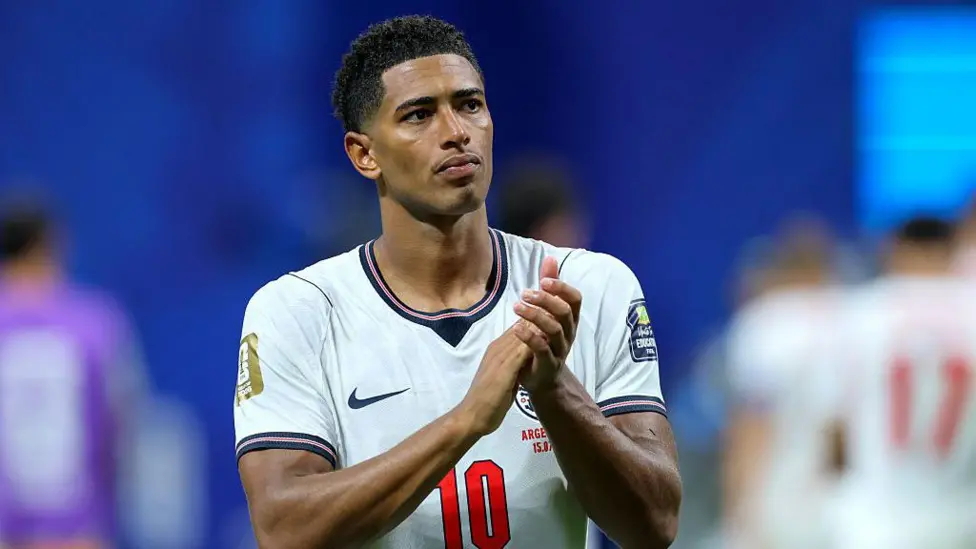
Jude Bellingham has become England’s leader.
If Saka supplied the brilliance, Jude Bellingham provided the authority. Still only 23, the midfielder increasingly looks like the player around whom England’s next generation will be built.
Throughout the tournament he combined technical excellence with leadership, dictating tempo while repeatedly driving England forward during transitions. Beyond goals and assists, Bellingham displayed the maturity expected of an experienced international rather than one of the youngest leaders in the squad.
International football increasingly rewards players capable of influencing every phase of the game. Bellingham already belongs comfortably within that category.
Harry Kane’s role is evolving, not diminishing
Much of the post-tournament discussion will inevitably focus on Harry Kane. That conversation should be framed carefully.
England do not need to replace their captain. They need to evolve around him.
Kane’s greatest strengths increasingly lie in his intelligence, movement and ability to connect midfield with attack rather than constantly running beyond defenders. England’s younger forwards now provide the pace and vertical threat that complement Kane’s vision and finishing. Managing that evolution successfully may become one of Tuchel’s defining challenges before Euro 2028.
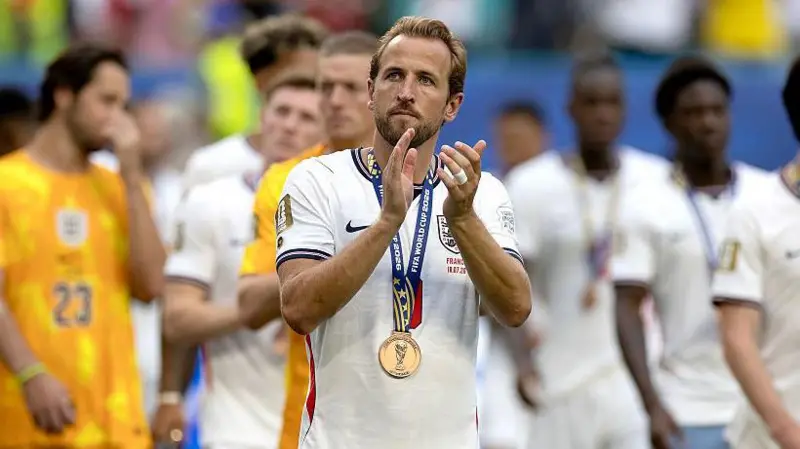
The dressing room still believes
Despite the disappointment of missing the World Cup final, England’s senior players remain convinced the squad is progressing. Harry Kane described the tournament as another step in England’s development, while Declan Rice argued the current group possesses the quality to compete for major honours in the years ahead. Those sentiments reflected a dressing room that believes it is moving closer to ending England’s long wait for another major international trophy.
Such confidence matters.
Modern tournament football is often decided by narrow tactical margins rather than dramatic differences in technical ability. England appears convinced those margins are becoming increasingly favourable.
Why African football should pay attention
England’s campaign also offers lessons that extend well beyond Europe. Countries including Ghana, Nigeria, Senegal, Morocco and Côte d’Ivoire continue producing footballers capable of competing among the world’s elite.
The challenge increasingly lies elsewhere. Modern international football rewards nations that combine individual talent with tactical flexibility, sports science, succession planning, performance analytics and coaching continuity.
England’s World Cup demonstrated that producing world-class footballers is only one part of sustained success. Building a system capable of maximising those players across an entire tournament is the greater challenge. For African football, that lesson may prove every bit as valuable as the tournament itself.
Premium Football Analysis
Road to Euro 2028
England’s next phase
The Road to Euro 2028 Begins Now
Third place will not define this England generation. Major trophies will. Yet dismissing the tournament as another near miss would overlook the most important achievement of Thomas Tuchel’s campaign.
England discovered a more adventurous attacking identity and provided clearer evidence of the tactical profile that may best suit the squad.
Young leaders such as Bukayo Saka and Jude Bellingham confirmed that they are ready to carry greater responsibility. The task now is to ensure those lessons survive beyond one exhilarating afternoon in Miami.
The Most Important Outcome Was Tactical, Not Ceremonial
A More Adventurous Identity
England appeared more dangerous when playing with greater tempo, width, movement and attacking intent rather than excessive caution.
A Clearer Tactical Profile
The performance against France suggested that an aggressive, high-pressing approach may suit the squad better than a passive, risk-averse structure.
Leadership Beyond Seniority
Saka and Bellingham increasingly look capable of shaping England’s footballing personality, not merely supporting its established stars.
A Platform, Not a Conclusion
The bronze medal matters less as an honour than as evidence that a more coherent tactical direction may now be emerging.
Tactical blueprint
What England’s Best Performance Revealed
England’s most convincing display came when the team combined intensity without the ball with greater freedom in possession.
1 Press Aggressively
Win possession higher up the pitch
→ 2 Attack Quickly
Exploit space before opponents recover
→ 3 Use Width
Stretch defensive structures
→ 4 Rotate Creatively
Allow Saka, Bellingham and Kane to interchange
Five Questions England Must Answer Before Euro 2028
-
01
Should Bukayo Saka Become the Focal Point of England’s Attack?
His performances suggest England’s attacking identity increasingly revolves around his pace, creativity, decision-making and movement.
-
02
Has Thomas Tuchel Found England’s Long-Term Tactical Blueprint?
The aggressive, high-pressing approach against France appeared more effective than England’s conservative displays earlier in the tournament.
-
03
How Should Harry Kane’s Role Evolve?
England’s younger attackers may allow Kane to operate increasingly as a creative focal point without reducing his goalscoring influence.
-
04
Can England Consistently Defeat Elite Opposition?
Progress is evident, but major tournaments are ultimately decided by victories over the world’s strongest teams in the latter stages.
-
05
Can This Generation Finally Deliver Silverware?
With Euro 2028 approaching, expectations will continue to grow for one of England’s most talented squads in decades.
The Players Who Could Define the Next Cycle
Bukayo Saka
Saka offers the combination of pace, creativity, tactical discipline and reliability required to become the central figure in England’s attacking structure.
Jude Bellingham
Bellingham’s influence extends beyond technical quality. His presence, personality and willingness to assume responsibility make him a natural leader.
Harry Kane
Kane may remain decisive by combining penalty-area threat with deeper creative involvement as England’s younger attackers develop.
Thomas Tuchel
Tuchel’s challenge is to transform one compelling performance into a durable system capable of surviving the pressure of tournament football.
Wider interpretation
What This Means
England’s bronze medal should not be treated as the conclusion of a tournament, but as the possible beginning of a new tactical direction.
The campaign suggests that future success will depend less on defensive caution and more on embracing the pace, technical quality and attacking flexibility displayed against France.
Those lessons resonate beyond Europe. Modern international football increasingly rewards coherent systems over collections of outstanding individuals.
Why the Lessons Matter Beyond England
England’s campaign offers a useful lesson for African national teams seeking sustainable progress. International success rarely comes from assembling the most recognisable names without a clearly defined tactical identity.
Teams require continuity in coaching, player development, sports science and technical planning. A system must make individual talent more effective rather than expecting individual moments to rescue an unclear strategy.
For football administrators, the wider lesson is that tournament performance should be assessed not only through results, but also through whether a team is developing a repeatable model for future success.
Key Takeaways
- 01
England ended the World Cup with their most convincing attacking display.
- 02
Bukayo Saka reinforced his status among the world’s elite attacking players.
- 03
Jude Bellingham continues to emerge as one of England’s natural leaders.
- 04
Thomas Tuchel identified a more aggressive tactical approach capable of taking England forward.
- 05
England must prove that the performance can be repeated consistently against elite opposition.
- 06
Euro 2028 now becomes the defining benchmark for this football project.
Editorial purpose
Why This Analysis Matters
This analysis moves beyond the final score to examine the strategic lessons emerging from England’s World Cup campaign.
It places the result within the wider context of tactical evolution, leadership development and international football trends, while drawing useful connections for African readers and football administrators seeking to build sustainable success.
Related posts:
 England Show Firepower and Flaws Ahead of Ghana World Cup Clash
  England Beat Costa Rica 3-0 as Gordon Impresses Before World Cup Opener
  Spain Outclasses France to Reach FIFA World Cup 2026 Final with Dominant 2-0 Victory
  England World Cup Preparations Disrupted After Equipment Theft Days Before Croatia Opener
  Ghana Edge Closer to World Cup Knockouts After Holding England to Draw