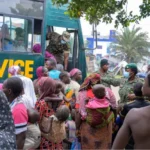
Spain train crash: High-speed trains collide near Madrid as emergency crews respond
Two high-speed trains have collided in Toledo province, Spain, prompting an emergency response and suspending Madrid–Andalusia rail services. The casualty toll remains unconfirmed.



Two high-speed passenger trains have collided in Spain’s Toledo province, disrupting the main rail connection between Madrid and Andalusia as emergency crews respond to reports of injuries and derailed carriages.
MADRID, Spain — Two high-speed passenger trains collided near the town of Urda in central Spain on Wednesday morning, prompting a major emergency response and the suspension of rail services between Madrid and the southern Andalusia region.
Spain’s railway infrastructure operator, Adif, confirmed that the collision involved trains operated by Renfe and Iryo on the Madrid–Andalusia high-speed railway.
The accident occurred near Urda, in Toledo province, approximately 100 kilometres south of Madrid.
Spanish emergency services reported that two carriages had left the tracks and fallen down an embankment, according to the EFE news agency.
Witnesses reported injuries, while emergency medical teams, firefighters and civil protection personnel were deployed to the scene.
The number of casualties had not been officially established in the initial reports reviewed by Nukunya.
Spain train collision: What is known and what remains unclear
Explore the initial reports of a collision on Spain’s Madrid–Andalusia railway corridor, the emergency response and disruption to rail services.
The figures and descriptions above are drawn from the supplied initial reporting and are not a live official incident feed.
What happened in the Spain train crash?
The collision was reported on the high-speed railway linking Madrid with destinations in southern Spain.
According to the supplied account, Adif described a rear-end collision involving two trains and confirmed that services were suspended in both directions.
Spanish media placed the incident between Los Yébenes and Urda, in Toledo province, at approximately 8:54 a.m. local time.
The trains were identified in the reports as a Renfe AVE service and an Iryo high-speed service.
The precise circumstances remain subject to investigation.
Interactive: key developments
Select a stage of the reported incident to see what is known and what still requires confirmation.
Collision reported
Adif was reported to have described a rear-end collision involving two trains on the Madrid–Andalusia corridor.
What remains unclear?The full sequence of train movements and the circumstances leading to contact have not been established in the supplied reporting.
Emergency response and reported damage
Spanish emergency services reportedly deployed firefighters, medical personnel and civil protection teams.
Medical helicopters reportedly dispatched.
Mobile intensive care units reportedly dispatched.
Reported by EFE to have fallen down an embankment.
Firefighters from Alcázar de San Juan and Orgaz were also reported to have been deployed. Castilla-La Mancha activated its territorial emergency response plan.
These are reported emergency-response details, not independently verified final deployment totals or a confirmed damage assessment.
Madrid–Andalusia rail disruption
Adif reportedly suspended train movements on the affected corridor following the collision.
Renfe also reported disruption affecting journeys between Madrid, Ciudad Real and Andalusia, with arrangements for affected passengers to change or cancel journeys without additional charges.
Interactive: what will investigators need to establish?
A reported rear-end collision describes the type of incident. It does not, on its own, identify the cause.
Train movements
Investigators may need to establish each train’s position, speed, direction and movement sequence before the collision. This is an area for examination, not evidence that either train was operated incorrectly.
Why this accident matters
The Madrid–Andalusia corridor is an important transport connection between the Spanish capital and southern destinations, including Seville.
A serious incident on such a corridor can disrupt travel beyond the immediate accident location.
Until official investigators publish their findings, it would be premature to attribute the collision to driver error, signalling failure or equipment malfunction.
Related posts:
 US-Iran conflict escalates as Iran strikes American military sites in Bahrain and Kuwait
 US-Iran Deal Reopens Key Oil Route but Lebanon and Nuclear Risks Remain
 Strait of Hormuz Shipping Fears Rise After New Report of Attack as Middle East Conflict Deepens
 North Korea Launches Ballistic Missiles as Tensions Rise With US and South Korea
 Massive Drone Attack Hits Moscow as Russians Vote in Parliamentary Election