Tesla Cybertruck Production to End in 2027
Tesla Cybertruck production will reportedly end in 2027. Elon Musk announced that factory space will be repurposed for the new Cybercab robotaxi fleet.



Elon Musk Confirms End of Cybertruck Production: Tesla cybertruck production
This article covers tesla cybertruck production and what it means for you. The decision to cease Cybertruck production in 2027 marks a dramatic shift in Tesla’s vehicle lineup, moving away from the stainless-steel pickup to prioritize autonomous taxi services.
“The company will use the factory space to make more Cybercabs.”
— Elon Musk via TechCrunch
Tesla has officially announced plans to terminate the manufacturing of its polarizing stainless-steel pickup truck by 2027. This decision, confirmed by CEO Elon Musk, marks a definitive end date for the vehicle’s production lifecycle. First unveiled in 2019 to significant fanfare and skepticism alike, the Tesla Cybertruck production timeline has been defined by engineering hurdles, delayed rollouts, and a design language that deviated sharply from industry norms.
The news signals a strategic shift for the automaker. While the Cybertruck was initially framed as a disruptive force in the highly lucrative pickup truck market, its long-term viability appears to have been outweighed by Tesla’s new operational priorities. By setting a hard deadline for the end of production, Musk is signaling that the era of experimentation with ultra-hard cold-rolled stainless steel may be drawing to a close in favor of more scalable, high-volume initiatives.
The Shift to Cybercab Production
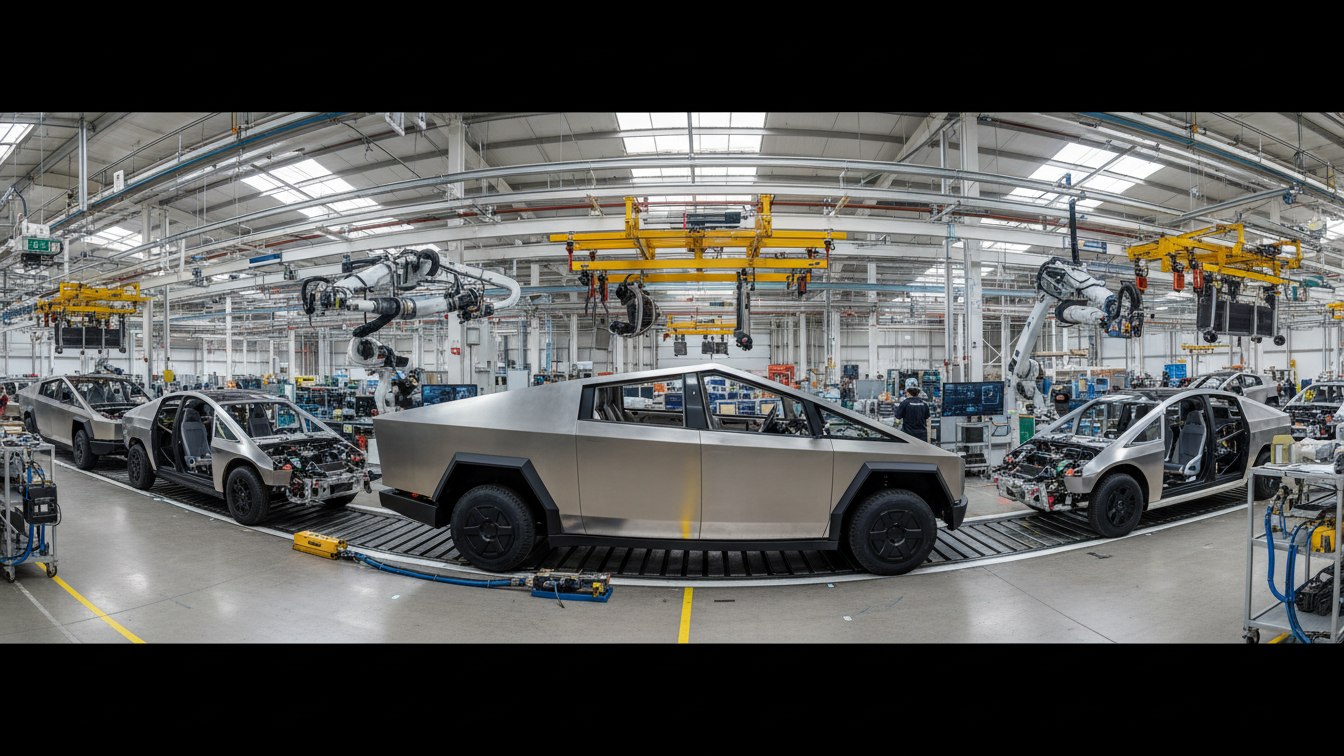
The primary driver behind ending Tesla Cybertruck production is the company’s aggressive pivot toward autonomous ride-hailing. Musk stated that the physical Gigafactory space currently dedicated to the assembly of the pickup will be repurposed to facilitate the mass production of the Cybercab. This move suggests that Tesla views the future of its revenue not in individual consumer ownership, but in a fleet of autonomous vehicles that can operate around the clock.
This reallocation of resources comes at a time when industrial infrastructure is increasingly being scrutinized for efficiency. As global industries grapple with rising data center demand and the energy requirements of AI, Tesla is tightening its focus on robotics. The manufacturing footprint required for the Cybertruck—which involves specialized casting and unique assembly lines for its exoskeleton—is substantial. By removing these complexities, Tesla aims to streamline its facilities for the Cybercab, a vehicle designed from the ground up for high-density, low-cost autonomous transportation.
Impact on Tesla’s Vehicle Lineup
The sunsetting of the Cybertruck creates a ripple effect across the Tesla fleet and its long-term manufacturing philosophy. The transition highlights several key changes in how the company intends to position itself in the marketplace:
- Prioritizing Autonomy: The focus is shifting heavily toward robotaxis over consumer utility vehicles. The Cybercab represents a “purpose-built” design for ride-hailing, lacking traditional controls like steering wheels or pedals.
- Sunsetting Specialized Processes: The 30X cold-rolled stainless steel manufacturing process, which was unique to the Cybertruck, is likely to be phased out. This reduces the need for specialized welding and finishing equipment that cannot be easily adapted for other models.
- Simplified Inventory: By removing a low-volume, high-complexity vehicle, Tesla can concentrate on the Model 3, Model Y, and the upcoming Cybercab platform, potentially improving overall manufacturing margins.
- Utility Gap: Without the Cybertruck, Tesla will lack a dedicated utility vehicle in the pickup segment, unless a more traditional EV truck is introduced later.
Future of Tesla’s Manufacturing Strategy
This strategic move reflects Elon Musk’s broader goal of evolving Tesla from a traditional car manufacturer into a pure AI and robotics company. The manufacturing strategy is no longer just about building cars; it is about building the machines that build the machines at an unprecedented scale. By clearing the factory floor of the Cybertruck, Tesla is betting that it can achieve higher volume and better returns through a dedicated taxi unit than it could through a niche luxury truck.
Industry observers note that this pivot aligns with broader trends in the EV and defense sectors, where agility and rapid scaling are becoming paramount. Other companies are also refining their expansion plans to meet changing market demands, but Tesla’s move is particularly bold given the Cybertruck’s cultural footprint. The decision suggests that Tesla is willing to abandon a high-profile product to ensure it has the manufacturing capacity necessary to lead the autonomous vehicle revolution.
Implications for the EV Market
The departure of the Cybertruck from the production line in 2027 creates a significant opening for competitors in the electric truck segment. While the Cybertruck was a unique entry, its absence will allow legacy automakers and EV startups to capture market share among consumers who desire a rugged, electric utility vehicle without the “cyber” aesthetic. Companies like Rivian, Ford, and General Motors may find their market position strengthened as the most high-profile competitor exits the stage.
Ultimately, the end of Cybertruck production marks the end of an era for Tesla manufacturing. It signifies a transition away from the “eccentric” phase of the company’s growth toward a highly standardized, software-driven future. As the focus shifts to AI and the Cybercab, the Cybertruck will likely be remembered as a bridge between Tesla’s identity as an EV pioneer and its future as a global leader in autonomous robotics.
Frequently asked questions
When will Tesla stop making the Cybertruck?
According to Elon Musk, production will conclude in 2027.
Why is Tesla discontinuing the Cybertruck?
Tesla plans to repurpose the factory floor space to increase production of the Cybercab, the company’s dedicated robotaxi.