Weija Paediatric Hospital delay linked to procurement dispute, Health Ministry confirms


Follow Nukunya
Get the latest breaking news and updates from Nukunya.
Weija Paediatric Hospital delay continues despite completion, as Ghana’s Health Ministry cites procurement irregularities and unresolved contractor disputes.
ACCRA, Ghana — 6 May 2026
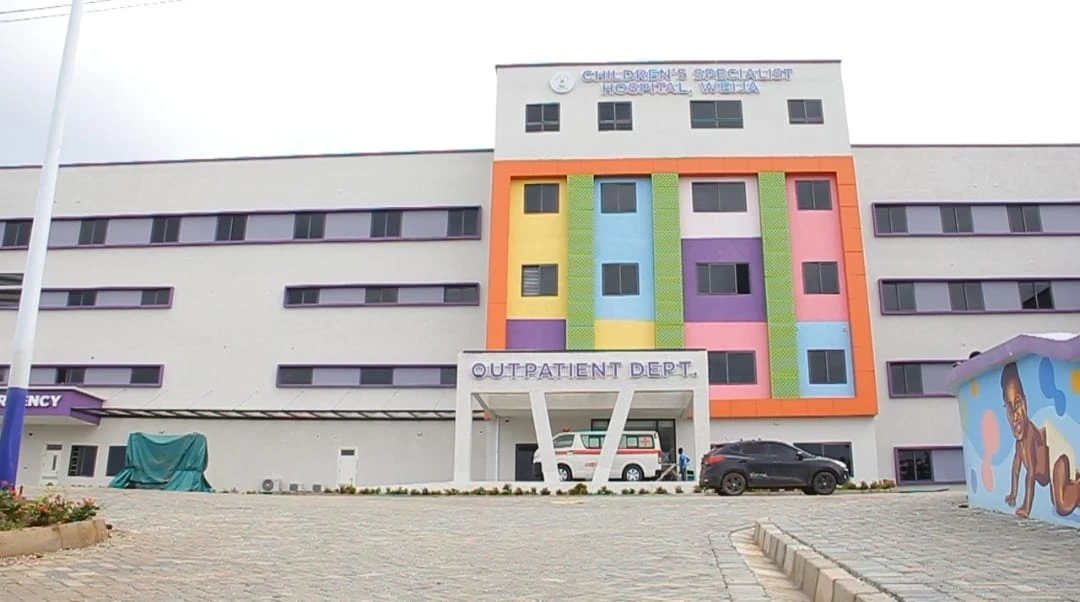
The Weija Paediatric Hospital delay has been attributed to procurement irregularities and unresolved contractual disputes, according to Ghana’s Ministry of Health, despite the facility being completed and ready for use. The Ministry confirmed that the 120-bed hospital, funded by the World Bank and initiated in 2023, was originally scheduled for completion by December 2025 but has yet to become operational. Officials said concerns raised by the World Bank over “misprocurement” halted progress, preventing final payments and delaying commissioning of the facility.
Procurement concerns stall hospital opening
According to the Ministry, the delay began in 2024 after the World Bank flagged irregularities in the procurement process, including inflated costs for medical equipment. Some items reportedly cost nearly 11 times their actual value, which raised compliance concerns from the funding partner.
As a result, the World Bank declined to settle outstanding payments on the project, creating a dispute between stakeholders. The Ministry said it had prepared to commission the hospital, but the contractor halted the process, insisting that all outstanding issues be resolved before granting access to the facility. In a formal statement, the Ministry said it is “actively engaging all stakeholders to resolve the matter in the best interest of the public”.
Human impact: residents demand urgent opening
The delay has frustrated residents in Weija-Gbawe, where the hospital is expected to serve as a major referral centre for paediatric care. According to reports, residents staged a protest at the facility on 5 May 2026, calling for its immediate operationalisation. The hospital is designed to ease pressure on existing facilities and improve access to specialised care for children, particularly in underserved communities. For families, the continued delay means longer travel times and overcrowding at existing hospitals. A resident near the facility said the hospital’s closure is affecting access to urgent care. “We see the building every day, but we cannot use it,” she said. “Children still have to travel far for treatment.”
Government response and assurances
The Ministry acknowledged the importance of the hospital to Ghana’s healthcare system, particularly in delivering specialised services for children. It assured the public that efforts are ongoing to resolve procurement and contractual issues and enable full operationalisation. In its press release, the Ministry appealed to residents to remain patient while discussions continue. The statement, shown on page 3 of the Ministry’s official release, outlines the timeline of the project, the procurement concerns raised by the World Bank, and the government’s commitment to completing the process.
Opposing view: governance and accountability concerns
Policy analysts say the delay highlights broader governance challenges in public procurement and project management. Health policy expert Dr Kwame Asante said such issues can undermine public trust in large-scale infrastructure projects. “When projects complete but do not become operational, they raise questions about oversight and accountability,” he said. He added that resolving procurement disputes quickly is essential to avoid waste and ensure that public investments deliver intended benefits.
Strategic importance of the facility
The Weija Paediatric Hospital is expected to become one of Ghana’s key specialised healthcare centres for children. According to project details on page 2 of the report, the facility is designed to reduce congestion at major hospitals and improve outcomes for critically ill children in Greater Accra and surrounding regions. Its delay therefore has implications beyond the immediate community, affecting referral systems and national healthcare capacity.
What this means
The Weija Paediatric Hospital delay reflects a recurring challenge in Ghana’s infrastructure delivery: the gap between project completion and operational readiness. Historically, several public sector projects have faced delays linked to procurement disputes, funding interruptions, or contractual disagreements.
Compared with other countries in sub-Saharan Africa, Ghana has made progress in expanding healthcare infrastructure, but operational bottlenecks remain a constraint. The World Bank’s involvement emphasises the necessity of compliance with procurement standards, particularly in donor-funded projects.
In practical terms, the delay means that a fully equipped hospital remains unused while the demand for paediatric healthcare services continues to grow. For residents, the delay translates into continued reliance on overstretched facilities, longer waiting times, and increased travel expenses.
For policymakers, the case highlights the need for stronger procurement oversight, clearer contractual frameworks, and faster dispute resolution mechanisms. Ongoing negotiations will determine when the facility becomes operational and whether similar delays can be avoided in future projects.
Sources: Ministry of Health Ghana; World Bank; project documentation.
Additional reporting and analysis by Nukunya News Desk
Related posts:
 MTN Ghana to Start Charging Customers for MoMo-to-Bank Transfers From June 1
  Health Ministry recruitment portal crashes on advertised mop-up application day
  Nearly 300 Ghanaians evacuated from South Africa arrive in Accra amid anti-immigration protests
  Ghana Pushes Border Cooperation as Sahel Insecurity Raises Regional Security Risks
  Ghana Partners Google for Education to Expand AI and Digital Skills in Schools