$300 Million World Bank Loan: 5 Key Facts Isaac Adongo Says It’s Not for Free SHS

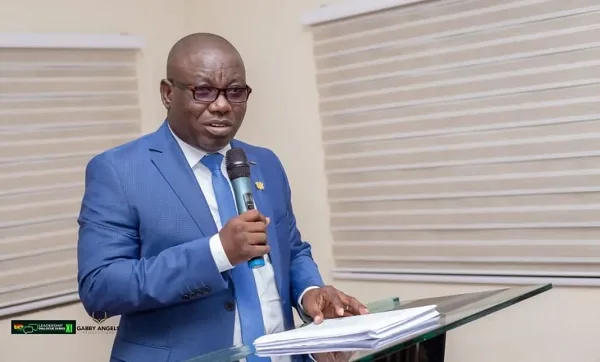

$300 Million World Bank Loan to Expand Secondary Education, Not Fund Free SHS – Isaac Adongo
The Chairman of Parliament’s Finance Committee and Member of Parliament for Bolgatanga Central, Isaac Adongo, has rejected claims that the government’s proposed $300 million World Bank loan is intended to finance Ghana’s Free Senior High School (Free SHS) programme.
Speaking in Parliament, Adongo clarified that the funding is aimed at expanding access to secondary education, improving school infrastructure, enhancing education quality, and eliminating the double-track system, rather than covering the operational costs of the Free SHS policy.
Adongo Rejects Minority’s Claims
His comments came after the Minority in Parliament argued that the loan request demonstrated the government’s inability to sustain the Free SHS programme without additional borrowing, despite Ghana’s recent exit from the International Monetary Fund (IMF) programme.
Responding to the criticism during parliamentary deliberations on Tuesday, July 21, Adongo insisted that the loan was not intended to finance Free SHS.
“There is no loan agreement before this House to finance Free SHS. What we are considering is a loan agreement meant to improve access to free secondary education, eliminate the double-track system, and upgrade schools across the country,” he stated.
How the $300 Million World Bank Loan Will Be Used
Adongo outlined the proposed allocation of the World Bank financing, explaining that the funds would support three major components:
- $257.7 million will be used to increase equitable access to secondary education, including eliminating the double-track system and upgrading schools.
- $33.8 million has been allocated to improve the quality and relevance of secondary education.
- $8.5 million will strengthen education systems, communication, monitoring, and evidence-based decision-making.
He also disclosed that the Government of Ghana will contribute $23 million in counterpart funding to support the implementation of the project.
Focus on Expanding Secondary Education
According to Adongo, the investment will create more opportunities by upgrading Grade C schools to Grade B and Grade B schools to Grade A, allowing more students to access quality secondary education facilities.
He maintained that the objective of the project is to improve learning conditions nationwide while addressing infrastructure deficits that continue to affect secondary education.
Debate Continues in Parliament
The proposed loan has sparked debate between the Majority and Minority caucuses over government borrowing and education financing.
While the Minority argues the loan reflects financial challenges facing the education sector, the Majority maintains that the facility is a long-term investment in Ghana’s education infrastructure and should not be interpreted as funding for the Free SHS programme itself.
If approved, the World Bank facility is expected to support ongoing reforms aimed at improving access, quality, and efficiency across Ghana’s secondary education system.
Related posts:
 Double-Track System Ends in 2027: 7 Important Facts as Education Ministry Clarifies 2029 Slip
  Ghana Expands Play-Based Learning Nationwide as Kindergarten Reform Scales Up
  10 Fully Funded Scholarships That Could Take Ghanaian Students to Oxford, Cambridge and Beyond
  Ghana Suspends SHS Graduation Ceremonies Amid Backlash Over Wealth Displays
  EOCO Investigation Renews Focus on Delayed Opening of Ghana’s US$10.15m Weija Children’s Hospital