Sunyani Central Prison Commissions Skills Centre
Sunyani Central Prison commissions a new Skills Development Centre featuring car wash and vulcanising facilities to boost inmate rehabilitation and reintegration.



Sunyani Central Prison Commissions Skills Centre
“This facility forms part of the Think Prisons 360 Degrees initiative, which focuses on rehabilitation, skills development, empowerment and reintegration.”
— Ghana Prisons Service Statement
The Sunyani Central Prison has officially commissioned a state-of-the-art Car Wash and Vulcanising Skills Development Centre, marking a significant milestone in the facility’s approach to correctional management. The newly established centre is designed to provide inmates with hands-on technical experience, ensuring they possess marketable trades upon their discharge. By bridging the gap between confinement and employment, the project aligns with broader national goals similar to vocational training for youth, focusing on equipping individuals with the tools necessary to thrive in a modern economy.
During the commissioning ceremony, officials emphasized that the facility is not merely an addition to the prison’s infrastructure but a dedicated space for transformation. The inclusion of a car wash and vulcanising unit allows inmates to engage in real-world service delivery, fostering a sense of responsibility and professionalism. The Bono Regional Commander of the Ghana Prisons Service rehabilitation efforts noted that providing such avenues is essential for maintaining order within the facility while preparing inmates for the realities of the job market outside prison walls.
Think Prisons 360 Degrees: A Holistic Approach
The ‘Think Prisons 360 Degrees’ initiative focuses on four key pillars: rehabilitation, skills development, empowerment, and successful reintegration of inmates into society.
The establishment of this centre falls under the Think Prisons 360 Degrees initiative, a strategic framework adopted by the Ghana Prisons Service to modernize inmate care. This initiative moves away from a purely punitive model of incarceration, instead embracing a holistic philosophy that prioritizes four key pillars: rehabilitation, skills development, empowerment, and reintegration. By treating the period of incarceration as a cycle of preparation, the 360-degree approach aims to address the social and economic factors that often lead to criminal behavior.
Under this initiative, the Sunyani Central Prison serves as a hub for practical learning. The “Think Prisons 360 Degrees” philosophy acknowledges that successful inmate rehabilitation Ghana requires more than just formal education; it necessitates the acquisition of technical competencies that are in high demand within local communities. By focusing on the “360-degree” view, the service ensures that when an individual completes their sentence, they do so as a reformed citizen with the capacity to contribute positively to the national economy.
Vocational Training in Car Wash and Vulcanising
The new Skills Development Centre offers a structured curriculum focused on two primary automotive support services. The choice of these specific trades reflects their low barrier to entry for self-employment and the consistent demand for such services across the country. Inmates participating in the program will undergo rigorous training in the following areas:
- Advanced Vulcanising Techniques: Mastery of tyre repairs, wheel balancing, and the use of modern pneumatic tools to ensure vehicle safety.
- Professional Car Detailing: Comprehensive training in vehicle cleaning, interior maintenance, and the application of protective finishes.
- Equipment Management: Practical instruction on the operation and maintenance of industrial-grade compressors, pressure washers, and vulcanising machines.
- Customer Service and Business Basics: Learning how to interact with clients, manage service timelines, and understand basic bookkeeping for small-scale enterprises.
- Safety Standards: Strict adherence to workplace safety protocols to prevent accidents during the handling of heavy machinery and pressurized equipment.
The Role of Private Sector Partnership
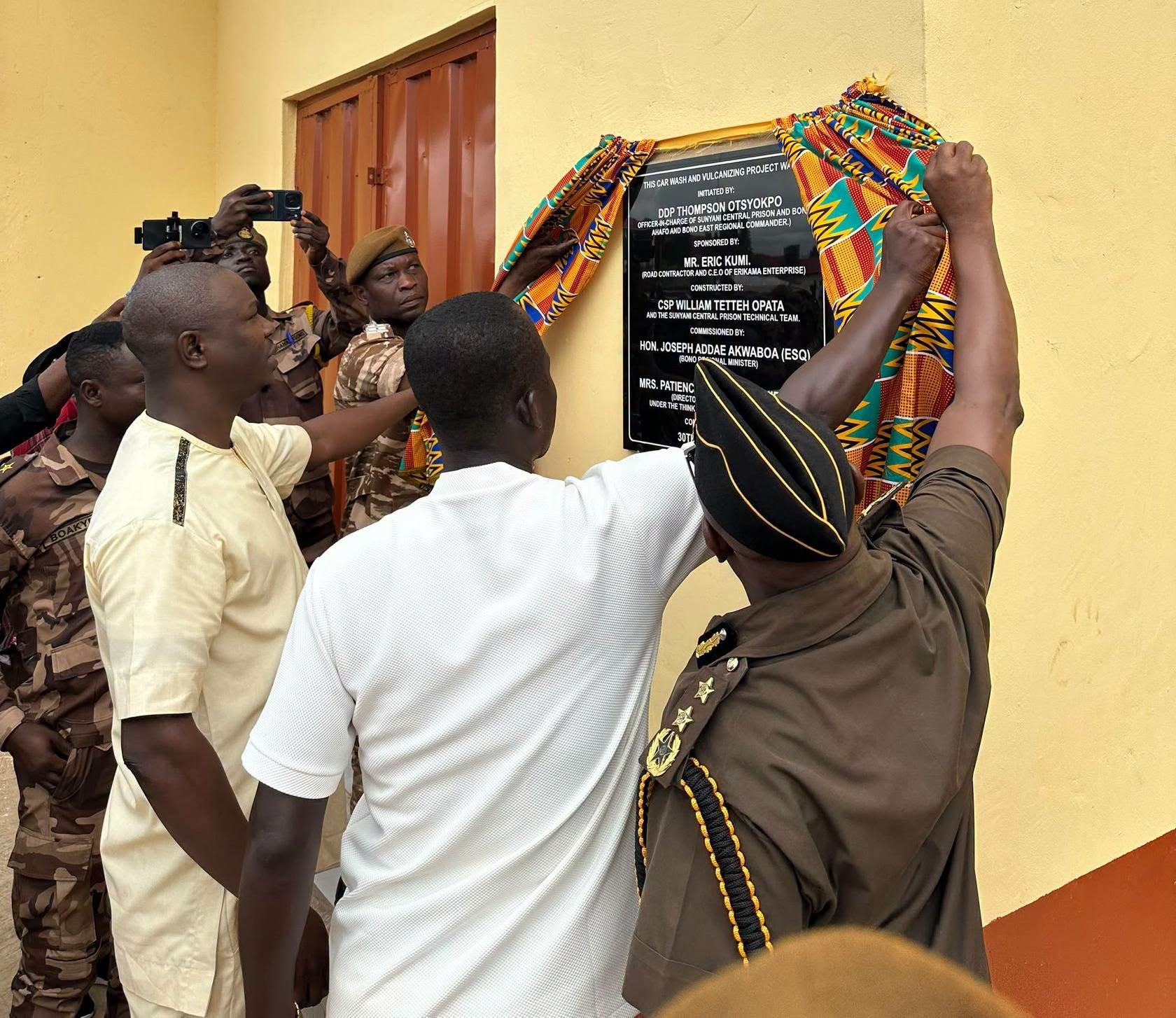
The realization of this vocational facility was made possible through a collaborative effort between the public sector and private philanthropists. A notable contributor to the project was Eric Kumi, the Chief Executive Officer of Erikama Enterprise (E-CEO). His support proved instrumental in securing the necessary equipment and materials to bring the centre to fruition. This partnership highlights the growing importance of corporate social responsibility in supporting the Ghana Prisons Service rehabilitation programs.
Officials at the ceremony praised the involvement of the private sector, noting that government funding alone is often insufficient to cover the extensive infrastructure required for comprehensive vocational hubs. They suggested that maintaining fiscal discipline in projects of this nature ensures that every donation and allocated resource directly benefits the inmates’ learning environment. By leveraging private expertise and funding, the Sunyani Central Prison has created a sustainable model that can be replicated in other correctional facilities across the nation.
Preparing Inmates for Post-Release Success
The ultimate goal of the Skills Development Centre is to drastically reduce recidivism rates. When inmates lack a viable means of earning a living upon release, the risk of re-offending remains high. By providing specialized vulcanising skills training and car wash management experience, the Sunyani Central Prison is empowering these individuals to become entrepreneurs or employable technicians immediately upon their return to society.
As the Think Prisons 360 Degrees initiative continues to expand, the focus remains on ensuring that reintegration is a seamless process. The regional command expressed optimism that the certificates of competence awarded to inmates at the end of their training will serve as a testament to their reform and readiness to work. This proactive approach to inmate rehabilitation Ghana not only benefits the individuals involved but also enhances public safety by fostering a more inclusive and productive society.
Related posts:
 Ghana Police Arrest 74 in Upper East Anti-Drug and Violent Crime Operations
 Ghana Police Arrest 44 as Ashanti Drug Network Allegedly Targeting University Students Is Dismantled
 Obuasi SHTS Headmaster Hospitalised After Student Attack Over Infanticide Allegations
 Police seize 500 cartons of Tramadol at Widana
 Ghana Spends GH¢49.7M Evacuating Citizens From South Africa