Data Center Opposition Hits Post-Midterm High
Following the 2026 midterms, Data Center Opposition is reaching a boiling point. Voters cross party lines to challenge energy and water use by tech giants.



Post-Midterm Shift in Tech Infrastructure Sentiment
The conclusion of the 2026 midterms has revealed a significant shift in the American political landscape regarding tech infrastructure policy. For the better part of a decade, data centers were viewed by local and state officials as blue-chip economic assets—reliable sources of tax revenue that required minimal municipal services. However, the recent election cycle suggests that these massive facilities have transitioned from economic prizes to political liabilities.
Across several key districts, candidates who campaigned on platform of skepticism toward rapid industrial expansion found unexpected success. The narrative surrounding Data Center Opposition has evolved from localized “not-in-my-backyard” (NIMBY) complaints into a structured electoral force. Voters are no longer prioritizing the promise of abstract economic growth over tangible concerns regarding land use, noise pollution, and the strain on aging electrical grids. As the dust settles on the 2026 midterms, it is clear that the “blank check” era for tech giants seeking to break ground in rural and suburban corridors is coming to an end.
Data Center Opposition: A Cross-Party Movement
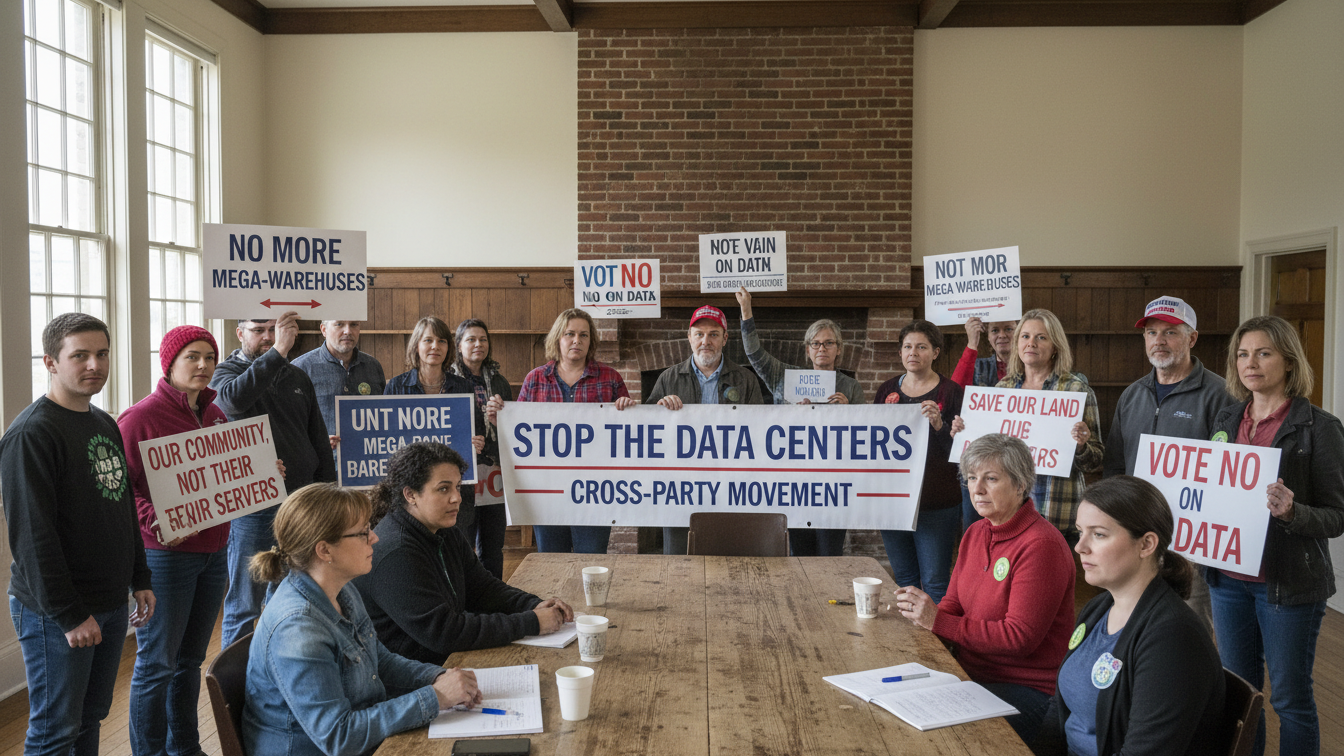
According to exit polls, over 60% of voters in key tech-heavy districts expressed concerns about the local environmental and infrastructure impact of data centers, suggesting this issue transcends traditional Democratic or Republican lines.
Analysis of voter exit polls indicates that skepticism toward large-scale tech infrastructure is one of the few issues that bridges the partisan divide. While their motivations differ, both conservative and liberal voting blocs expressed high levels of concern regarding the rapid pace of development. Conservative voters often cited the infringement on property rights and the preservation of rural character, while liberal voters focused on energy consumption concerns and the environmental impact of massive cooling systems.
This bipartisan coalition has created a unique set of infrastructure challenges for policymakers who previously relied on standard industrial zoning laws. In districts where tech companies expected a warm welcome, they instead met a wall of organized resistance. Exit polling suggested that nearly 60% of voters in high-growth corridors favored stricter regulations or outright moratoriums on new permits until independent utility impact studies could be completed. This sentiment suggests that the political cost of approving a new “server farm” may now outweigh the projected fiscal benefits for local incumbents.
The Ohio Precedent: Local Wins Against Tech Giants
Perhaps the most significant signal of this shift occurred in a bellwether Ohio county, which has now established a potential blueprint for national resistance. In a landslide vote, residents passed a charter amendment that effectively bans the construction of “hyperscale” data centers—defined by square footage and megawatt capacity—within county limits. This move was not merely a protest but a legally binding obstacle that bypassed traditional state-level incentives.
The Ohio campaign focused heavily on the disparity between the massive resources these facilities consume and the relatively low number of permanent jobs they provide once construction is complete. Local organizers successfully argued that the “tax windfall” promised by developers was often offset by the need for new substations and water treatment upgrades funded by the public. This successful use of local ballot initiatives is expected to trigger similar movements in Northern Virginia, Arizona, and Georgia, where the concentration of data centers has reached a boiling point.
The AI Surge and Energy Demands
The timing of this political friction coincides with an unprecedented AI data center growth cycle. The global race for artificial intelligence supremacy has forced tech conglomerates to seek massive amounts of computing power, which in turn requires vast physical footprints. However, the intensity of AI and energy demands is straining local resources to a degree rarely seen with traditional cloud storage facilities.
Financial analysts at Morgan Stanley have noted that the power requirements for AI-focused hardware are significantly higher than those of previous generations. This surge in demand often forces utility companies to delay the decommissioning of fossil fuel plants or to raise rates for residential consumers to fund grid expansions. As these costs are passed down to the taxpayer, the social license for tech companies to operate diminishes. The clash between the Silicon Valley mandate for rapid AI scaling and the localized reality of limited resource management is becoming the primary friction point in modern infrastructure debates.
Congressional Scrutiny and National Implications
The ripples from the 2026 midterms are already reaching Washington, D.C. Following reports from the New York Times and other major outlets regarding voter frustration over secretive land acquisitions, the newly seated Congress is expected to launch formal investigations into how tech infrastructure is planned and approved. Lawmakers are facing pressure to introduce federal oversight on how “big tech” interacts with the national energy grid, particularly concerning the preferential treatment some companies receive from utility providers.
“The results of Tuesday’s midterms suggest that the ‘not in my backyard’ sentiment regarding data centers has evolved into a national policy challenge.”
— TechCrunch Analyst
The focus of these inquiries will likely center on transparency. In many cases, developers use shell companies to purchase vast tracts of farmland, only revealing the true nature of the project once zoning changes are well underway. Congressional leaders from both sides of the aisle have signaled that this “stealth development” model is no longer acceptable. Proposed legislation may soon require more rigorous environmental and utility impact statements at the federal level, potentially slowing the pipeline of new projects significantly.
Conclusion: The Road Ahead for Tech Infrastructure
The tech industry currently finds itself at a crossroads. While the demand for digital services and AI capabilities shows no signs of slowing, the physical space and energy required to sustain that growth are under intense scrutiny. The 2026 midterms proved that Data Center Opposition is a potent electoral force that can unseat even the most pro-business incumbents.
Moving forward, the success of tech infrastructure projects will depend on a shift from “extraction” to “collaboration.” Companies that fail to address community concerns regarding noise, water usage, and energy equity will likely face an endless cycle of litigation and legislative roadblocks. Balancing the global necessity for innovation with the local demand for sustainability is the defining challenge for the next decade of tech development.
Frequently asked questions
What happened to data center initiatives in Ohio during the midterms?
In a significant local victory, a county in Ohio approved a charter amendment that effectively bans the construction of large-scale data centers, citing resource preservation.
Why are voters opposing data center expansions?
Opposition stems from concerns over the high energy consumption, water usage for cooling, and the lack of community input during the planning phases of these massive facilities.