
Bank of Ghana policy rate cut to 11% raises loan cost questions
The Bank of Ghana has cut its benchmark rate to 11%. What does the decision mean for loan costs, businesses and borrowers?

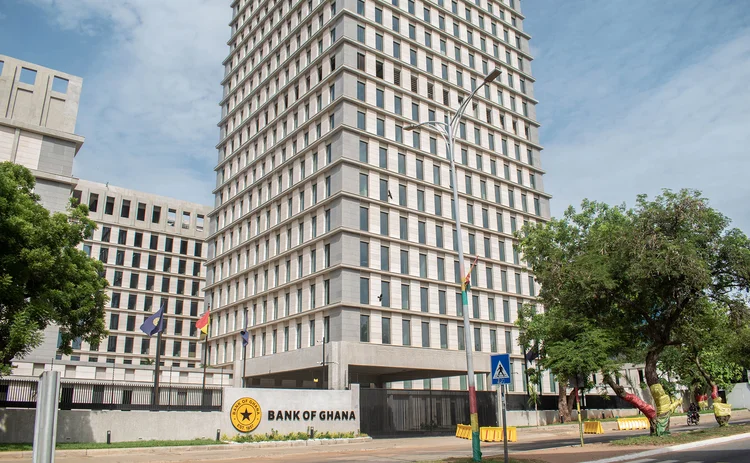

Ghana’s central bank has lowered its benchmark rate by three percentage points, but cheaper commercial loans are not automatic.
ACCRA, Ghana — The Bank of Ghana has reduced its Monetary Policy Rate from 14% to 11%, while announcing changes to the way it manages short-term liquidity in the banking system. The decision, announced after the Monetary Policy Committee’s meeting on 16–18 November, raises an immediate question for households and businesses: will the lower benchmark translate into less expensive borrowing?
What Ghana’s interest-rate changes mean for you
Explore the figures behind the Bank of Ghana’s policy decision, and estimate how different lending rates could affect your repayments.
How have interest rates changed?
Select an indicator to compare its reported values.
Average lending rates fell by 6.4 percentage points over the year.
These are reported market indicators, not rates guaranteed to individual borrowers.
What could a loan cost you?
Adjust the figures to compare estimated repayments on a fixed-rate, fully amortising loan.
Enter valid figures within the displayed limits.
Estimates assume equal monthly payments, monthly compounding and a constant nominal annual rate. Fees, insurance, penalties and variable-rate changes are excluded. The 22.2% comparison uses the same loan amount and term, and does not predict your bank’s offer.
Does a policy-rate cut mean cheaper loans?
Central bank
Adjusts its policy benchmark and liquidity operations.
Financial markets
Short-term funding and market interest rates may respond.
Commercial banks
Assess funding costs, risk, collateral and contractual terms.
Borrowers
May experience different lending rates depending on their circumstances.
Key distinction: A 300-basis-point policy-rate cut is not an automatic three-percentage-point reduction in every customer’s loan rate.
Three questions for borrowers
Will my existing loan become cheaper?
That depends on your contract. Fixed-rate borrowing may remain unchanged. Variable-rate loans may adjust according to their benchmark, review dates and other conditions.
What should I compare before taking a loan?
Compare the effective annual rate, fees, total repayment, repayment schedule, collateral requirements and penalties. A low advertised interest rate does not necessarily mean the lowest overall cost.
What does this mean for small businesses?
Lower market rates may improve financing conditions, but credit approval still depends on cash flow, risk assessment, security and lender requirements.
Related posts:
 IMF PCI to Strengthen Bank of Ghana’s Balance Sheet
 IMF Raises Ghana’s 2026 Growth Forecast to 5.7%
 Ghana’s inflation slows for third consecutive month as food prices ease
 Ghana Nears First Non-Interest Banking Licence as BoG Warns on Fintech Trust
 Community Banking Assets Hit GHS26bn as Eight-Million Customers Drive Growth in Ghana