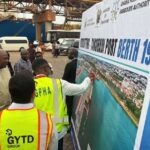
Tamale 3rd Ring Road Sections Reach 36% Completion
The Tamale 3rd Ring Road project reaches a major milestone with two sections exceeding 36% completion. Learn how this Big Push project impacts Ghana's economy.



Progress Milestone for Tamale 3rd Ring Road Project
The Tamale 3rd Ring Road project has reached a significant milestone, marking a transformative phase in the northern region’s transportation landscape. Spanning a total of 34 kilometres, this ambitious infrastructure initiative is designed to alleviate the growing traffic congestion within the Tamale Metropolis and the Sagnarigu Municipality. As the city continues to expand as a commercial hub for West Africa, the development of an asphaltic concrete dual carriageway has become essential for maintaining urban mobility.
According to the Ghana Roads and Highways Ministry, the project is currently advancing with notable efficiency. Several sections are reported to be ahead of their projected completion timelines, reflecting a rigorous construction schedule. By bypassing the city center, the ring road aims to redirect heavy-duty vehicles and transit traffic, thereby preserving the lifespan of inner-city roads and reducing the daily commute time for residents and businesses alike.
Current Progress Across Construction Lots

“Two sections of the Tamale 3rd Ring Road have recorded over 36% progress, moving ahead of schedule under the government’s Big Push Infrastructure Programme.”
— Ministry of Roads and Highways
The construction of the Tamale 3rd Ring Road is divided into three distinct lots, each managed by reputable engineering firms. The Ministry’s recent updates indicate that work is proceeding at different speeds across these sections, with some areas showing remarkable advancement beyond the initial projections.
Lot 1, which covers the stretch between Banvim and Jisonayili, is being executed by China Railway No. 5. This section has recorded a completion rate of 36.50 per cent. The Ministry has lauded this progress as being significantly ahead of the original schedule. Meanwhile, Lot 2, connecting Jisonayili to Kanvilli, is under the management of Sinohydro Corporation Limited. This section is currently reported at 22.80 per cent completion, with foundational work and drainage structures taking priority to ensure the road’s durability against local weather conditions.
The most advanced progress has been observed in Lot 3, the stretch between the Kanvilli and Vittin Barrier. Managed by Munisco Limited, this section has reached 43 per cent completion. The rapid development of Lot 3 is particularly critical, as it serves as a major entry point for commuters and commercial vehicles entering the metropolis from the eastern corridors. The combined efforts across these lots signify a robust push toward completing Northern Region roads that meet international safety and quality standards.
Key Communities Benefiting from the Road Network
The alignment of the ring road has been strategically planned to integrate several rapidly developing outskirts into the metropolitan economic zone. The following communities are set to benefit directly from the improved connectivity provided by the dual carriageway:
- Kanvilli: A growing residential and educational hub that will see reduced transit times to the city center.
- Tuunayili and Fuo: Areas expected to see a rise in property value and residential development.
- Vittin and Banvim: Communities that will benefit from enhanced access to the main commercial arteries of the region.
- Datoyili and Shishegu: Localities that serve as vital links for agricultural transport.
- Kpalsi, Gurugu, and Jisonayili: Neighborhoods that will experience improved drainage and reduced dust pollution as a result of the asphaltic surfacing.
Development of the Big Push Infrastructure Programme

The Tamale 3rd Ring Road is a cornerstone of the Big Push Infrastructure Programme, a multi-billion cedi initiative aimed at addressing the historical infrastructure deficit across the country. The government has allocated approximately GH¢28 billion to this program, emphasizing the creation of high-quality road networks, bridges, and interchanges to stimulate regional growth. This project aligns closely with the government’s broader infrastructure goals, which focus on building a resilient economy through physical connectivity.
By investing in the Tamale infrastructure development, the government aims to position the Northern Region as a logistics gateway for the Sahelian regions. The Big Push strategy is not merely about laying asphalt; it is about creating the structural framework necessary for the “New Economy” plan, where industrialization and localized trade can flourish without the bottleneck of poor transportation links.
Economic Impact: What This Means for Ordinary Ghanaians
Infrastructure projects like the Tamale 3rd Ring Road often lead to a ‘multiplier effect.’ For the local resident, this means shorter commute times to markets and schools, while for the national economy, it signifies the government’s attempt to stimulate growth through the ‘Big Push’ initiative—a central pillar of current political strategy heading into the next fiscal cycle.
For the average citizen in Tamale, the completion of this road translates into tangible daily benefits. Reduced traffic congestion means lower fuel consumption for motorists and lower maintenance costs for vehicle owners. Furthermore, improved road access typically leads to a decrease in the cost of food and consumer goods, as transporters can move products more efficiently from rural farms to urban markets. The project also provides direct employment for local artisans, engineers, and laborers during the construction phase.
The economic ripple effects extend to the national level as well. Enhanced transportation networks in the north complement other strategic investments, such as petroleum sector developments and agricultural initiatives. When the Northern Region is well-connected, it can more effectively support the supply chains required for industrial growth, ultimately contributing to a more balanced national economy. The ring road serves as a vital artery for the “Trans-African Highway,” facilitating easier trade between Ghana and its northern neighbors, Burkina Faso and Mali.
Project Oversight and Future Outlook
Constant oversight remains a priority for the Ghana Roads and Highways Ministry to ensure that the 36% and 43% progress figures translate into a high-quality final product. During a recent site inspection, Roads and Highways Minister Kwame Governs Agbodza emphasized the importance of the project for the socio-economic health of the region. He noted that the dual carriageway would fundamentally change the way traffic is managed in Tamale, allowing the city to grow without the typical gridlock seen in other major metropolitan areas.
The future outlook for the Ghanaian construction news cycle remains positive, with contractors maintaining their presence on-site even during challenging weather windows. The next phases of the project will involve the completion of the asphaltic layers, the installation of modern street lighting, and the construction of safe pedestrian walkways. As the sections approach the 50% mark, the Ministry plans to maintain rigorous quality control measures to ensure that the Tamale 3rd Ring Road serves as a benchmark for regional infrastructure for decades to come.
Frequently asked questions
What is the Tamale 3rd Ring Road project?
The project is a 34-kilometre asphaltic concrete dual carriageway designed to bypass the central business district of Tamale.
How many sections are currently under construction?
Three main lots are currently under construction: Lot 1 (Banvim–Jisonayili), Lot 2 (Jisonayili–Kanvilli), and Lot 3 (Kanvilli–Vittin Barrier).
Which sections are ahead of schedule?
Lot 1 is 36.5% complete, and Lot 3 is 43% complete, both of which are currently ahead of their projected schedules.