Mahama Calls for New Global Health Order Built on Self-Reliance


Follow Nukunya
Get the latest breaking news and updates from Nukunya.
President John Dramani Mahama says declining international aid and cuts to global health funding are forcing African countries to rethink healthcare financing, sovereignty and long-term resilience.
GENEVA, Switzerland —
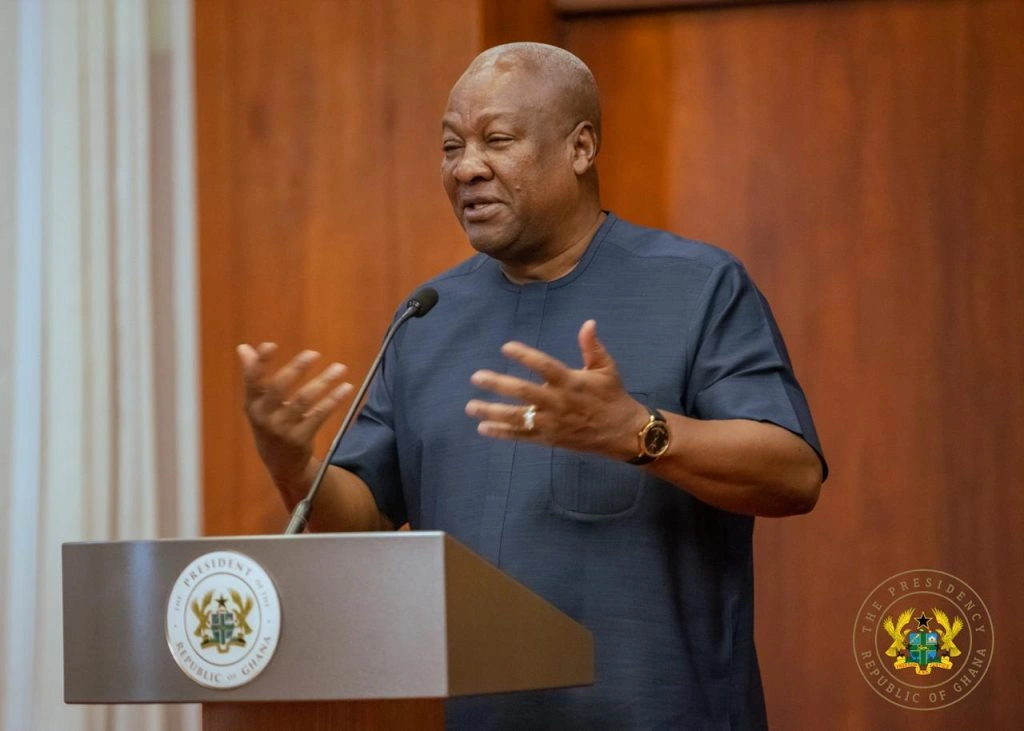
President John Dramani Mahama has called for a new global health order built on self-reliance and African health sovereignty, warning that declining international aid and geopolitical tensions are exposing deep vulnerabilities in healthcare systems across developing countries.
Addressing delegates at the 79th World Health Assembly in Geneva, Mahama said cuts to overseas development assistance and growing uncertainty within the global health system were forcing African countries to rethink how healthcare was financed and delivered.
“We are here to decide whether the architecture we supervise is still fit for purpose,” Mahama said. “We are here to discuss how we can continue to save lives even in the face of adversity.”
His remarks come as governments and international health agencies confront mounting funding pressures following reductions in major donor-backed programmes, including some linked to United States health assistance.
Mahama said the world was entering a new health era six years after the COVID-19 pandemic reshaped international public health priorities.
“The old system of donor dependency is past its sell-by date,” he told delegates.
Ghana says aid cuts are already affecting healthcare delivery.
Mahama said Ghana had lost approximately US$78 million following the closure of several USAID-supported programmes since 2025, affecting malaria interventions, maternal healthcare, nutrition services, HIV/AIDS treatment support and antiretroviral drug delivery.
He said humanitarian assistance globally had fallen by about 40% and warned that healthcare systems across Africa were already beginning to feel the effects of reduced donor support.
In South Africa, Mahama said the withdrawal of some PEPFAR-linked funding had disrupted clinics, affected gender-based violence programmes and created uncertainty for people living with HIV.
“We are told that by 2030, nine million preventable deaths could occur due to these shifts,” he said.
The Ghanaian president added that aid reductions could push an estimated 5.7 million Africans into poverty by the end of 2026 if health and social support systems weakened further.
According to World Health Organization regional estimates, external donor funding still accounts for more than 20% of total health expenditure in several sub-Saharan African countries, particularly in HIV, malaria and maternal healthcare programmes.
Health economists say the concern for many African governments is not simply the loss of aid itself, but the speed at which funding reductions are taking place.
“The challenge is whether domestic systems can absorb these responsibilities quickly enough without disrupting frontline care,” said Dr Mavis Owusu-Gyamfi, President and Chief Executive Officer of the African Center for Economic Transformation.
Mahama promotes ‘health sovereignty’ and domestic financing.
Mahama used the speech to defend the “Accra Reset Initiative”, launched in Ghana in 2025, which advocates stronger domestic healthcare financing and reduced dependence on foreign aid.
He said African countries needed to move from being recipients of global health policy decisions to becoming active participants in shaping them.
The president highlighted reforms to Ghana’s National Health Insurance Scheme (NHIS), saying coverage had reached an estimated 66% of the population by the end of 2025, leaving roughly one-third of Ghanaians outside the system.
Mahama said the government had removed the cap on the National Health Insurance Fund, freeing up an additional GH₵3 billion, equivalent to roughly US$300 million, for healthcare investment.
He also said digital systems, including artificial intelligence tools, were being introduced to help detect fraudulent claims and speed up reimbursements to healthcare providers.
The president added that Ghana had started transitioning away from Gavi vaccine support ahead of 2030 while expanding free primary healthcare services in rural communities.
Mahama also promoted the Ghana Medical Trust Fund, known as MahamaCares, which targets non-communicable diseases, including cardiovascular disease, cancers, liver disease and kidney failure.
WHO urges coordinated reform amid funding strain
World Health Organization Director-General Dr Tedros Adhanom Ghebreyesus acknowledged growing strain on the global health financing system and said the World Health Assembly was intended to coordinate reforms rather than launch a single replacement initiative.
“That is why we have chosen as the theme for this year’s World Health Assembly, ‘Reshaping global health: a shared responsibility’,” Dr Tedros said.
He also praised Ghana’s leadership role in launching the Accra Reset Initiative last year.
Still, some analysts caution that replacing large-scale donor financing will remain difficult for heavily indebted economies already facing inflation pressures, debt servicing costs and competing social spending demands.
Professor Agyeman Badu Akosa, former Director-General of the Ghana Health Service, has previously argued that long-term health resilience in Ghana would require stronger domestic pharmaceutical production, improved tax mobilisation and sustained public investment rather than periodic emergency funding interventions.
Public health advocates also warn that abrupt reductions in aid-supported HIV and malaria programmes could reverse years of progress if governments are unable to scale up domestic financing quickly enough.
Some development economists have also questioned whether lower-income countries can fully replace large-scale donor support without broader international financing reforms and debt relief mechanisms.
Hospitals and patients monitor funding uncertainty.
Healthcare workers at Korle Bu Teaching Hospital in Accra said uncertainty over medicine funding and insurance reimbursements remained a recurring concern for patients receiving treatment for chronic illnesses.
Hospital administrators and clinicians say disruptions to external funding streams can place additional pressure on already stretched public healthcare facilities, particularly in specialist treatment areas such as renal care, oncology and infectious disease management.
Economists say sustaining expanded healthcare programmes will become increasingly difficult if African governments face slower economic growth, weaker tax revenues or renewed currency pressures.
The debate over donor dependence and health sovereignty is expected to remain central to discussions at the World Health Assembly throughout the week.
Sources: Ghana News Agency · Graphic Online · World Health Organization.
Reporting and analysis by Kofi Foli.
Related posts:
 Ghana exits IMF programme as government shifts focus to jobs and growth
 Ghana Pushes Border Cooperation as Sahel Insecurity Raises Regional Security Risks
 Ghana Partners Google for Education to Expand AI and Digital Skills in Schools
 Nearly 300 Ghanaians evacuated from South Africa arrive in Accra amid anti-immigration protests
 Ghana Welcomes First Evacuees From South Africa Amid Xenophobia Fears