Ghana floods displace families as heavy rains hit Cape Coast

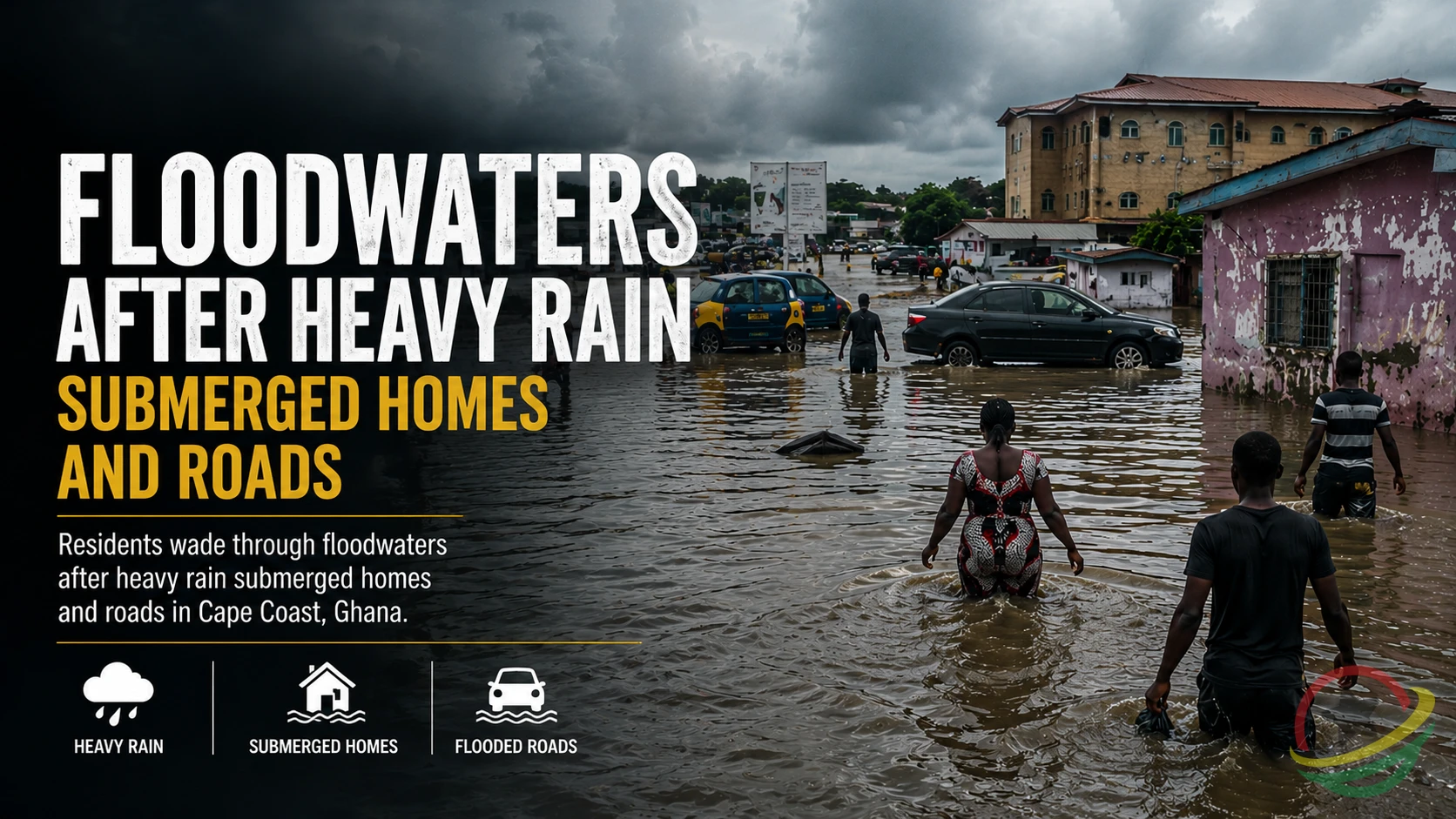

Dozens of families fled submerged homes in Cape Coast and Accra after torrential rain caused severe flooding, with forecasters warning more downpours could hit flood-prone communities across southern Ghana.
Ghana floods displaced dozens of families in Cape Coast and disrupted transport across parts of Accra after hours of torrential rain overwhelmed drainage systems and submerged homes in several communities, emergency officials said.
More than 50 homes and two churches were flooded in Cape Coast following over three hours of continuous rainfall on Friday evening, according to the National Disaster Management Organisation (NADMO). Residents described elderly and immobile people being carried through waist-high floodwaters to safety as rising water swept through low-lying neighbourhoods.
Officials said no deaths had been recorded by Saturday morning, although several families remained displaced while emergency teams assessed damage to homes, roads and electrical infrastructure. Mr Emmanuel Kwesi Dawood, the Central Regional Director of NADMO, said rapid response teams worked overnight to evacuate vulnerable residents after floodwaters rose quickly around communities near Christ the King Academy in Cape Coast.
“Some of the affected residents could not leave their homes on their own because the water rose rapidly,” Dawood said. “Our teams had to move elderly residents and children to safer areas to avoid casualties.” The flooding reportedly began around 21:00 GMT after heavy rainfall overwhelmed drains and waterways in several parts of the city.
Ghana’s weather agency warns of more rainfall
The Ghana Meteorological Agency (GMet) warned that additional rainfall and scattered thunderstorms could affect parts of Greater Accra, the Central Region and coastal communities through the weekend. Weather forecasts issued Saturday morning showed rain, showers and high humidity levels across Accra throughout the day. GMet data indicated humidity levels above 90% during early morning hours, with intermittent rainfall and cloudy conditions expected across the capital. The agency advised residents in flood-prone areas to remain alert, avoid crossing flooded roads and monitor weather updates as unstable conditions continued.
Accra flooding causes traffic disruption
The heavy rains also triggered flooding and traffic congestion in parts of Accra, where motorists struggled to move through submerged roads after drains overflowed. Residents in Kaneshie, Adabraka, Weija and surrounding communities reported severe flooding, with some vehicles abandoned after roads became impassable.
Videos circulating on social media showed residents attempting to salvage belongings from homes and shops as floodwaters entered buildings. NADMO urged residents to switch off electricity when floodwater entered homes and avoid contact with contaminated water. Authorities also advised households to boil drinking water until normal supplies were restored.
Residents demand long-term flood solutions
The Ghana floods have renewed criticism of drainage management and urban planning failures in several rapidly growing cities. Residents and environmental analysts blamed blocked drains, weak waste management systems and construction on waterways for worsening flood risks during the rainy season.
Mr Samuel Eshun, a resident in Cape Coast’s Pedu area whose home was flooded, said communities faced similar flooding each year despite repeated warnings. “Every rainy season people lose property because the drains are blocked and water has nowhere to go,” he said.
Urban planning analyst Dr Nana Yeboah said Ghana’s cities were becoming increasingly vulnerable to flash floods because infrastructure development had failed to keep pace with population growth. “Extreme rainfall events are becoming more frequent, but drainage systems in many urban areas remain inadequate,” he said. Climate researchers have repeatedly warned that changing rainfall patterns linked to climate change could increase the frequency and intensity of flooding across parts of West Africa.
Emergency teams continue assessments
NADMO said assessments were ongoing to determine the full extent of damage and identify households requiring immediate support. The agency appealed to businesses, charities and religious organisations to assist affected families with food, mattresses, clothing and medical supplies. Emergency officials said monitoring teams would remain on alert through the weekend as weather agencies tracked further rainfall activity across southern Ghana.
Sources: GNA
Related posts:
 Ghana Allocates GH¢442 Million for Flood Recovery and Coastal Protection
  Avenor Building Collapse Kills Two as Officials Demand Tougher Enforcement of Building Regulations
  Avenor Building Collapse Death Toll Rises to Three as Safety Concerns Intensify
  Bank of Ghana suspends proposed 0.75% mobile money transfer fee
  Teacher Arrested After Viral Assault Video Sparks Safeguarding Concerns at Nyinahin Catholic SHS