Somali Referee Omar Artan Denied Entry to United States Days Before 2026 World Cup


Follow Nukunya
Get the latest breaking news and updates from Nukunya.
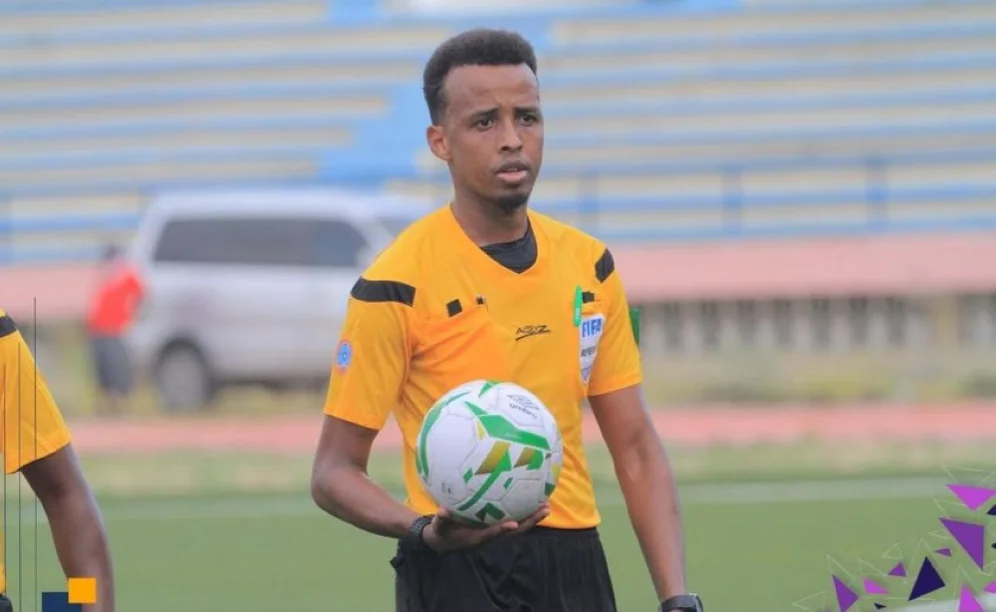
Omar Abdulkadir Artan, the first Somali referee selected to officiate at a FIFA World Cup, has reportedly been denied entry to the United States just days before the start of the 2026 tournament, raising fresh questions about visa restrictions, sporting fairness and global access to football’s biggest event.
A leading Somali football referee who was due to make history at the 2026 FIFA World Cup has reportedly been denied entry to the United States despite being selected by FIFA to officiate at the tournament.
Omar Abdulkadir Artan, widely regarded as one of Africa’s top match officials, was expected to become the first Somali referee to officiate at a FIFA World Cup. However, reports from multiple media outlets indicate that he was refused entry upon arrival in the United States and was subsequently returned to Istanbul. The reason for the refusal has not been officially confirmed by US authorities. However, Somalia is among the countries affected by recently announced US travel restrictions, leading to speculation that the decision may be linked to immigration measures rather than sporting considerations.
According to reports, Artan travelled from Nairobi through Istanbul to Miami after FIFA had reportedly indicated that his visa situation had been resolved and that he would be available to officiate during the tournament. Instead, he was denied entry on arrival and returned to Türkiye.
One of Africa’s Most Respected Referees
Artan’s selection for the World Cup was viewed as a landmark achievement for Somali football. The 34-year-old was named the Confederation of African Football’s Men’s Referee of the Year for 2025 and has officiated at major continental competitions, including the Africa Cup of Nations and CAF Champions League matches. He was among a select group of African referees chosen by FIFA for the expanded 2026 World Cup, which is being jointly hosted by the United States, Canada and Mexico.
Somalia’s Ministry of Youth and Sports described Artan as one of Africa’s most respected referees and expressed disappointment over the incident. Officials argued that preventing him from officiating would undermine football’s commitment to fairness, merit and equal opportunity.
FIFA Yet to Clarify Situation
Reports indicate that Somali football authorities contacted FIFA following the incident. While FIFA is said to have acknowledged the matter, no official public explanation had been issued at the time of publication. Likewise, neither US authorities nor Somali officials have publicly explained why Artan was refused entry. The uncertainty leaves questions over whether Artan will be able to participate in the tournament at a later stage or whether FIFA will be forced to replace him with another official.
Wider World Cup Visa Concerns
The case has added to broader concerns surrounding travel access ahead of the 2026 World Cup. Human rights groups, football administrators and international observers have previously warned that immigration restrictions could complicate participation for athletes, officials and supporters from certain countries.
As the first World Cup to be hosted across three North American nations, the tournament is expected to involve unprecedented cross-border movement involving players, officials, media and fans. Artan’s case is likely to intensify scrutiny of how visa and security policies intersect with international sporting events.
Why This Matters
Beyond football, the incident raises wider questions about equal access to global sporting competitions. For Somalia, Artan’s appointment represented a significant moment of national pride and recognition. For FIFA, it presents an early challenge as organisers seek to ensure the 2026 World Cup remains accessible to participants from around the world.
Related posts:
 FIFA World Cup 2026 Visa Dispute Raises Questions Over Access, Fairness and the Future of Global Football
  The Senegal Model: How Africa’s Most Consistent Football Nation Became a World Cup Contender
  FIFA Targets End of Delayed Offside Flags at 2026 World Cup
  Tottenham’s Mohammed Kudus ruled out of 2026 World Cup with injury
  Asamoah Gyan: Antoine Semenyo Is the Face of Ghana Football Now