
Humanoid Robots and the Future of War: Revolution or Hype?

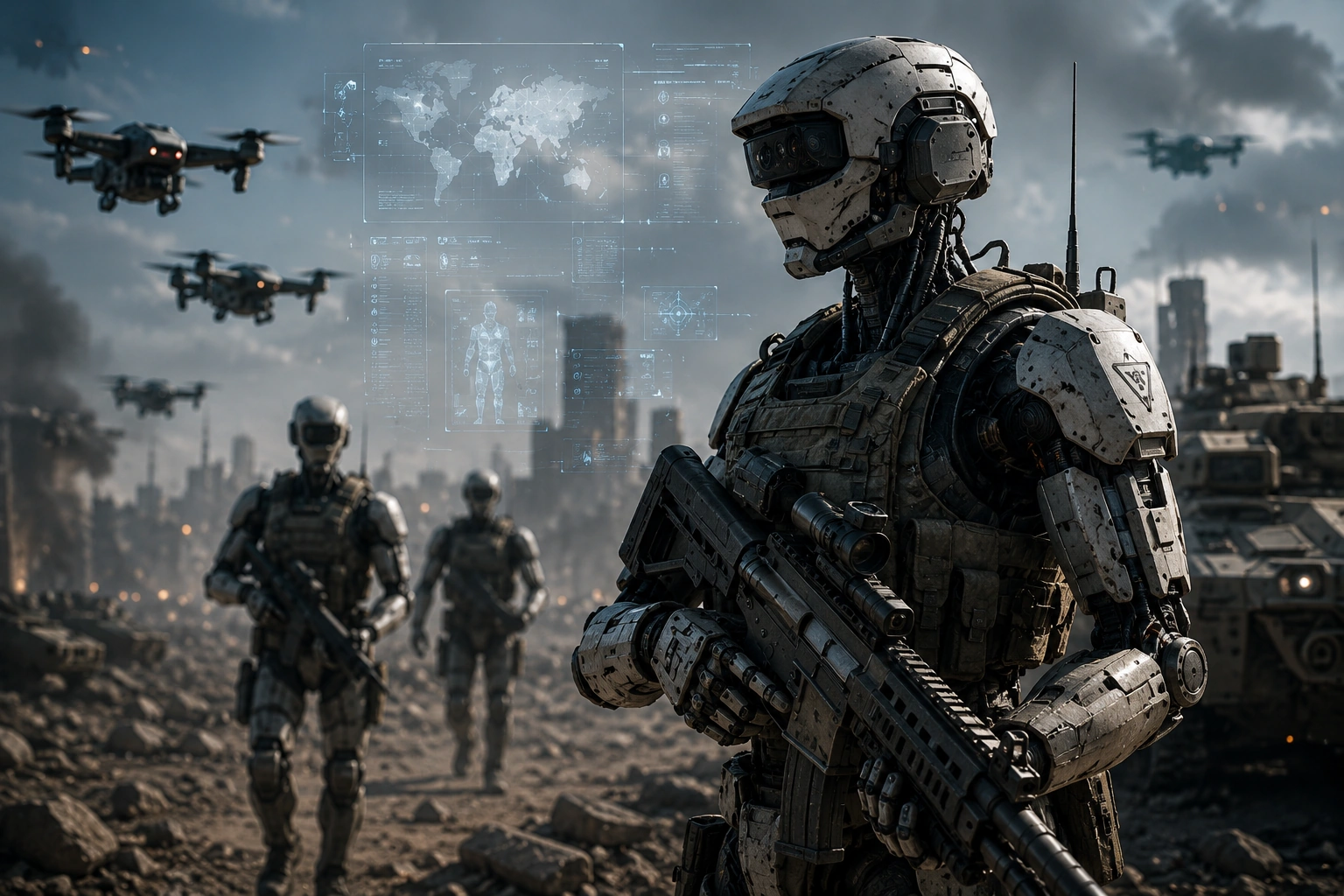

From Ukraine’s drone battlefields to China’s rapid advances in robotics, military technology is evolving at unprecedented speed. Yet experts remain divided on whether humanoid robots will ever become practical frontline soldiers or remain a futuristic vision.
The image of humanoid robots marching across battlefields has long belonged to science fiction. But advances in artificial intelligence, robotics and autonomous systems are forcing governments, militaries and technology companies to confront a serious question: could human-like robots one day become soldiers?
The debate has intensified as countries race to develop military robotics capabilities, driven by lessons from conflicts in Ukraine, the Middle East and elsewhere. While autonomous drones, robotic vehicles and AI-powered systems are already reshaping warfare, experts disagree on whether humanoid robots represent the next stage of military evolution or an expensive technological distraction.
The Robots Already Changing Warfare
Military robotics is no longer a future concept. Ukraine’s war has demonstrated the growing effectiveness of drones, autonomous systems and remotely operated vehicles in reconnaissance, logistics and combat operations. Robotic platforms have been used for mine clearance, surveillance, casualty evacuation and explosive ordnance disposal, reducing risks to human personnel.
Industry analysts note that unmanned ground vehicles, robotic dogs and AI-assisted military systems are already moving from experimentation into operational use. The United States, China, Ukraine, South Korea and several NATO countries are investing heavily in these technologies. The question is whether future military robots will need to resemble humans.
The Case for Humanoid Soldiers
Supporters argue that humanoid robots could operate in environments designed for people. Unlike wheeled or tracked machines, two-legged robots can theoretically climb stairs, open doors, navigate buildings and use equipment originally built for human operators. Some experts believe this could make them valuable in urban warfare, disaster zones and dangerous military missions.
US robotics company Foundation Robotics is among the firms developing humanoid systems capable of performing complex tasks. Its Phantom platform is being tested for logistics, supply operations and other applications that could eventually support military missions. Advocates argue that robots could reduce casualties by taking on hazardous tasks such as explosive disposal, reconnaissance and operations in contaminated environments.
Why Many Experts Remain Skeptical
Yet many specialists caution against assuming humanoid robots will dominate future battlefields. Military analysts interviewed by BBC News and other outlets argue that today’s robots struggle with many tasks humans perform instinctively. Uneven terrain, changing weather, damaged infrastructure and unpredictable combat conditions remain major challenges for advanced robotics.
Critics also question whether a human shape is the most efficient design for warfare. Drones can fly. Robotic vehicles can carry heavier payloads. Autonomous systems can be optimised for specific missions without replicating the human body. Several experts argue that future military robots are more likely to resemble specialised machines than science-fiction humanoids.
Peter Spayne, a former Royal Navy weapons engineer quoted by Metro, described visions of humanoid robot armies as largely fictional for now, arguing that military robotics will likely evolve in forms better suited to operational requirements than human-like machines.
The Ethical Challenge
The debate extends beyond engineering.
As autonomous systems become more capable, questions about accountability, international law and human control become increasingly urgent. Human rights groups and arms-control advocates have warned against fully autonomous lethal weapons that could make life-and-death decisions without meaningful human oversight. International discussions continue under United Nations frameworks, although no binding global treaty currently governs autonomous weapons systems.
Many defence organisations maintain that humans must remain “in the loop” for decisions involving the use of lethal force.
A Future Defined by Machines — But Not Necessarily Humanoids
What appears increasingly clear is that robots will play a larger role in future conflicts. The evidence from current wars suggests military innovation is moving rapidly toward greater autonomy, AI integration and machine-assisted operations. Yet the future battlefield may be shaped less by humanoid soldiers and more by swarms of drones, robotic vehicles and specialised autonomous systems working alongside human forces.
For now, humanoid combat robots remain a technological ambition rather than a battlefield reality. The more immediate transformation is already underway — and it is being driven not by robot soldiers that look like humans, but by machines increasingly capable of changing how wars are fought.
Related posts:
 Pope Leo XIV Urges AI ‘Disarmament’ in Major Vatican Warning on Technology Risks
  Claude Opus 4.8 Launches With Dynamic Workflows and Faster AI Performance
  Google I/O 2026: Google Unveils Gemini 3.5, AI Search and New AI Tools
  Nvidia ramps up Taiwan spending to $150bn a year as AI race intensifies
  Microsoft Scout