
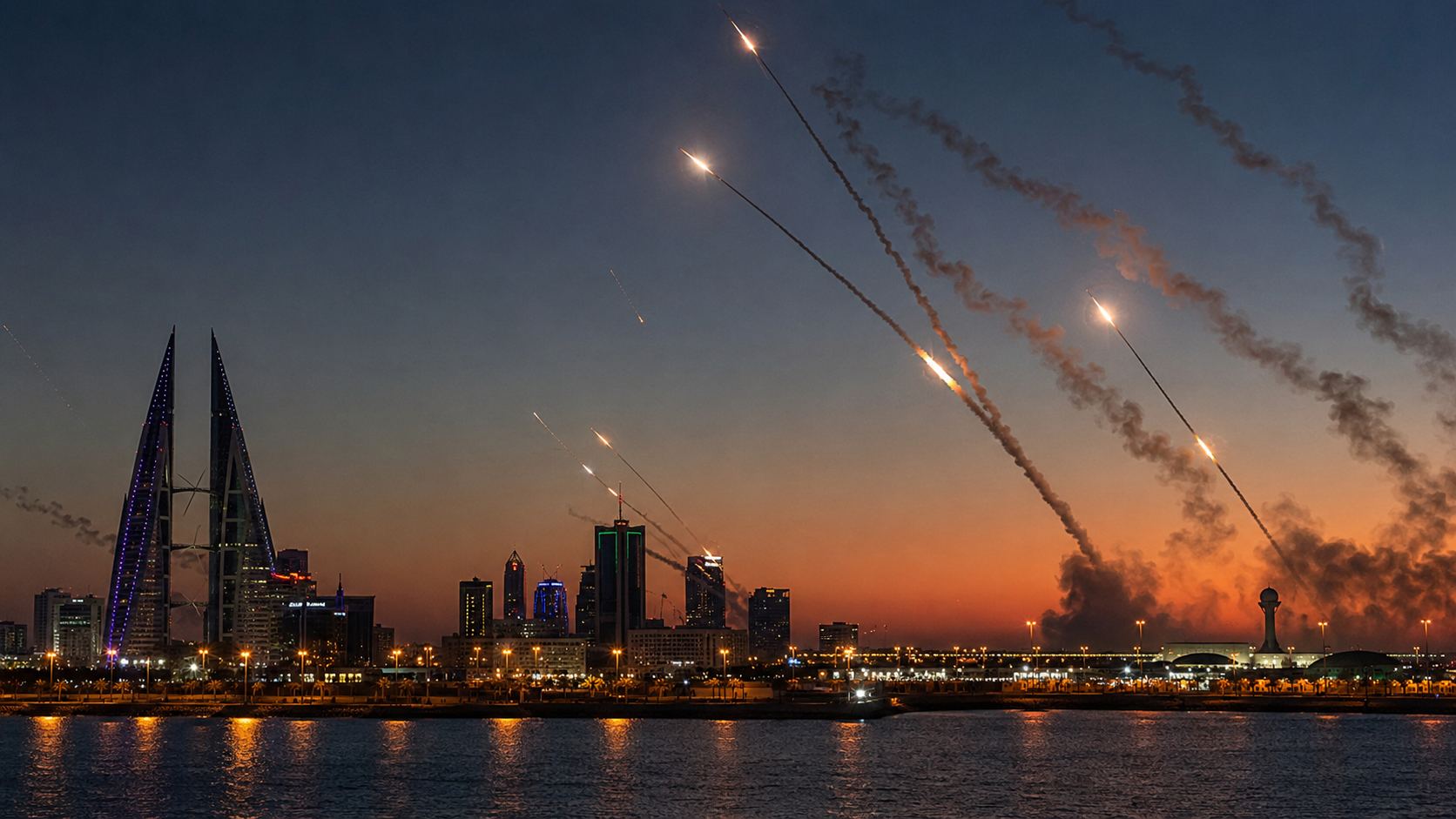
US-Iran conflict escalates as Iran strikes American military sites in Bahrain and Kuwait


Follow Nukunya
Get the latest breaking news and updates from Nukunya.
The Middle East has entered another dangerous phase after Iran launched missile and drone attacks against United States military facilities in Bahrain and Kuwait, following a wave of American strikes inside Iran.
The latest military exchanges have significantly increased fears that the conflict could spread across the Gulf region, threatening international shipping, global energy supplies and wider regional stability.
According to multiple international reports, Iran’s Revolutionary Guard said it targeted key US military installations in retaliation for overnight American attacks that struck dozens of sites across Iran. The United States said its operation was carried out after attacks on commercial vessels transiting the Strait of Hormuz.
Military exchanges intensify
Iran said its forces launched a coordinated operation involving missiles and drones against American military assets in Bahrain and Kuwait.
The strikes reportedly targeted locations associated with US military operations, including facilities used by the US Navy and Air Force.
Officials in Kuwait confirmed that air defence systems were activated to intercept incoming threats, while Bahrain also reported military activity following the attacks.
There has been no immediate confirmation of casualties from either side.
The United States has not announced any large-scale troop losses, while military officials continue to assess damage at affected installations.
Why did the attacks happen?
The latest escalation follows American military strikes against more than 80 Iranian targets.
US officials said those operations were launched after commercial shipping in the Strait of Hormuz came under attack, an incident Washington blamed on Iran.
The Strait of Hormuz remains one of the world’s most strategically important waterways, with roughly a fifth of global oil supplies passing through the narrow shipping route.
Any disruption to maritime traffic immediately raises concerns over energy security and international trade.
Ceasefire efforts appear to have collapsed
The renewed violence comes despite recent diplomatic efforts aimed at reducing hostilities.
US President Donald Trump said the interim agreement intended to halt the fighting was effectively “over” after the latest attacks, warning that further military action could follow if Iran continues its operations.
Iran, meanwhile, accused Washington of violating previous understandings and warned that any further attacks would receive a stronger response.
The collapse of diplomatic efforts has fuelled concerns that both nations could become locked into a prolonged cycle of retaliation.
Global markets react
Financial markets reacted swiftly to the renewed conflict.
Oil prices rose sharply as traders assessed the risk of prolonged disruption in the Gulf.
Analysts say any sustained military confrontation around the Strait of Hormuz could have significant consequences for global energy markets, shipping insurance costs and inflation.
Energy-producing nations are closely monitoring developments as governments assess contingency plans should commercial shipping face further threats.
International concern grows
Governments across Europe, Asia and the Middle East are urging restraint amid fears the conflict could draw additional countries into direct military confrontation.
Regional security experts warn that continued attacks on military installations and commercial shipping could increase the likelihood of wider instability throughout the Gulf.
International organisations have also called for renewed diplomatic engagement to prevent further escalation.
While no major international coalition has announced additional military involvement, several countries have increased security monitoring around key maritime routes.
What happens next?
Military analysts believe the coming days will be critical.
If either side launches further retaliatory strikes, the conflict could widen beyond the current exchanges, increasing risks for neighbouring Gulf states and international shipping.
Much will depend on whether diplomatic channels can be reopened before another round of military action occurs.
For now, heightened military alert levels remain in place across several Gulf countries as governments continue to monitor the rapidly evolving situation.
Related posts:
 China coal mine explosion kills at least 82 in Shanxi province disaster
  Microsoft Cuts 4,800 Jobs as AI Reshapes the Global Tech Industry
  US-Iran Deal Reopens Key Oil Route but Lebanon and Nuclear Risks Remain
  NDC Renames Headquarters ‘Jerry Rawlings House’ on Founder’s 79th Birthday.
  Community Police Assistant shot in Central Region as police launch manhunt