Afghanistan floods kill at least 20, as more than 100 remain missing.


Follow Nukunya
Get the latest breaking news and updates from Nukunya.
KABUL, Afghanistan — At least 20 people have been killed, and more than 100 remain missing after flash floods swept through Afghanistan’s remote Nuristan province, destroying homes, businesses and public buildings, officials said. At least 80 other people were injured after torrential rain struck Parun, the provincial capital, and surrounding communities. Search-and-rescue operations were continuing as authorities warned that the casualty figures were preliminary and could increase.
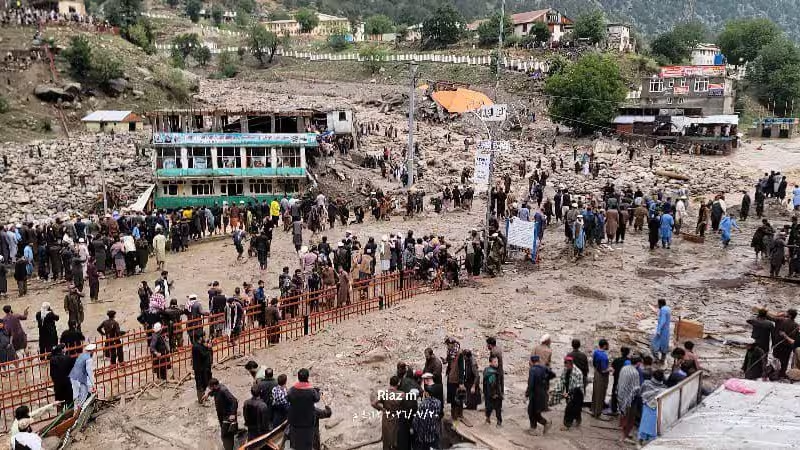
The floods hit late on Monday after several hours of intense rainfall, according to local officials. Large quantities of water, mud and rock were channelled through Nuristan’s narrow mountain valleys, leaving extensive damage across Parun. The city’s mayor was among those reported missing, according to the BBC. Local residents were seen searching through collapsed buildings and heavy debris, in some cases without specialist equipment.
What We Know So Far
The figures below reflect the latest reported situation and may change as search-and-rescue operations continue.
Officials have confirmed at least 20 deaths.
Search teams are working to locate those still unaccounted for.
Casualties have been taken for medical treatment.
Parun is the capital of Nuristan province.
Emergency Response
Search-and-rescue teams have been deployed to the affected area.
Casualty Warning
Officials say the number of dead and injured could rise as rescue work continues.
The Taliban-run National Disaster Management Authority said most of the destruction had been reported in Parun, close to Afghanistan’s border with Pakistan. Mohammad Yousuf Hamad, a spokesman for the authority, said the floods had caused extensive damage to residential homes, government buildings and agricultural land. Assessment teams were working to establish the full scale of the losses.
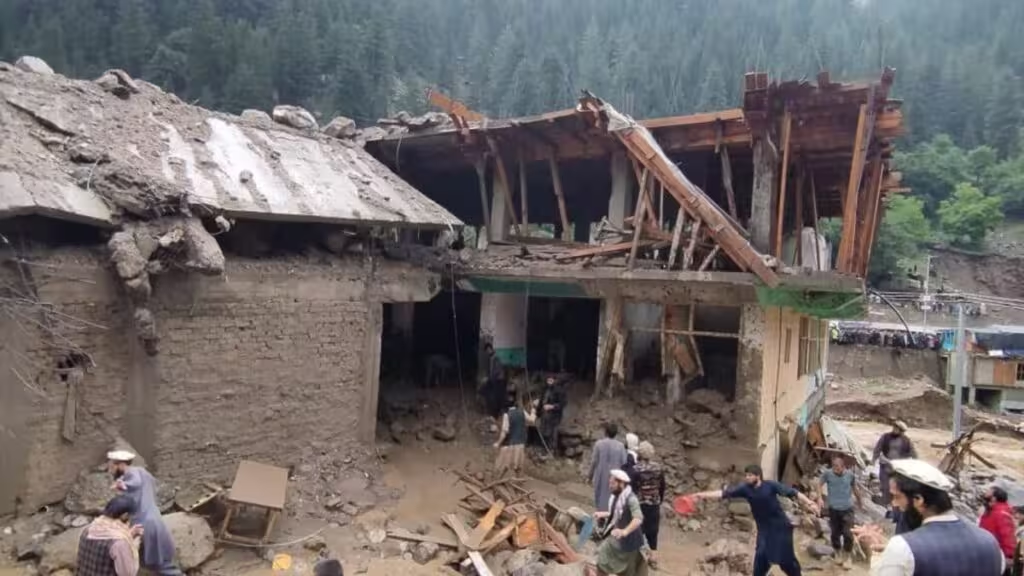
Residents search through the debris.
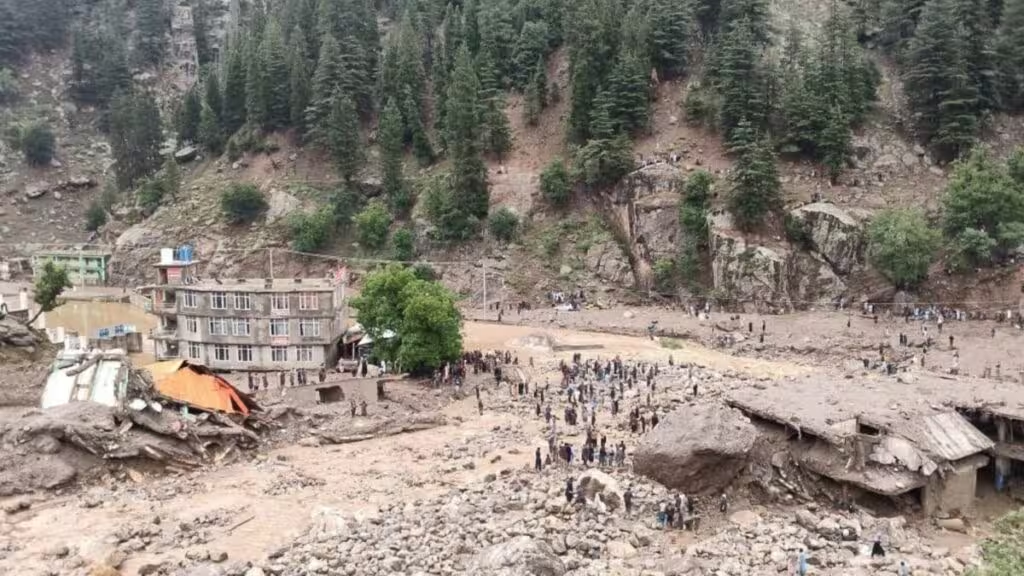
Images from the province showed damaged buildings, streets covered in mud and rocks, and large groups of people gathering in affected areas. Some structures had been partly or completely swept away. Boulders carried by the floodwaters were scattered among collapsed walls, roofs and household belongings.
Ashiqullah Safi, who leads the local organisation Shpoul, told AFP that the flooding had “completely destroyed” the municipality in Parun. He said residents were searching through the debris without adequate equipment. The destruction of roads and other infrastructure could make it harder for emergency teams to reach isolated communities. Nuristan’s steep terrain and limited transport links already complicate access to many settlements.
The immediate priorities are locating survivors, treating the injured and providing shelter to people whose homes have been destroyed or made unsafe.
More heavy rain forecast
Afghanistan’s meteorological authorities warned that heavy rain and further flooding could continue across 10 of the country’s 34 provinces through Wednesday. Residents were advised to stay away from riverbanks and other flood-prone areas.
Further rainfall could create additional risks for communities already affected and slow rescue operations in Nuristan. Authorities have not yet published a comprehensive assessment of the number of homes, roads, bridges or public buildings damaged. It also remains unclear how many residents have been displaced.
Why Nuristan is vulnerable to flash floods
Nuristan is a mountainous eastern province known for its forests, rivers and steep valleys. The region was designated as a national park in 2020. Its geography can make intense rainfall particularly dangerous. Water running rapidly down steep slopes can enter narrow valleys with little warning, carrying soil, trees and large rocks into populated areas.
Deforestation and illegal logging have also reduced the land’s ability to absorb heavy rainfall, increasing the risk that water will flow rapidly across exposed ground and into rivers and settlements, according to reports. Afghanistan is highly exposed to drought, storms and flooding. Decades of conflict have weakened infrastructure and limited the resources available for disaster preparation and emergency response.
Afghanistan’s repeated flood disasters
The Nuristan floods follow several major natural disasters in Afghanistan in recent years. Heavy rainfall and flooding in northern parts of the country in April killed at least 150 people, according to Taliban officials. The World Food Programme subsequently reported that the number of deaths may have exceeded 300.
Repeated disasters have placed additional pressure on communities already facing widespread poverty, food insecurity and limited access to public services. Humanitarian organisations have warned that weak infrastructure and inadequate emergency-response capacity increase the risk of high casualties when extreme weather strikes remote regions.
The search operation continues.
Officials said emergency teams were surveying the affected areas while residents continued searching for missing relatives. The disaster management authority said the full scale of the human and financial losses was not yet known. With more than 100 people still unaccounted for and further rainfall possible, authorities said rescue and recovery operations would continue across Nuristan.
Public-interest context
Why This Matters
The disaster combines several of Afghanistan’s most serious vulnerabilities: remote communities, fragile infrastructure, environmental degradation and limited emergency-response capacity.
The risk extends beyond the immediate death toll. Damage to homes, roads, farms and public buildings could leave affected communities without shelter, income or reliable access to assistance long after the floodwaters recede.
Remote Communities
Difficult terrain can delay rescue teams, medical assistance and the delivery of emergency supplies.
Fragile Infrastructure
Roads, bridges and public buildings may be unable to withstand severe flooding or prolonged rainfall.
Environmental Pressure
Land degradation, deforestation and unstable slopes can worsen runoff, erosion and flood damage.
Limited Response Capacity
Emergency services may struggle to reach isolated areas or sustain relief operations over time.
Related posts:
 Australia Approves Stronger Mouse Poison as Farmers Battle Growing Rodent Plague
  Pakistan says security forces kill 29 fighters in cross-border operation with Afghanistan
  Nine Buddhist monks killed after child driver crashes into Thailand pilgrimage
  Guyana Ferry Disaster: Search Intensifies After MV Barima Capsizes with 133 On Board
  Elon Musk vs Sam Altman: what the jury will decide