Guyana Ferry Disaster: Search Intensifies After MV Barima Capsizes with 133 On Board


Follow Nukunya
Get the latest breaking news and updates from Nukunya.
Rescue teams are racing to find dozens of missing passengers after the MV Barima capsized off Guyana’s northwest coast. Authorities have expanded search operations while supporting affected families and investigating what caused one of the country’s worst maritime disasters in recent years.
GEORGETOWN, Guyana — Rescue teams continued searching through Sunday for dozens of passengers still missing after the MV Barima capsized off Guyana’s northwest coast, as authorities expanded one of the country’s largest maritime rescue operations in recent years.
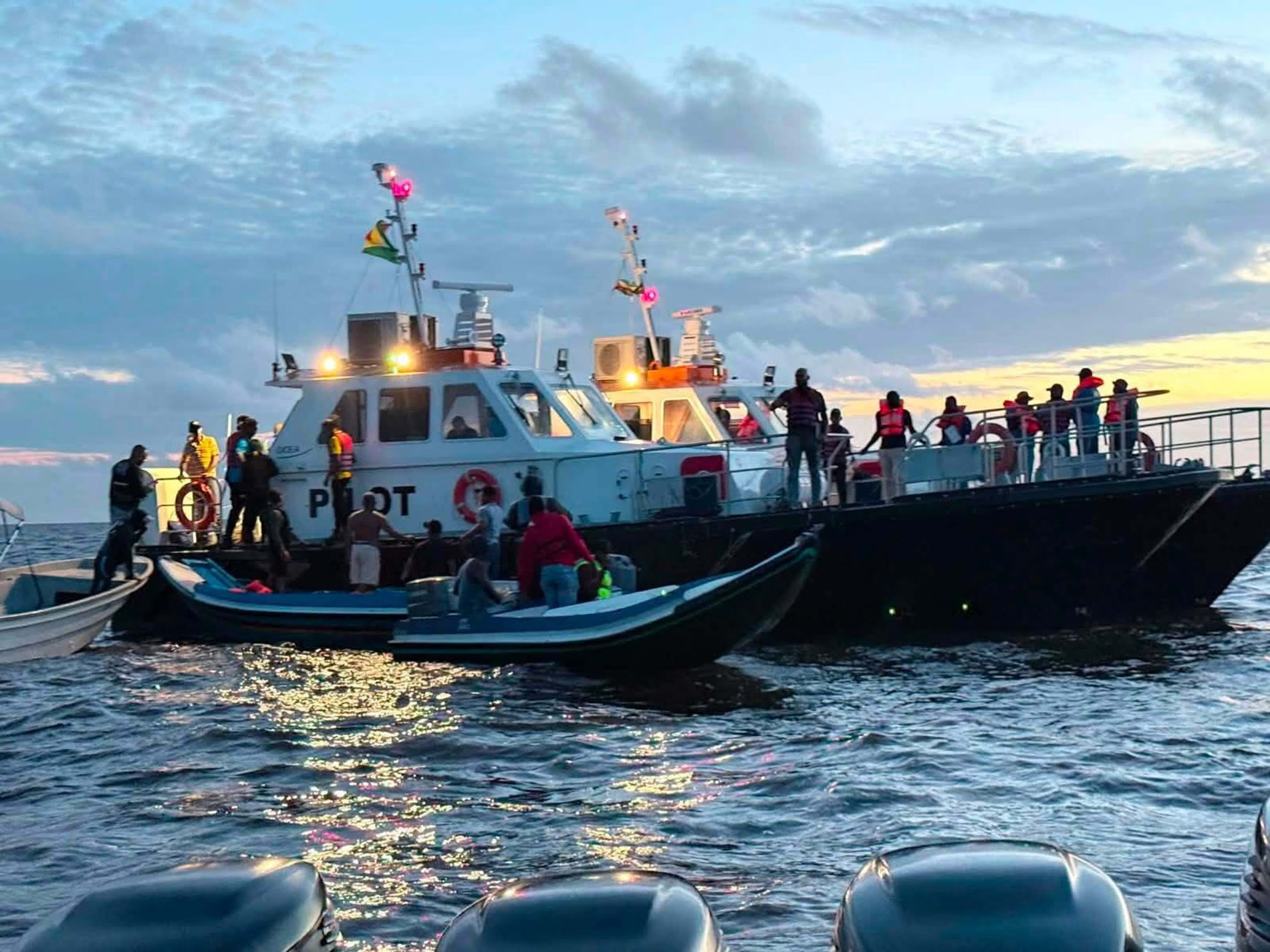
Officials said 67 people, including 15 children, had been rescued after the ferry overturned while travelling from Georgetown to Port Kaituma with 116 passengers and 17 crew members on board. The remaining passengers were still being searched for as government agencies, private vessels and local fishing boats joined the operation.
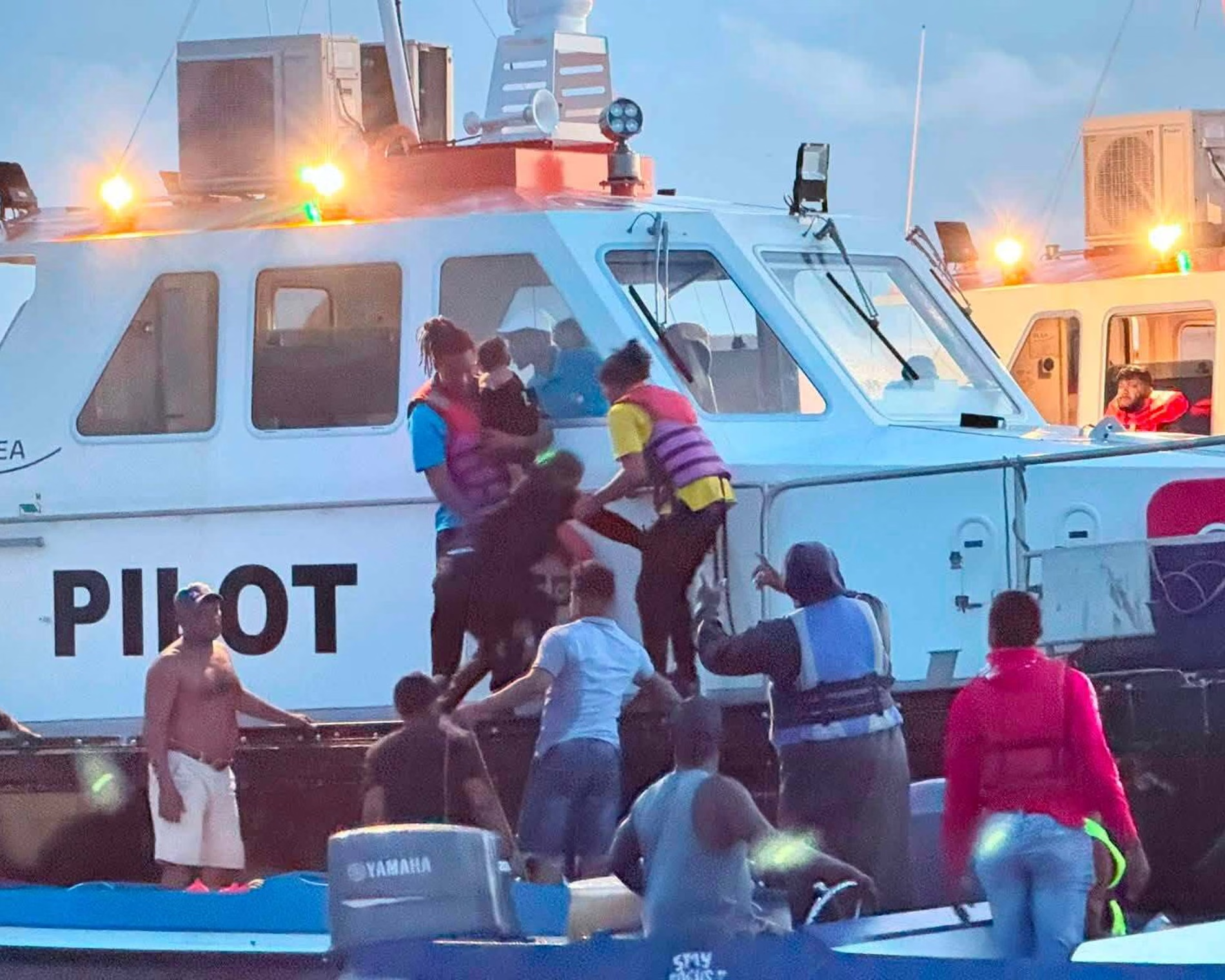
The vessel issued a distress call late Saturday after overturning near Iron Punt, prompting an overnight emergency response involving the Guyana Defence Force, Coast Guard, private operators and residents from nearby coastal communities. Search crews significantly expanded the operation on Sunday, with additional vessels deployed to widen the search area.
Prime Minister Mark Phillips said the government remained focused on accounting for everyone who had been aboard the ferry and confirmed that assistance centres had been established for survivors and relatives awaiting news of missing family members. Authorities said the names of passengers would be released once rescue efforts and medical assessments had been completed.
Public Works Minister Juan Edghill said the vessel had been licensed to carry more than 300 passengers and was operating well below its certified capacity. The ferry was equipped with approximately 250 life jackets, two rigid lifeboats and six inflatable life rafts, according to the ministry.
Initial indications suggest the vessel overturned after encountering rough sea conditions and a powerful wave, although officials cautioned that the exact cause has yet to be determined. Investigators have begun examining the circumstances surrounding the accident, and authorities said all findings would be subject to the formal inquiry now under way.
Government ministers travelled to affected communities in the Barima-Waini region to meet relatives of passengers and provide updates on the rescue effort. Officials established family assistance centres at Port Kaituma Community Centre and the NAREI Extension Centre in Kumaka, where counsellors and social workers have been deployed to provide psychological support and practical assistance.

Minister within the Office of the Prime Minister Kwame McCoy urged the public to rely on verified official information as rescue operations continued.
“This is why we govern, for people. We are here to support at every level,” McCoy said during a government update.
Human Services Minister Dr Vindhya Persaud said trained social workers would remain with affected families throughout the emergency response to provide counselling and support. Other ministers, including Education Minister Sonia Parag, Home Affairs Minister Oneidge Walrond and Tourism Minister Susan Rodrigues, also visited communities affected by the disaster.
The Prime Minister said the captain had returned to assist rescue efforts after surviving the incident, while emergency crews continued searching for passengers who remained unaccounted for. Authorities have also begun reviewing passenger records as part of efforts to establish an accurate manifest of everyone aboard.
Survivors described chaotic scenes as the vessel overturned during the night. Some reported spending several hours in the water before being rescued by emergency responders and nearby fishing boats, highlighting both the scale of the operation and the challenges rescuers faced in darkness and difficult sea conditions.
The MV Barima, built in 1939 and measuring about 40 metres (131 feet) in length, serves communities along Guyana’s sparsely populated northwest coast, where river and sea transport provide essential links between remote settlements and the capital. The Georgetown–Port Kaituma route is a vital transport corridor for residents travelling for work, education, healthcare and commerce.
Port Kaituma lies in Guyana’s Barima-Waini Region near the country’s border with Venezuela. Much of the area is accessible only by river, sea or air, making ferries an essential part of daily life for many communities.
Authorities stressed that the search would continue until every passenger had been accounted for.
Related posts:
 Twin Earthquakes Strike Venezuela, Collapsing Buildings in Caracas
  China coal mine explosion kills at least 82 in Shanxi province disaster
  US-Iran conflict escalates as Iran strikes American military sites in Bahrain and Kuwait
  Elon Musk vs Sam Altman: what the jury will decide
  Iran and Israel Halt Attacks After Trump Intervention, but Ceasefire Remains Fragile