

Ghana passport staff to receive bonus after improved corruption ranking
Foreign Affairs Minister Samuel Okudzeto Ablakwa has announced a special bonus for Ghana Passport Administration staff after improved governance indicators, as the government highlights reforms to passport processing.


Follow Nukunya
Get the latest breaking news and updates from Nukunya.
Foreign Affairs Minister Samuel Okudzeto Ablakwa says Passport Administration staff will receive a special bonus after the institution recorded a strong result in Ghana Statistical Service governance data, as the government pushes ahead with reforms to passport processing.
ACCRA, Ghana — Staff of Ghana’s Passport Administration are to receive a special bonus after the institution recorded a strong performance in national governance data measuring citizens’ experiences of bribery and corruption in public services.
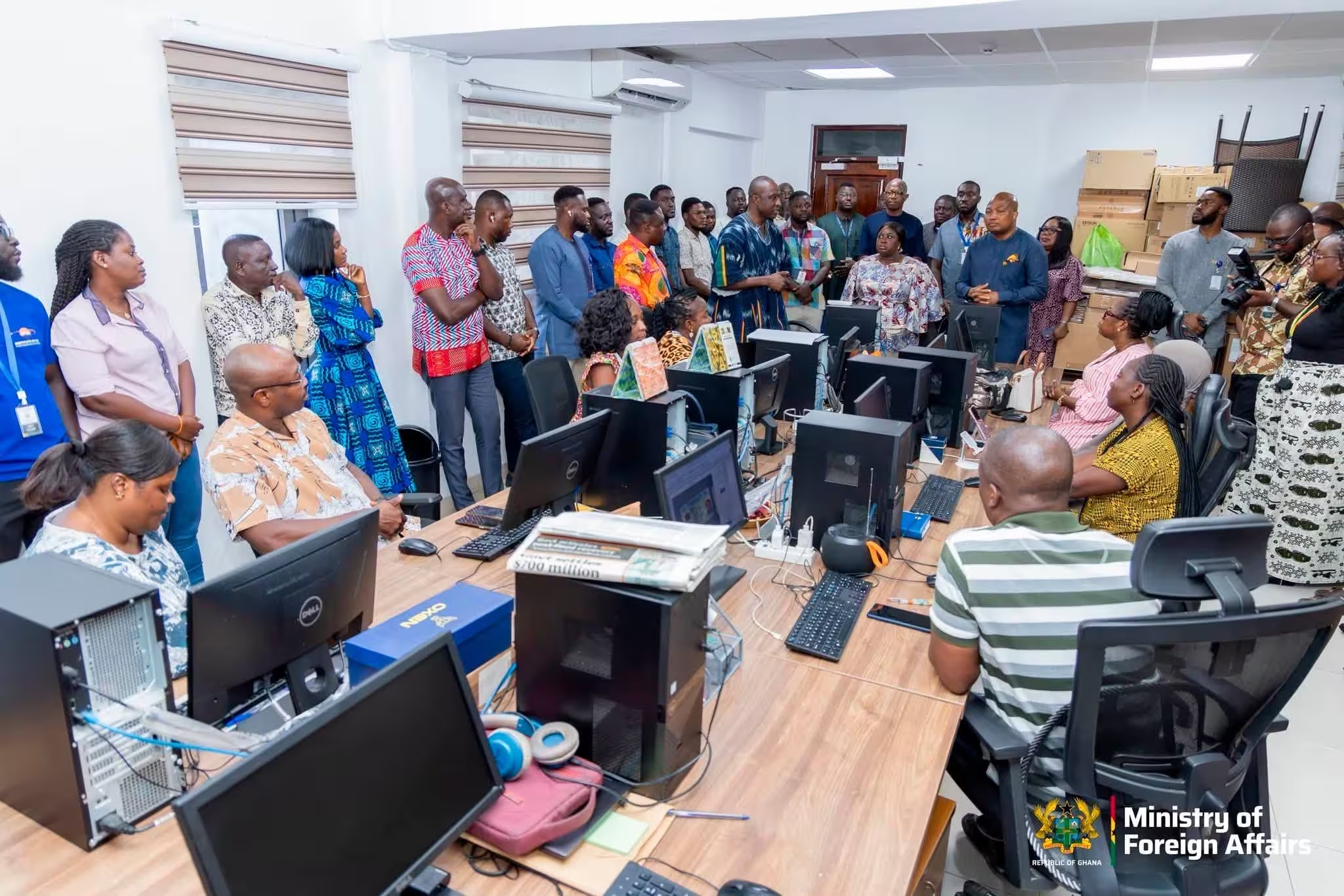
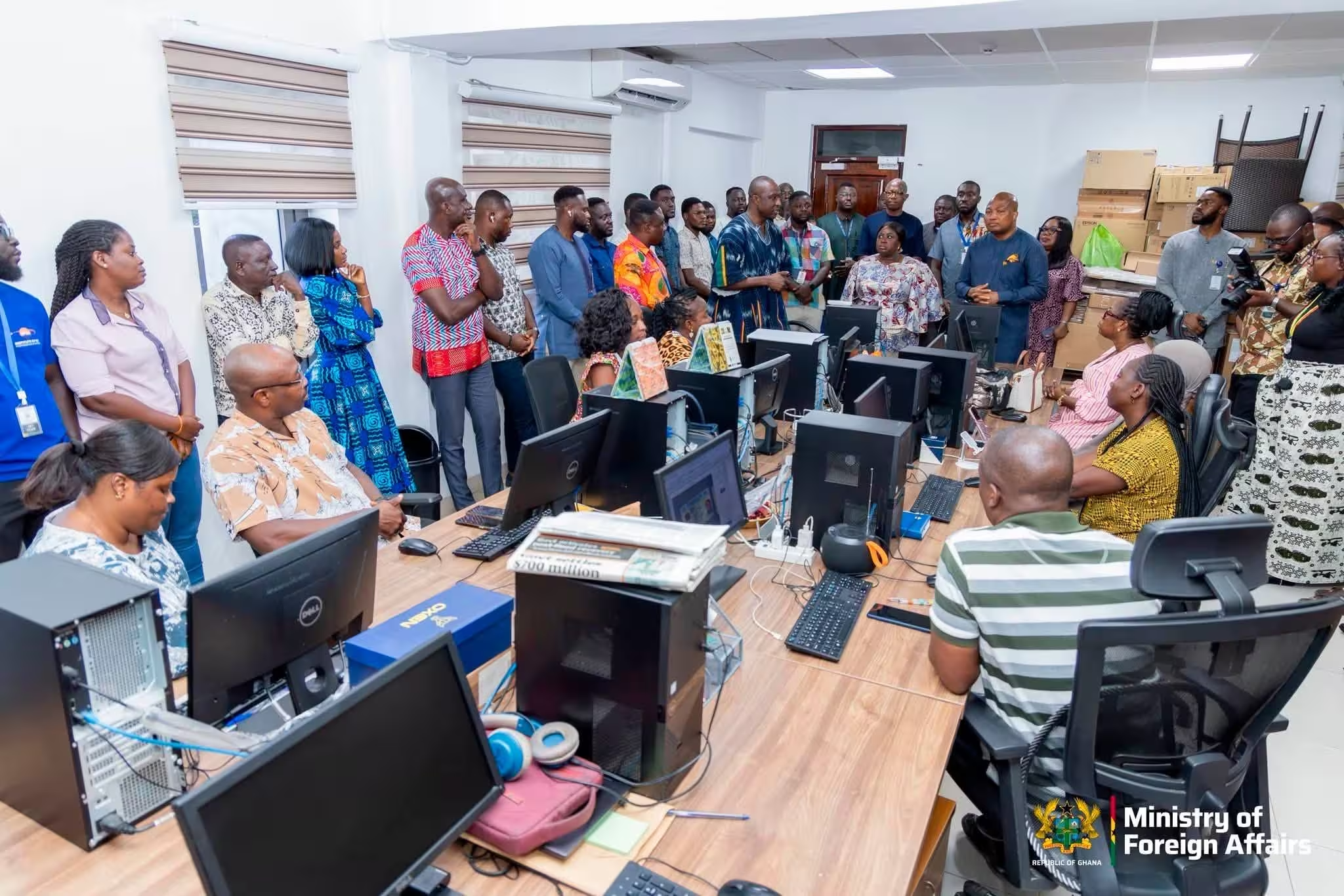
Foreign Affairs Minister Samuel Okudzeto Ablakwa announced the incentive during a working visit to the Passport Head Office, where he praised staff and management and reviewed reforms introduced in the country’s passport system. Mr Ablakwa said the bonus would be paid to Passport Administration staff in recognition of their performance and changes implemented at the institution. The two local reports said payment was expected in the week following his visit.
The announcement follows the publication of governance research by the Ghana Statistical Service (GSS), which collects nationally representative data on citizens’ interactions with public officials, including experiences involving bribery. The government’s interpretation of the findings is that the Passport Administration emerged as the country’s least corrupt and most transformed public institution.
That description, however, should be understood in the context of what the underlying GSS research measures.
What does the Ghana Statistical Service data measure?
The GSS Governance Series examines citizens’ experiences and perceptions of governance, including interactions with public officials. Its second wave was conducted using computer-assisted telephone interviews and tracks indicators, including the proportion of people who had contact with a public official and either paid a bribe or were asked for one.
The study is therefore an important indicator of public experience, rather than a forensic audit establishing whether corruption exists or does not exist within an institution. That distinction matters when interpreting the government’s description of the Passport Administration as Ghana’s “least corrupt” public institution.
The GSS says its Governance Series was established to produce nationally representative evidence on citizens’ experiences of governance and corruption and to support accountability and progress towards the United Nations Sustainable Development Goals. For the Passport Administration, the findings are nevertheless significant because passport acquisition has historically involved direct interaction between applicants, officials and intermediaries.
Mr Ablakwa said the improved assessment reflected reforms designed to reduce those points of friction.
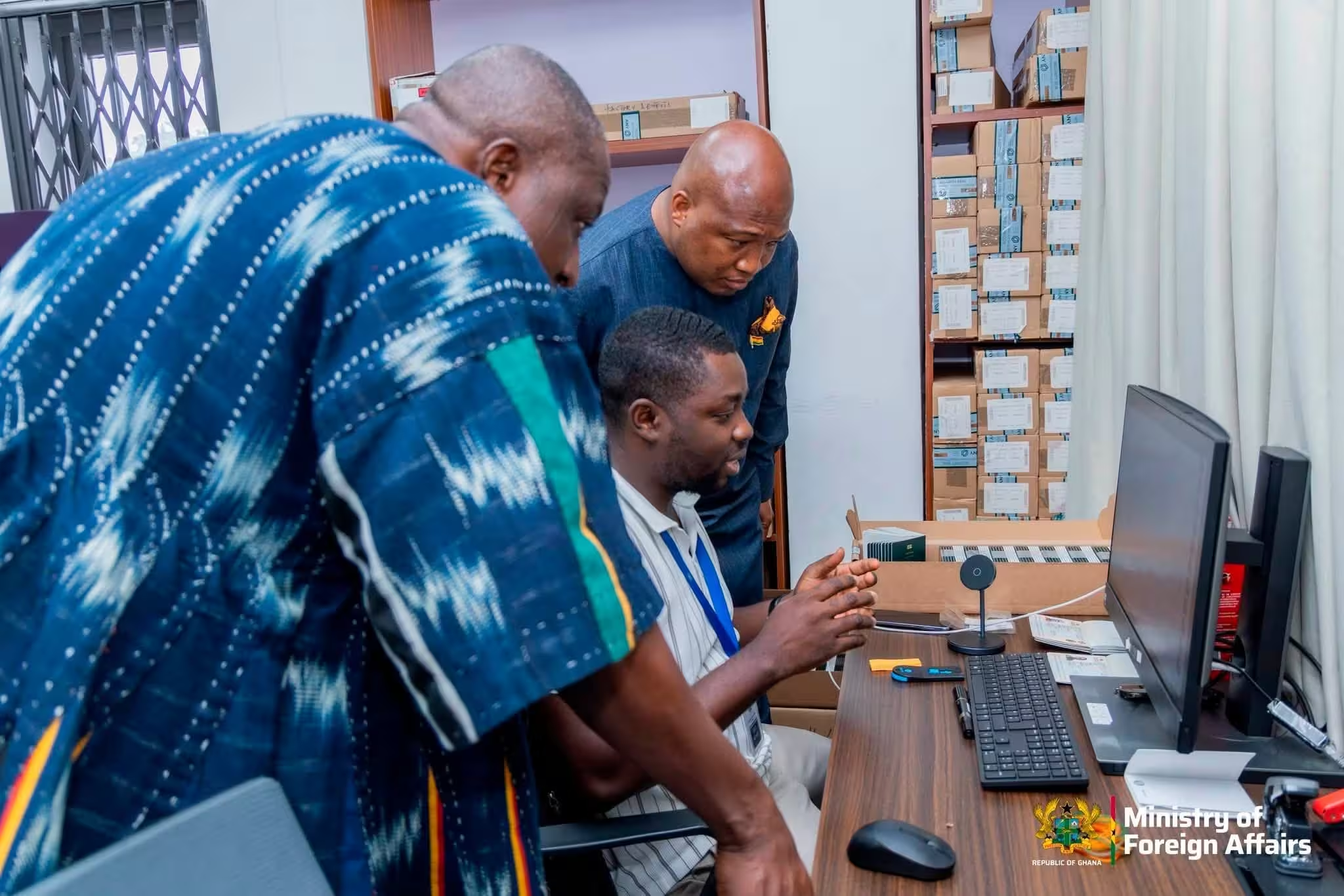
Ablakwa promises further passport reforms.
The minister said the government would continue what he described as “radical reforms” of passport administration, focusing on integrity, professionalism, technological innovation, customer service and efficiency. Several changes form part of what the government calls its Passport Reset programme. Among them is Ghana’s transition to a chip-embedded passport with a polycarbonate biographical data page and enhanced security features.
The Ministry of Foreign Affairs independently confirms that the new passport regime includes chip-embedded passports, 24-hour operations at the Passport Head Office, courier delivery and an electronic tracking system allowing applicants to follow applications from submission to delivery.
The government says these measures are intended not only to improve convenience but also to make the passport system more difficult to manipulate.
Mr Ablakwa said application backlogs had been cleared following the introduction of round-the-clock operations at the head office. He also said passports were generally being processed in fewer than 15 working days and that reforms were reducing applicants’ reliance on informal intermediaries commonly referred to in Ghana as “goro boys”.
Passport fees cut by 30%
Cost has also become part of the reform programme.
Mr Ablakwa said passport processing fees had been reduced by 30%, alongside the introduction of courier delivery at no additional charge. Other measures cited during the visit included digital application tracking, the possibility of same-day processing and additional safeguards intended to prevent people who are not entitled to Ghanaian citizenship from obtaining Ghanaian passports.
Passport Application Centres have also been established across all 16 regions of Ghana, which the minister described as the first nationwide coverage of its kind.
Other reports similarly records the minister as saying the reforms are intended to make passport services more efficient, accessible and secure.
The Ministry of Foreign Affairs’ own documentation corroborates several of the central elements of the programme, including 24-hour operations, courier delivery, electronic tracking and the move to chip-embedded passports.
From passport queues to digital public services
The significance of the changes extends beyond the Passport Administration.
Passport acquisition is one of the most visible points of contact between citizens and the Ghanaian state. Delays, informal intermediaries and uncertainty over processing times can therefore affect perceptions of government well beyond the service itself.
Digitisation can reduce some of those vulnerabilities by limiting unnecessary human intervention, providing applicants with information about the status of their documents and creating more traceable administrative processes.
But technology alone does not eliminate corruption.
The longer-term test will be whether improvements recorded in citizen surveys persist, processing standards remain consistent across the country and applicants can obtain passports without resorting to unofficial payments or intermediaries.
That makes future rounds of independent GSS data particularly important.
NUKUNYA CONTEXT
Why the bonus matters
Performance-related recognition in the public sector can provide an incentive for institutional improvement, but the decision also raises an accountability question: whether better performance can be sustained after the initial reform drive.
The government has linked the planned bonus directly to the Passport Administration’s performance and reforms.
The public test
For citizens, however, the more consequential measures will be practical ones: how much a passport costs, how quickly it is delivered, whether applications can be tracked, whether regional centres provide comparable services and whether passports can be obtained without unofficial payments.
The GSS Governance Series provides one mechanism for testing that progress independently over time.
Its second wave builds on earlier data specifically to identify changing patterns in citizens’ experiences with governance and public officials.
That gives the Passport Administration’s performance wider significance.
If improvements in passport services can be sustained and independently demonstrated, the experience could offer lessons for other high-contact public services in Ghana where digitisation, predictable processing times and reduced dependence on intermediaries could limit opportunities for petty corruption.
For now, the bonus represents government recognition of progress.
Whether the transformation becomes institutional rather than temporary will ultimately depend on what Ghanaian passport applicants experience after the attention surrounding the reforms has passed.
WHY IT MATTERS Public services
Why this story matters
Ghana’s passport reforms provide a practical test of whether digitisation can improve public services while reducing opportunities for unofficial payments.
01
The strongest element of the story is therefore not the bonus itself.
02
It is the emerging relationship between administrative reform, digital services and citizens’ reported experiences of corruption.
03
The Passport Administration provides an unusually visible case because millions of Ghanaians at home and abroad depend on secure and predictable access to travel documents.
What to watch
Independent data from future GSS governance surveys will help establish whether the improvement can be sustained.
REFORM TRACKER
Key passport reforms
Measures cited by government and documented across official sources.
30%
Lower processing fees
Reduction in passport processing fees, according to the minister.
24H
Round-the-clock operations
Twenty-four-hour operations at the Passport Head Office.
01
Chip-embedded passports
Enhanced passport security and modernised document technology.
02
Electronic tracking
Applicants can track progress from submission through to delivery.
03
Courier delivery
Completed passports can be delivered directly to applicants.
16
Nationwide centres
Passport Application Centres in all 16 regions, according to the minister.
<15
Working-day target
Fewer than 15 working days for general passport processing, according to Mr Ablakwa.
↓
Fewer intermediaries
Measures designed to reduce dependence on informal intermediaries.
The Ministry of Foreign Affairs independently documents several of these reforms, particularly the chip-embedded passport, round-the-clock operations, courier service and electronic tracking.
Related posts:
 Only one Ghanaian reports for South Africa evacuation flight amid xenophobia fears
  Government Disputes House Arrest Reports on Ex-MASLOC Chief Sedina Tamakloe
  Ghana moves nearly 900 citizens to safe havens ahead of South Africa protests
  EOCO Explains Dennis Miracles Aboagye’s Arrest in Alleged GH¢55m IMCCoD Probe
  Tema Police Seize 5,039 Suspected Narcotics Parcels, Reject GH¢150,000 Bribe