PURC to Engage Roads Ministry Over Damaged Utility Lines



Follow Nukunya
Get the latest breaking news and updates from Nukunya.
PURC to Engage Roads Ministry, Contractors Over Damaged Utility Lines
If you’ve noticed water cuts or power outages popping up in areas where road construction is happening, you’re not imagining things and now the Public Utilities Regulatory Commission (PURC) is stepping in to fix it.
The Commission is preparing to convene a major stakeholder meeting bringing together the Ministry of Roads and Highways and road contractors, all centred on one growing problem: water and electricity infrastructure getting damaged during road construction.
The trigger for this move is a wave of complaints from residents living near ongoing road works under government’s Big Push infrastructure programme. In several of these areas, underground pipelines and distribution lines have been damaged during construction, leaving residents without water or power in the aftermath.
Speaking during a working visit to the Western Region on August 26, PURC Executive Secretary Dr Shafic Suleman said the Commission has taken serious notice of the pattern and is now moving to tighten coordination among everyone involved.
According to Dr Suleman, much of the problem comes down to something surprisingly basic: contractors often don’t have accurate maps showing exactly where major utility lines are buried.
There are major pipelines, transmission and distribution lines. It is important that we make them available to the contractors so that they will be guided. It is the responsibility of the contractors to make sure that they don’t destroy that major infrastructure, he said.
To close that gap, the planned engagement will bring the Ministry of Roads and Highways, road contractors, and utility providers including Ghana Water Company Limited, the Electricity Company of Ghana (ECG), and the Ghana Grid Company (GRIDCo) around the same table.
The goal is straightforward: get detailed utility maps into contractors’ hands before construction even begins, and make sure standard operating procedures are actually followed to protect what’s already underground.
Dr Suleman was clear that when damage does happen, PURC will make sure services are restored quickly for affected residents. But that restoration won’t come free for the contractor responsible — the full cost will be surcharged directly to them.
He also pushed back on the idea that these disruptions are just an inconvenience. In his view, they hit livelihoods directly. Hospitals, schools, and small businesses have all had to shut their doors for days at a time because of prolonged outages tied to construction damage.
Dr Suleman had a direct appeal for the public: if construction work is affecting your water or electricity supply, don’t stay quiet about it.
If anywhere you think there is an interference as a result of construction affecting your quality of service, you can complain to the PURC and we will take it up, he said.
According to the Commission, complaints from affected communities have already started coming in, and PURC has formally written to the Ministry of Roads and Highways about the issue. The upcoming stakeholder meeting is meant to mark a shift in approach — moving PURC from simply reacting to complaints toward actively protecting utility infrastructure and consumer rights before damage happens in the first place.
Related posts:
 ECG Trains 23 Technicians to Reduce Outages in Ashanti Region
 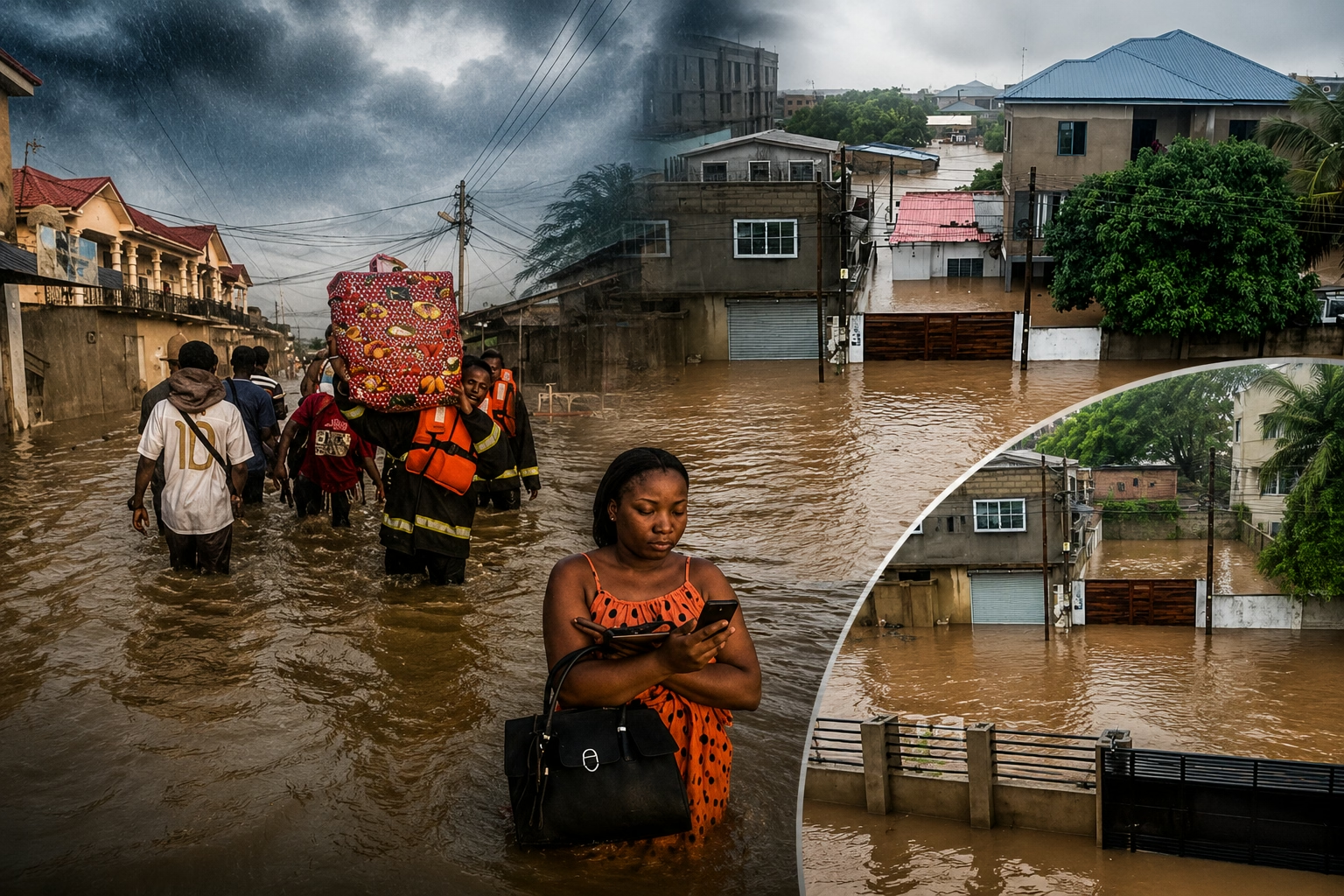 GRIDCo and ECG shut down Mallam and Achimota substations as Accra floods threaten power infrastructure
  Power outages expected in Accra, Volta and Ashanti during ECG maintenance
  Police Probe Shooting That Injured Adwoa Safo Amid Kristo Asafo Leadership Dispute
  Ghana moves nearly 900 citizens to safe havens ahead of South Africa protests