Cost of Building in Ghana Drops From 14.2% to 4%


Cost of Building in Ghana Drops Sharply, From 14.2% to 4% – Government Statistician
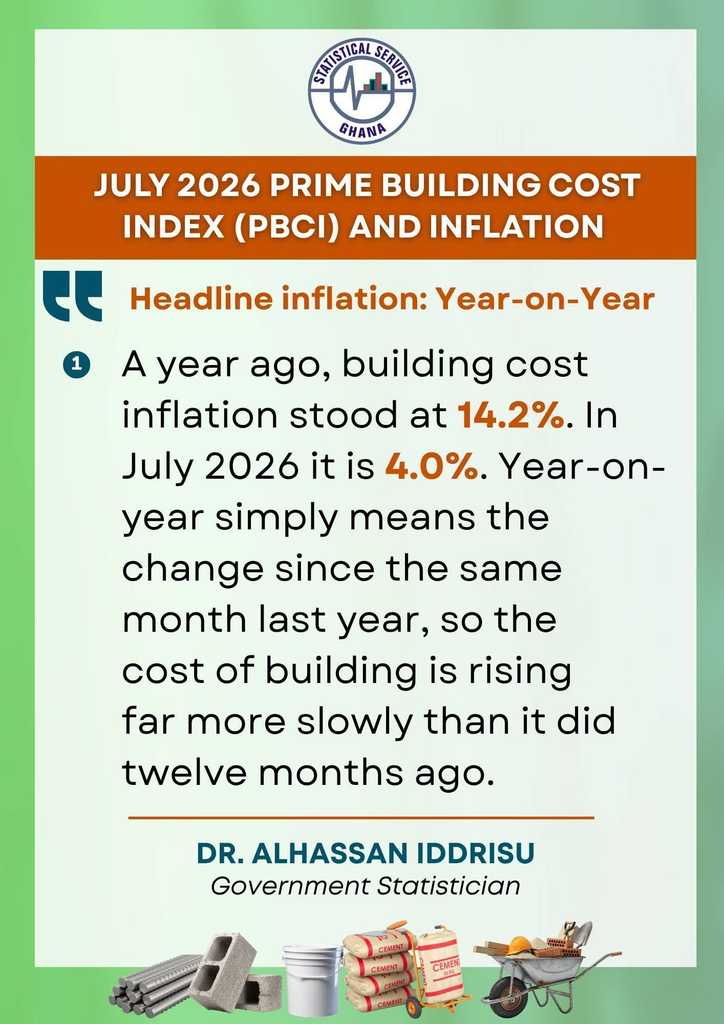
Building a house in Ghana is getting a lot less painful on the wallet than it was a year ago. According to Government Statistician Dr Alhassan Iddrisu, the annual cost of building has dropped from 14.2% in 2025 down to just 4% this year.
It might sound like a small technical detail, but Iddrisu was quick to point out just how far-reaching this shift really is. As he put it, this single change affects the math for every household, contractor, and planner across the country.
Speaking at a press conference in Accra on Wednesday, August 26, Iddrisu broke down the two figures everyone tends to mix up: year-on-year and month-on-month.
Year-on-year, he explained, simply compares prices now to where they stood the same month last year. And on that measure, the news is good building costs are climbing far more slowly than they were twelve months ago.
Month-on-month tells a narrower story: the change from just one month to the next. Between June and July 2026, building input prices rose by only 0.3%. In other words, month to month, things have stayed largely steady, with just a slight uptick.
Not everything is moving in the same direction, though. Materials which make up more than three-quarters of the entire building cost basket rose 5.1% over the year. That single category, Iddrisu said, accounts for almost all of the upward pressure being felt.
But the real concern sits elsewhere. Plant, machinery and equipment used in construction, jumped 18.0% by far the sharpest increase across the board. “This is the main risk we are watching, he said.

Within that, plumbing led the pack, rising a striking 25.3%. Small tools and roofing sheets weren’t far behind.
It’s not all bad news, though. Two of construction’s heavyweight materials actually got cheaper. Cement prices fell 9.8%, and steel dropped 8.9%.
According to Iddrisu, that drop is doing some quiet, useful work — helping offset the rising cost of fittings and tools, and keeping overall building costs from climbing even faster than they already are.