
Accra Flooding Crisis Decades in the Making, Engineers Warn

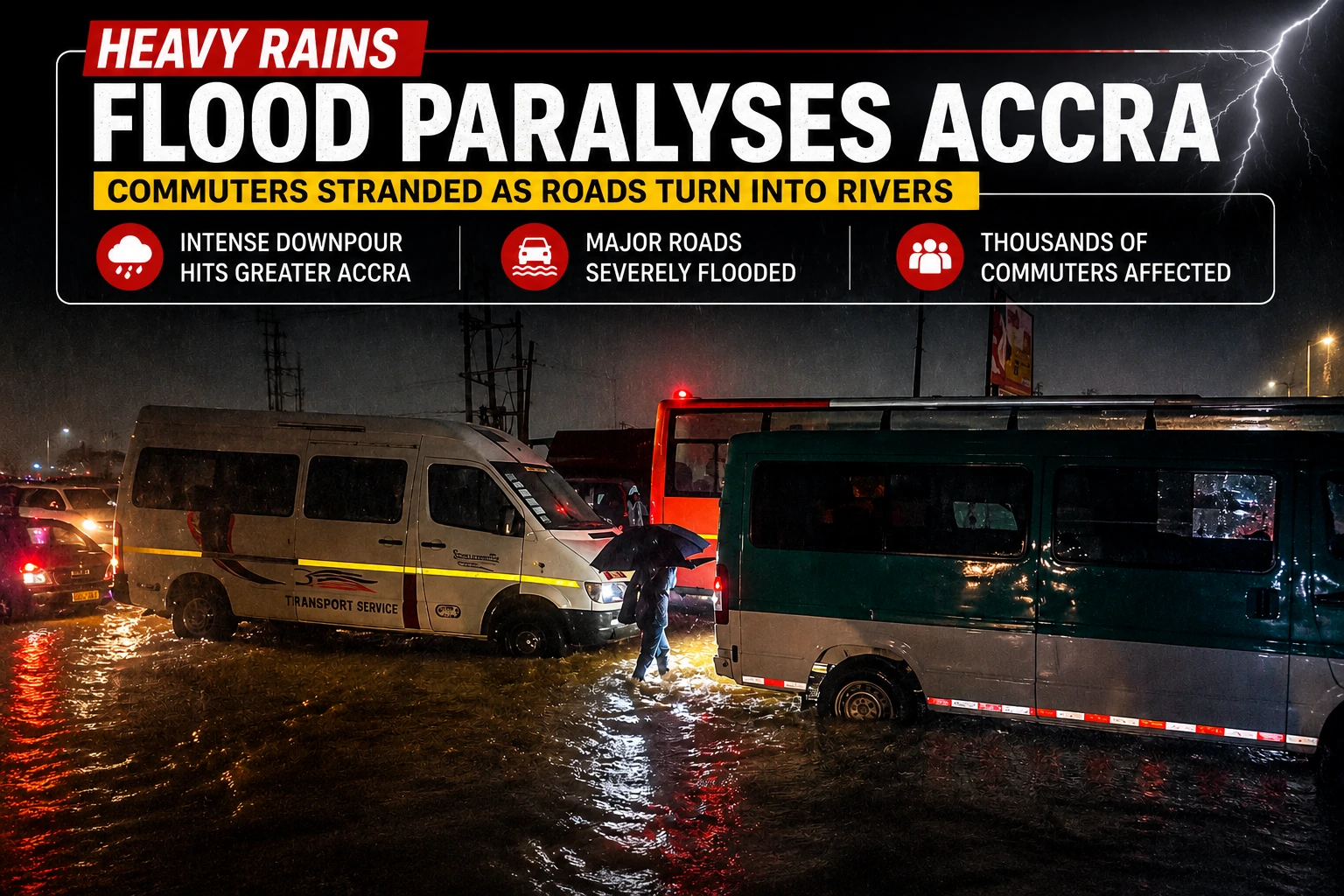

Ghanaian engineers say Accra’s recurring floods are no longer simply a weather problem but the result of decades of planning failures, disappearing wetlands and unchecked urban development. Their warning comes after fresh flooding again disrupted parts of the capital and renewed debate about how Ghana’s cities are being built.
ACCRA, Ghana — Ghanaian engineers have issued a stark warning over Accra’s recurring floods, arguing that the capital’s vulnerability is the result of decades of poor planning, disappearing wetlands and unchecked development rather than rainfall alone.
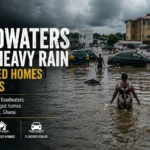
The warning follows fresh flooding in parts of Accra after heavy rainfall this week, with floodwaters affecting roads, disrupting movement and renewing concerns about the city’s ability to withstand increasingly intense storms. Residents in several communities reported damage to homes, vehicles and businesses as authorities assessed the impact.
According to the President of the Ghana Institution of Engineers (GhIE), Ing. Ludwig Annang Hesse, the roots of the problem stretch back more than three decades.
“For the past 30 or 40 years, we have done things the wrong way,” he said, arguing that natural systems designed to absorb and manage water have gradually been sacrificed to urban expansion. His comments reflect a growing consensus among engineers, planners and environmental experts that flooding in Accra has become as much a governance and planning challenge as an environmental one.
The Disappearance of Accra’s Natural Defences
Engineers say wetlands, retention ponds, floodplains and low-lying areas once acted as natural buffers that slowed stormwater and reduced pressure on drainage systems. However, rapid urbanisation has transformed many of these areas into residential, commercial and industrial developments.
Speaking on Citi Business News, Ga East Municipal Assembly engineer Daniel Okyere said many natural water retention zones have either disappeared or been significantly compromised. As a result, rainwater now reaches drainage channels more quickly and in larger volumes than before.
The consequence is that drainage systems designed decades ago are frequently overwhelmed during heavy rainfall. The engineers’ assessment is consistent with longstanding concerns raised by urban planners and environmental experts about encroachment on waterways, the loss of wetlands and weak enforcement of planning regulations across the Greater Accra Region.
More Than a Drainage Problem
Hesse argues that focusing solely on larger drains will not solve Accra’s flooding crisis. Over the years, successive governments have invested in drainage expansion, desilting programmes and flood mitigation projects. While those interventions have improved conditions in some areas, engineers say they have not addressed the underlying causes of flooding.
Many drainage channels remain clogged by silt, plastic waste and other debris. At the same time, developments continue to emerge in locations that historically served as natural water storage areas. According to Hesse, Ghana has focused heavily on what engineers call “downstream solutions” while neglecting the “upstream” systems that naturally slow, store and absorb rainfall before it reaches major drains. The result is a city that increasingly struggles to cope whenever rainfall intensifies.
Lessons Still Unlearned
For many Ghanaians, discussions about flooding inevitably evoke memories of the June 3, 2015 disaster, when devastating floods and a fuel station explosion claimed more than 150 lives in Accra. That tragedy prompted widespread calls for reform in urban planning, drainage management and environmental protection.
More than a decade later, engineers warn that many of the structural vulnerabilities exposed by that disaster remain unresolved. The recurring nature of the problem has led experts to question whether Ghana has sufficiently protected waterways, enforced planning laws and preserved critical environmental assets.
Climate Change and Human Decisions
Engineers acknowledge that changing weather patterns and increasingly intense rainfall events may be contributing to flood risks. However, they argue that climate factors alone do not explain the scale of flooding witnessed in Accra.
Instead, they say the loss of wetlands, construction in flood-prone areas, inadequate waste management and weak planning enforcement have significantly increased the city’s exposure to flood damage. In other words, while climate change may be increasing pressure on urban infrastructure, decades of human decisions have made Accra more vulnerable.
The Difficult Solution Ahead
The GhIE president believes the city has reached a point where difficult choices can no longer be avoided.
He argues that future developments should incorporate water retention measures designed to temporarily store rainfall before releasing it into drainage systems. Existing developments may also need to be retrofitted with similar infrastructure. “This is the option left for us. It’s the most difficult of the options left,” Hesse said. While such measures may require significant investment, engineers believe they offer one of the few sustainable paths towards reducing long-term flood risks.
What It Means for Ghana
The engineers’ warning extends far beyond Accra.
Cities across Ghana are expanding rapidly, placing growing pressure on drainage systems, environmental assets and planning authorities. For homeowners, the consequences are increasingly financial. Flood-prone communities face recurring repair costs, businesses experience disruptions, insurers confront higher risks and local authorities face mounting demands for infrastructure investment.
For policymakers, the challenge is equally significant.
The question is no longer simply how to clear drains after a flood. It is whether Ghana can build cities that work with natural water systems rather than against them. That is the deeper message behind the latest warning from Ghana’s engineers.
Flooding is not merely an environmental problem. It is a planning, infrastructure, governance and economic challenge decades in the making. And unless those underlying issues are addressed, the next heavy rain may produce the same outcome.
What Happens Next?
Engineers are calling for stronger planning enforcement, protection of wetlands, improved waste management and greater investment in sustainable stormwater systems. As Ghana enters another rainy season, attention will increasingly focus on whether policymakers can move beyond emergency responses and tackle the structural causes of flooding. For Accra’s residents, the stakes are measured not only in disrupted journeys and damaged property but also in the long-term resilience of the city itself.
Related posts:
 Ghana Allocates GH¢442 Million for Flood Recovery and Coastal Protection
  Ghana Pushes Border Cooperation as Sahel Insecurity Raises Regional Security Risks
  Ghana Partners Google for Education to Expand AI and Digital Skills in Schools
  Ghana floods displace families as heavy rains hit Cape Coast
  One Dead, Children Feared Trapped After Adenta Building Collapse