
Accra flooding risk warning issued as rains intensify

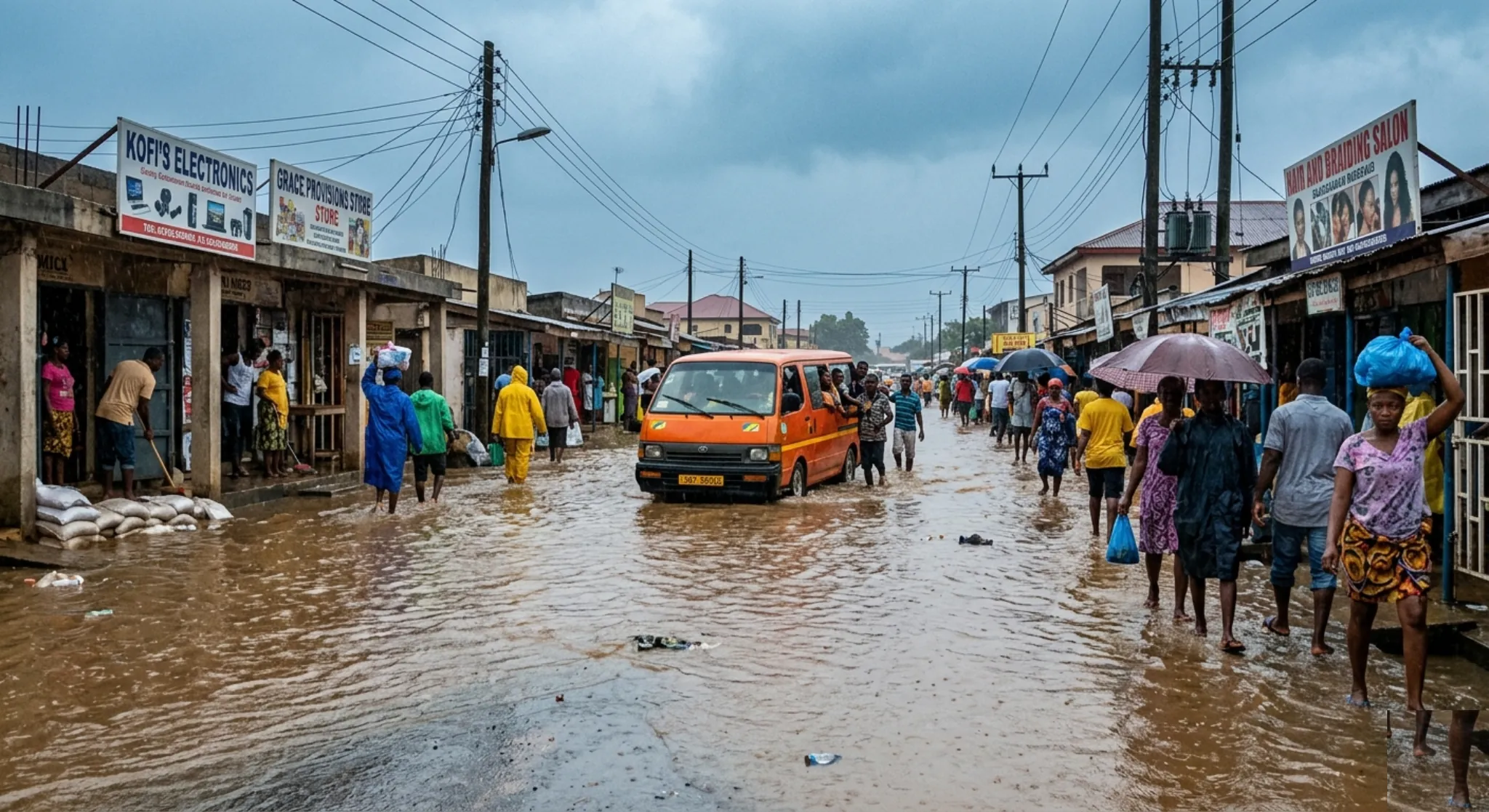

Authorities warn residents in flood-prone areas of Accra to prepare for heavy rainfall, as drainage systems face renewed pressure during peak rainy season.
ACCRA, Ghana — 5 May 2026
An Accra flooding risk warning has been issued by authorities as heavy rains intensify across Ghana’s capital, raising concerns over drainage capacity and potential disruption in vulnerable communities. Officials say that early signs of water accumulation in low-lying areas highlight the need for preparedness, particularly in neighbourhoods that have historically been affected by seasonal flooding.
Why Accra’s flooding risk warning matters now
The Ghana Meteorological Agency has forecast above-average rainfall in parts of Greater Accra, increasing the likelihood of flash floods in densely populated urban areas. City authorities say blocked drains, unregulated construction, and waste disposal challenges continue to limit the effectiveness of flood prevention measures.
Engineer Joseph Addo, an official with the Accra Metropolitan Assembly, said the situation requires both immediate and long-term responses. “We are clearing drains and monitoring high-risk zones, but public cooperation is essential,” he said. He added that residents must avoid dumping waste into drainage systems, which significantly reduces water flow capacity during heavy rainfall events.
Infrastructure challenges persist
Urban planning experts say Accra’s rapid expansion has outpaced infrastructure development, leaving drainage systems under strain. Dr Lydia Baffour, a lecturer in urban planning at Kwame Nkrumah University of Science and Technology, said flooding risk is tied to structural issues. “Encroachment on waterways and poor land-use enforcement continue to increase vulnerability,” she said.
Government initiatives to improve drainage infrastructure have been ongoing, but progress remains uneven across districts. Some areas have seen upgrades, while others still rely on outdated systems unable to handle heavy rainfall volumes. The Accra flooding risk warning reflects these broader structural challenges, which require sustained investment and enforcement of planning regulations.
Residents brace for impact
In flood-prone communities such as Odawna and parts of Kaneshie, residents say they are already preparing for potential disruptions. Adjoa Mensima, a shop owner, said past experiences have made residents cautious. “When the rains start like this, we move our goods to higher places,” she said. “We cannot take chances anymore.” Transport operators also report early signs of congestion linked to waterlogged roads, which can quickly escalate during peak rainfall. Emergency services have urged residents to avoid driving through flooded areas and to follow official advisories during heavy rainstorms.
Dissenting concerns over preparedness
Some civil society groups argue that responses remain reactive rather than preventive. A representative from the Centre for Democratic Development (CDD-Ghana) stated that we must prioritise long-term planning. “Flooding is a recurring issue in Accra, yet systemic solutions are slow,” the representative said.
The group called for stronger enforcement of building regulations and better coordination between national and local authorities. Authorities have acknowledged these concerns but say resource constraints and rapid urbanisation present ongoing challenges.
Human impact across vulnerable communities
Flooding in Accra has historically led to displacement, property damage, and disruptions to livelihoods, particularly in informal settlements. Residents in areas along the Odaw River say even moderate rainfall can lead to significant water accumulation, affecting homes and small businesses. Community leaders report that families often face repeated losses during the rainy season, with limited access to insurance or formal support systems.
Why this matters
Data from the National Disaster Management Organisation shows that urban flooding remains one of the most frequent natural hazards in Ghana, with significant economic and social impacts.
Research by the World Bank indicates that improving urban drainage and waste management systems can significantly reduce flood risks in rapidly growing cities. Experts say sustained investment, enforcement of regulations, and public awareness campaigns are critical to reducing vulnerability. The Accra flooding risk warning calls for coordinated action across government, communities, and stakeholders to address both immediate risks and long-term resilience.
Outlook as rains continue
Meteorological forecasts suggest that rainfall intensity may remain high in the coming weeks, increasing the likelihood of further flooding incidents. Authorities say monitoring systems are in place, but residents are urged to remain vigilant and follow official guidance. The Accra flooding risk warning serves as an early signal, but its effectiveness will depend on both institutional response and community action in the days ahead.
Sources: Ghana Meteorological Agency, National Disaster Management Organisation, World Bank. Additional reporting by Nukunya News Desk.
Related posts:
 Ghana floods displace families as heavy rains hit Cape Coast
  Dr Ofori Sarpong donates 600-bed dormitory to PRESEC Legon to ease student congestion
  President Mahama Signs Legal Education Reform Bill 2026 Into Law
  Ghana Pushes Border Cooperation as Sahel Insecurity Raises Regional Security Risks
  Ghana Partners Google for Education to Expand AI and Digital Skills in Schools